
The Archaeology and Historical Ecology of Late Holocene San Miguel Island
by Torben C. Rick

Paperback (Published)
(March 2007)
ISBN: 9781931745369
8.46 x 10.94 inches
Price: $9.95
In stock
Hardback (Published)
(March 2007)
ISBN: 9781931745376
Price: $14.95
On back order
California’s northern Channel Islands have one of the longest and best-preserved archaeological records in the Americas, spanning some 13,000 calendar years. When European explorers first travelled to the area, these islands were inhabited by the Chumash, some of the most populous and culturally complex hunter-gatherers known. Chumash society was characterised by hereditary leaders, sophisticated exchange networks and interaction spheres, and diverse maritime economies. Focusing on the archaeology of five sites dated to the last 3,000 years, this book examines the archaeology and historical ecology of San Miguel Island, the westernmost and most isolated of the northern Channel Islands. Detailed faunal, artefact, and other data are woven together in a diachronic analysis that investigates the interplay of social and ecological developments on this unique island. The first to focus solely on San Miguel Island archaeology, this book examines issues ranging from coastal adaptations to emergent cultural complexity to historical ecology and human impacts on ancient environments.
- By (author) Torben C. Rick
Other Titles in this Series


Similar Books


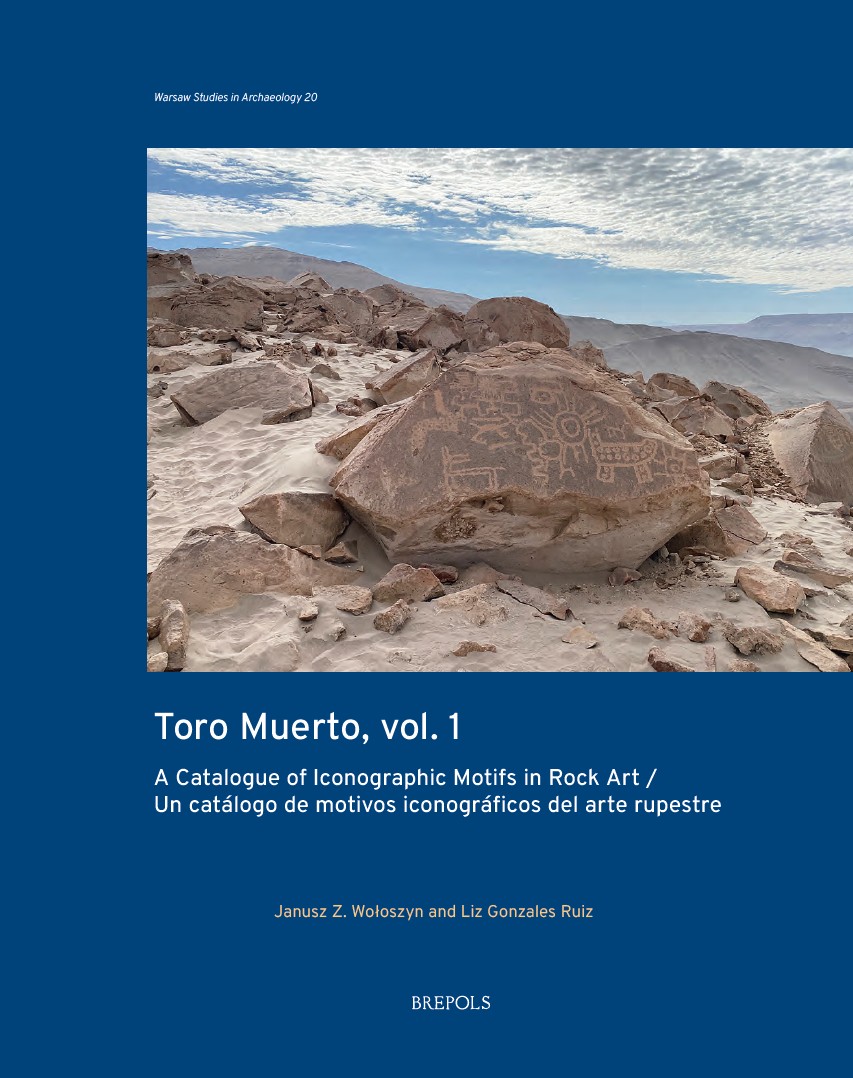 Toro Muerto, vol. I
A Catalogue of Iconographic Motifs in Rock Art / Un catálogo de motivos iconográficos del arte rupestre
Volume 20


 Patrimonio antes del patrimonio
Una genealogía del pensamiento patrimonialista y la arqueología mexicana en un amplio siglo XIX

 From Sedentarisation to the Complex Society
Settlement, Economy, Environment, Cult. Proceedings of the workshops in Lisbon, Tehran and Lima (2016 − 2019)


 Adolescente de Jalpan
Primer estudio iconográfico y esbozo de interpretación iconológica sobre una escultura huasteca en la Sierra Gorda del Noreste de México

 Archaeological Investigations in Guadalupe, Northeast Honduras
Interaction Networks during the Late Pre-Hispanic Period (AD 900-1525)
Volume 19
 Flower World – Mundo Florido
Music Archaeology of the Americas - Arqueomusicologia de las Americas
Volume 7


 Obsidian Across the Americas
Compositional Studies Conducted in the Elemental Analysis Facility at the Field Museum of Natural History


 La fábrica del prestigio en Mesoamérica
Interacciones y alteridad en el Altiplano central durante el período epiclásico (600-900 d.C.)


 El renacer de los Reyes
Imagen, contexto y significado del friso de Balamku, Campeche, Mexico
Volume 56

 El Palacio: Historiography and new perspectives on a pre-Tarascan city of northern Michoacán, Mexico


 Essai bibliographique sur l’archéologie francophone de la Mésoamérique
Bibliographical essay upon the French-speaking contributions to Mesoamerican archaeology; Ensayo bibliográfico sobre la arqueología francófona de Mesoamérica

 Sea Shells in the Mountains and Llamas on the Coast
The Economy of the Paracas Culture (800 to 200 BC) in Southern Peru
Volume 16

 Wari Women from Huarmey
Bioarchaeological Interpretation of Human Remains from the Wari Elite Mausoleum at Castillo de Huarmey, Peru
 Flower World – Mundo Florido
Music Archaeology of the Americas - Arqueomusicologia de las Americas
Volume 6