
The Anti-Religious Testimony of the Bible
Theology as Self-Critique
By (author) M. Elbers
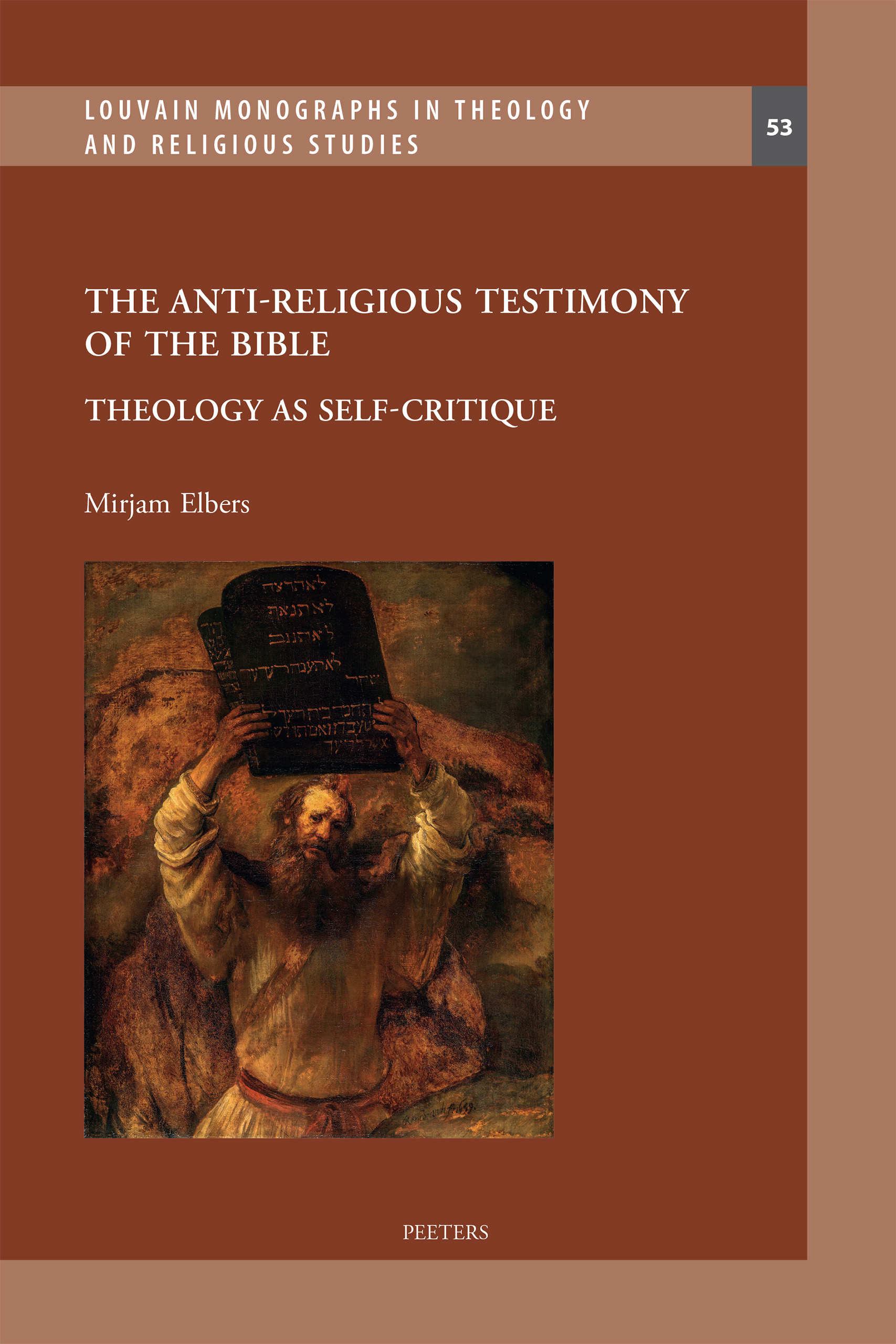
The Anti-Religious Testimony of the Bible compares the work of Jan Assmann with the writings of Dutch theologian Kornelis Heiko Miskotte. Both scholars acknowledge that biblical texts undeniably make judgements, distinctions, and divisions. Assmann considers the intolerant aspect of the Bible ‘semantic dynamite’ that causes religious violence, whereas Miskotte views the Bible’s critical stance as ‘self-critique’. Mirjam Elbers shows how Miskotte’s self-critical approach could further the Monotheism Debate that Assmann initiated in the 1990s and that is still ongoing. Additionally, this monograph dives into the Hebrew Bible to show how critique and judgement function in selected stories from the Torah and the Prophets. This exegetical research attempts to answer the question of who is actually being criticized. Finally, the book offers a theological outline of what it would mean for Christian theology if the biblical judgements are first and foremost self-critical.
The Anti-Religious Testimony of the Bible compares the work of Jan Assmann with the writings of Dutch theologian Kornelis Heiko Miskotte. Both scholars acknowledge that biblical texts undeniably make judgements, distinctions, and divisions. Assmann considers the intolerant aspect of the Bible ‘semantic dynamite’ that causes religious violence, whereas Miskotte views the Bible’s critical stance as ‘self-critique’. Mirjam Elbers shows how Miskotte’s self-critical approach could further the Monotheism Debate that Assmann initiated in the 1990s and that is still ongoing. Additionally, this monograph dives into the Hebrew Bible to show how critique and judgement function in selected stories from the Torah and the Prophets. This exegetical research attempts to answer the question of who is actually being criticized. Finally, the book offers a theological outline of what it would mean for Christian theology if the biblical judgements are first and foremost self-critical.
- By (author) M. Elbers
Other Titles in this Series
 How Do Stories Save Us?
An Essay on the Question with the Theological Hermeneutics of David Tracy in View
Volume 35


 Standing Responsibly between Silence and Speech
Religion and Revelation in the Thought of Dietrich Bonhoeffer and Rene Girard
Volume 42


 Answerable for our Beliefs
Reflections on Theology and Contemporary Culture Offered to Terrence Merrigan
Volume 48


 Towards Another Future
On the Christian Faith and Its Shape between Yesterday and Tomorrow
Volume 34
 Suffering and Salvation
The Salvific Meaning of Suffering in the Later Theology of Edward Schillebeeckx
Volume 33
Similar Books
 ‘For You I Study, For You I Work, For You I Live, For You I Am Ready To Even Give My Life’
Essays in Honour of Francis (Frank) J Moloney, SDB





 Ars Prophetica
Theology in the Poetry of Twentieth-Century Hebrew Poets Avraham Halfi, Shin Shalom, Amir Gilboa, and T. Carmi
 As Messianism Turns to Heresy
The Regenstein Chair Lectures On Lurianic Kabbalah and Shabbatai Tzevi at Hebrew Union College - Cincinnati


 Creating the Woman in Antiquity
Proceedings of the 16th Melammu Workshop, Innsbruck, 2–3 June 2022
Volume 13

 Drunk the Potion, No Whit Charmed
The Doctrine of Pure and Perfect Souls from Iamblichus to Damascius






 Extracanonical Traditions and the Holy Land
Texts, Rituals, and Material Culture in Late Antique Palestine
 Fear, Fear of God, God-Fearers
Philological and Historical Perspectives on the World of Ancient Judaism and Christianity




 Legal Visuality
Exegesis, Ambiguity, and Dissimulation of the Donation of Constantine in the Early Modern Period
 Liturgia semper reformanda
Adaptations and accommodations in the liturgy in light of canon 838 of the Code of Canon Law
