
Soziale Insekten in der Antike
Ein Beitrag zu Naturkonzepten in der griechisch-römischen Kultur
By (author) Dominik Berrens
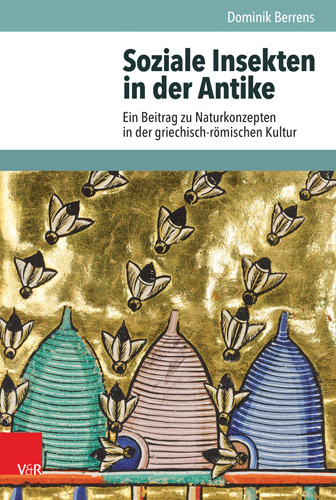
Hardback (Published)
(June 2018)
ISBN: 9783525310533
6.34 x 9.33 inches
Price: $138.00
In stock
At the beginning of the Historia animalium Aristotle lists several criteria for classifying animals. One of these criteria is the way of living together with other members of the same species. The thesis examines descriptions of bees, wasps, and ants in classical text within the period of the 8th century bce and LateAantiquity. It is based on scientific descriptions (mainly Aristotle, Varro, Columella, Pliny, and Aelianus) as well as similes, metaphors and miracle stories in other literary genres.
English Summary:At the beginning of the Historia animalium Aristotle lists several criteria for classifying animals. One of these criteria is the way of living together with other members of the same species. According to his classification, the so-called ??a p???t??? reach the highest level in this category, because they work together for one goal (Arist. Hist. an. I 1, 488 a 8). Apart from man, especially the social insects bee, wasp, and ant belong to this very small group of species. (Aristotle also adds the crane). Because of this assumed close relationship between man and social insects, it is no surprise that there is a rich literary involvement with bees, wasps, and ants in the Greek and Roman literature. This applies not only for biological or agricultural works, but also – primarily in form of metaphors and similes – for poetic genres like epic, didactic poetry, drama, elegy as well as for philosophical literature. The thesis examines descriptions of bees, wasps, and ants in classical text within the period of the 8th century B.C.E. (epics of Homer) and late antiquity. It is based on scientific descriptions (mainly Aristotle, Varro, Columella, Pliny, and Aelianus) as well as similes, metaphors and miracle stories in other literary genres. In this context, the intentions and the specific conditions of each genre are taken into account. The research focuses on the relationship between human being and animal, but also on the relationship between these groups of animals among themselves. The human society is always visible in the classical texts about social insects, not only in similes and metaphors but also in scientific descriptions. Therefore, on the one hand human values and conditions are quite naturally assigned to these animals, whereas on the other hand observations of conditions in animal societies can become a standard for human activity. German Description:Darstellungen von Bienen, Wespen und Ameisen finden sich in zahlreichen griechischen und lateinischen Texten. Konstitutiv fur diese kleine Gruppe von Tieren ist das Hinarbeiten auf ein gemeinsames Werk sowie das enge gemeinschaftliche Zusammenleben. Als Grundlage der Untersuchung dienen nicht nur agronomische und naturkundliche Fachtexte, sondern auch Gleichnisse, Metaphern und Bilder in Dichtung oder philosophischer Prosa. Die Insekten werden vor allem bezuglich ihrer sozialen Lebensweise in enger Verbindung zum Menschen gesehen, sodass ihre Darstellungen haufig stark von Anthropomorphismen gepragt sind.
Dr. Dominik Berrens ist Postdoc an der Leopold-Franzens Universitat Innsbruck im Projekt: NOSCEMUS – Nova Scientia: Early Modern Science and Latin.
- By (author) Dominik Berrens
Other Titles in this Series
 Exemplarische Vergangenheit
Valerius Maximus und die Konstruktion des sozialen Raumes in der frühen Kaiserzeit
 Katharsis in Kaiserzeit und Spätantike
Vorstellungen von Reinigung und Reinheit in Medizin, platonischer Philosophie und christlicher Theologie des 2. bis 4. Jahrhunderts n. Chr
 Europa und der Stier oder der Brautraub des Zeus
Die Entführung Europas in den Darstellungen der griechischen und römischen Antike




 Göttliche Botschaften für zweifelnde Menschen
Pragmatik und Orientierungsleistung der Apollon-Orakel von Klaros und Didyma in hellenistisch-römischer Zeit
 ›De arte magorum‹
Erklärung und Deutung ausgewählter Hexenszenen bei Theokrit, Vergil, Horaz, Ovid, Seneca und Lucan unter Berücksichtigung des Ritualaufbaus und der Relation zu den Zauberpapyri
 Caesar and the Bellum Alexandrinum
An Analysis of Style, Narrative Technique, and the Reception of Greek Historiography
 Dichter über ihre Gedichte
Die Prosavorreden in den »Epigrammaton libri« Martials und in den »Silvae« des Statius






 Cinis omnia fiat
Zum poetologischen Verhältnis der pseudo-vergilischen »Dirae« zu den Bucolica Vergils

Similar Books



 Contesting Labeled Identities
The Sociology of Gentilics in Biblical and Northwest Semitic Literature


 Drunk the Potion, No Whit Charmed
The Doctrine of Pure and Perfect Souls from Iamblichus to Damascius

 Epigraphic “Shades” from Hellenistic Thrace
Contextualizing Inscriptions in Greek from Thracian Tombs

 Epiphanies of the Divine in the Septuagint and the New Testament
Fifth International Symposium of the Corpus Judaeo-Hellenisticum Novi Testamenti (CJHNT), 14-17 May 2015, Nottingham


 Éthique, politique, religions
Superstition (XVIIe - XXIe siècles). Sémantique, histoires et cultures


 Gold, Silver and Glass: Power Networks, Cultural Identities, Technology Transfers and Agency across the Old World (7th Century BC – 1st Century AD)
Proceedings of a Conference Held at the British Museum, 16–18 June 2023

 La Lettre clandestine
La littérature philosophique clandestine, ses éditeurs et ses éditions
Volume 34
 Language and Power in the Roman Empire and Early India
Hierarchy, Ambiguity, and the Art of Reading the Signs in Cosmopolitan Cultures
 Late Antique villae in the Balkans (3rd–7th c. AD): Current Research Questions and Perspectives
HAEMUS Companion to the Late Antique Balkans 1
Volume 4
 Libertinage et philosophie à l’époque classique (XVIe-XVIIIe siècle)
Athéisme, Modernité et Sécularisation / Atheism, Modernity and Secularization
Volume 23


 Nurturing the Elite
Representations of Drinking, Eating, and Religious Vessels in Palmyrene Funerary Iconography
Volume 13


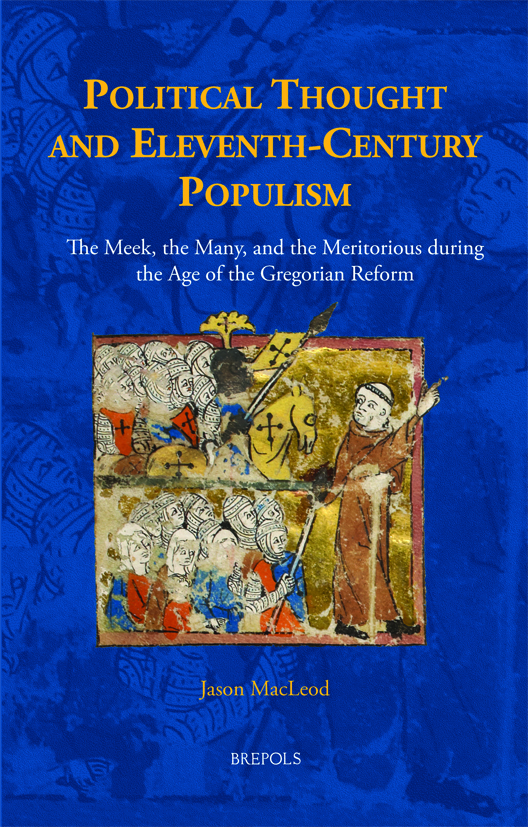 Political Thought and Eleventh-Century Populism
The Meek, the Many, and the Meritorious during the Age of the Gregorian Reform
Volume 38



