
Responses to the 12th Century BC Collapse
Recovery and Restructuration in the Early Iron Age Near East and Mediterranean. Proceedings of the 9th Melammu Workshop, Tartu, 7-9 June 2019
edited by Mait Koiv and Raz Kletter
During the Late Bronze Age, the Eastern Mediterranean formed a world of relatively closely integrated societies. In this Small World Network, stretching from the Elamite kingdom in southwestern Iran to the Mycenaean principalities in Greece, the scene was dominated by the Great Kings of Egypt, Assyria, Babylonia, and the Hittite empire, who competed for hegemonic power and tried, with variable success, to extend their dominions. – During the 12th and the early 11th century, the Late Bronze Age system collapsed. The crisis did not affect all the subregions simultaneously and to the same extent. Signs of instability and regression can be seen already in the later part of the 13th century, but in the 12th century a wave of destructions affected numerous places in a wide area, from the Aegean to the southern Levant. Many Mycenaean, Syrian and Levantine centres, including Ugarit, were destroyed. The fall of the Hittite empire probably dates from roughly the same horizon of the late 12th and early 11th centuries. A large number of immigrants might have been moving from the Aegean world towards the Near East and Egypt, where they were allegedly defeated by Ramesses III. Explaining the divergent lines of development in a world of increasingly networked communities and cultures is a challenge. It requires a complex, and necessarily comparative approach, exploring both the unifying factors and the causes of variability. The present volume can, hopefully, shed some light on these and related questions. The chapters in this volume are varied and reflect different methodologies, viewpoints and conclusions. They explore the evolving trade networks and their impact on societies, the impulses for innovation, the spread of new technologies, and the variable lines of demographic, economic, social, ideological and political development. The volume covers a broad range of subjects concerning the post-collapse developments in a number of key regions of the Ancient Near Eastern and Mediterranean worlds. The chapters illuminate the dynamics of political order and power ideologies in Mesopotamia and Syria, discuss the complex processes related to the crisis and subsequent polity formation in southern Levant, analyse the impact of the spread of technologies in the Mediterranean with Cypriots and Phoenicians playing a central role, consider in depth the development of various Aegean communities, and show how emerging political identities were manifested in southern Italy. It goes without saying that the chapters in this volume cannot and do not pretend to answer all the relevant questions. However, they offer updated, varied, and critical insights, and will, hopefully, inspire further discussions of power building as well as the limitations of power in the Ancient Mediterranean and Near East during the centuries after the 12th century collapse.
During the Late Bronze Age, the Eastern Mediterranean formed a world of relatively closely integrated societies. In this Small World Network, stretching from the Elamite kingdom in southwestern Iran to the Mycenaean principalities in Greece, the scene was dominated by the Great Kings of Egypt, Assyria, Babylonia, and the Hittite empire, who competed for hegemonic power and tried, with variable success, to extend their dominions. – During the 12th and the early 11th century, the Late Bronze Age system collapsed. The crisis did not affect all the subregions simultaneously and to the same extent. Signs of instability and regression can be seen already in the later part of the 13th century, but in the 12th century a wave of destructions affected numerous places in a wide area, from the Aegean to the southern Levant. Many Mycenaean, Syrian and Levantine centres, including Ugarit, were destroyed. The fall of the Hittite empire probably dates from roughly the same horizon of the late 12th and early 11th centuries. A large number of immigrants might have been moving from the Aegean world towards the Near East and Egypt, where they were allegedly defeated by Ramesses III. Explaining the divergent lines of development in a world of increasingly networked communities and cultures is a challenge. It requires a complex, and necessarily comparative approach, exploring both the unifying factors and the causes of variability. The present volume can, hopefully, shed some light on these and related questions. The chapters in this volume are varied and reflect different methodologies, viewpoints and conclusions. They explore the evolving trade networks and their impact on societies, the impulses for innovation, the spread of new technologies, and the variable lines of demographic, economic, social, ideological and political development. The volume covers a broad range of subjects concerning the post-collapse developments in a number of key regions of the Ancient Near Eastern and Mediterranean worlds. The chapters illuminate the dynamics of political order and power ideologies in Mesopotamia and Syria, discuss the complex processes related to the crisis and subsequent polity formation in southern Levant, analyse the impact of the spread of technologies in the Mediterranean with Cypriots and Phoenicians playing a central role, consider in depth the development of various Aegean communities, and show how emerging political identities were manifested in southern Italy. It goes without saying that the chapters in this volume cannot and do not pretend to answer all the relevant questions. However, they offer updated, varied, and critical insights, and will, hopefully, inspire further discussions of power building as well as the limitations of power in the Ancient Mediterranean and Near East during the centuries after the 12th century collapse.
- Edited by Raz Kletter
- Edited by Mait Koiv
Other Titles in this Series
 Domestic Trade and Maritime Trade in the Eastern Mediterranean and the Ancient Near East
Proceedings of the 10th Melammu Workshop, TRANSMARE Institute Trier, 11–13 December 2019
Volume 11
 Creating the Woman in Antiquity
Proceedings of the 16th Melammu Workshop, Innsbruck, 2–3 June 2022
Volume 13
 Autocratic Rule in Antiquity
Proceedings of the 14th Melammu Workshop, Krakow, 46 October 2021
Volume 12
 Making Peace in the Ancient World
Proceedings of the 7th Melammu Workshop, Padova, 5-7 November 2018
Volume 5
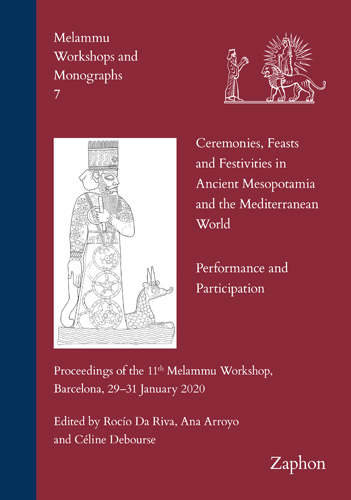 Ceremonies, Feasts and Festivities in Ancient Mesopotamia and the Mediterranean World
Performance and Participation: Proceedings of the 11th Melammu Workshop, Barcelona, 29-31 January 2020
Volume 7

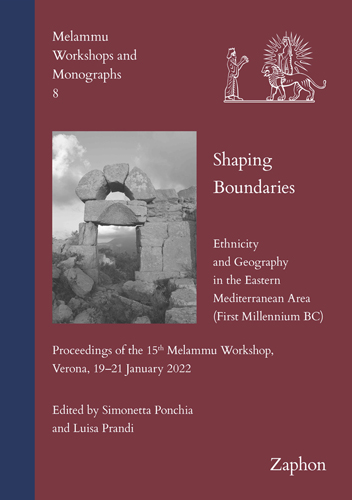 Shaping Boundaries
Ethnicity and Geography in the Eastern Mediterranean Area (First Millennium BC). Proceedings of the 15th Melammu Workshop, Verona, 19-21 January 2022
Volume 8
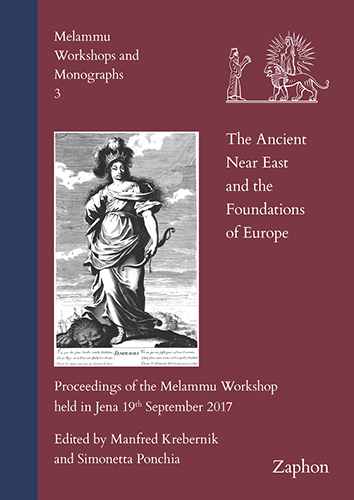 The Ancient Near East and the Foundations of Europe
Proceedings of the Melammu Workshop held in Jena 19th September 2017
Volume 3
 Literary Change in Mesopotamia and Beyond and Routes and Travellers between East and West
Proceedings of the 2nd and 3rd Melammu Workshop
Volume 2
 Representing the Wise
A Gendered Approach: Proceedings of the 1st Melammu Workshop. Lille, 4-5 April 2016
Volume 1
Similar Books





 Boğazköy Tablets in the Museum of Anatolian Civilizations (Bo 9032–Bo 9097)
Anadolu Medeniyetleri Müzesinde Bulunan Boğazköy Tabletleri (Bo 9032–Bo 9097)
Volume 4
 Caesar’s Visions and Impact on the Roman Empire
Revisiting the Archaeological and Historical Record of the 40s BC
Volume 2

 Connecting the Dots: Counting, Writing, and the Beginnings of Civilization
The Secret Lives of Clay Tokens: A Memoir
 Construction Processes in Historical Western Societies (5th c. BC – 10th c. AD)
Case Studies on Techniques, Models, and Costs

 Curating the Prehistoric Past
Studies on West Asian Archaeology and Beyond in Honour of Yoshihiro Nishiaki


 Etruscan and Roman Hellenistic Anatomical ex votos
Reassessing Popular Religious Expressions in Central Italy
Volume 8

 Exploring Gender Dynamics across the Ancient Near East
Collected Essays of Gender and Methodology in the Ancient Near East (GeMANE) 4 and 5
Volume 7


 Ḫattušaš utnē išḫameški
Hittite and Other Ancient Near Eastern Studies Presented to Piotr Taracha on the Occasion of His 65th Birthday




 Invisible Labour in Antiquity
Visualizing Obscure Work in the Ancient Mediterannean and West Asia
Volume 1


 Kultur – Kontakt – Kultur
Beiträge anlässlich der 66. Rencontre Assyriologique Internationale in Frankfurt/Main und Mainz, 25.–29. Juli 2022
Volume 35
 Late Antique villae in the Balkans (3rd–7th c. AD): Current Research Questions and Perspectives
HAEMUS Companion to the Late Antique Balkans 1
Volume 4


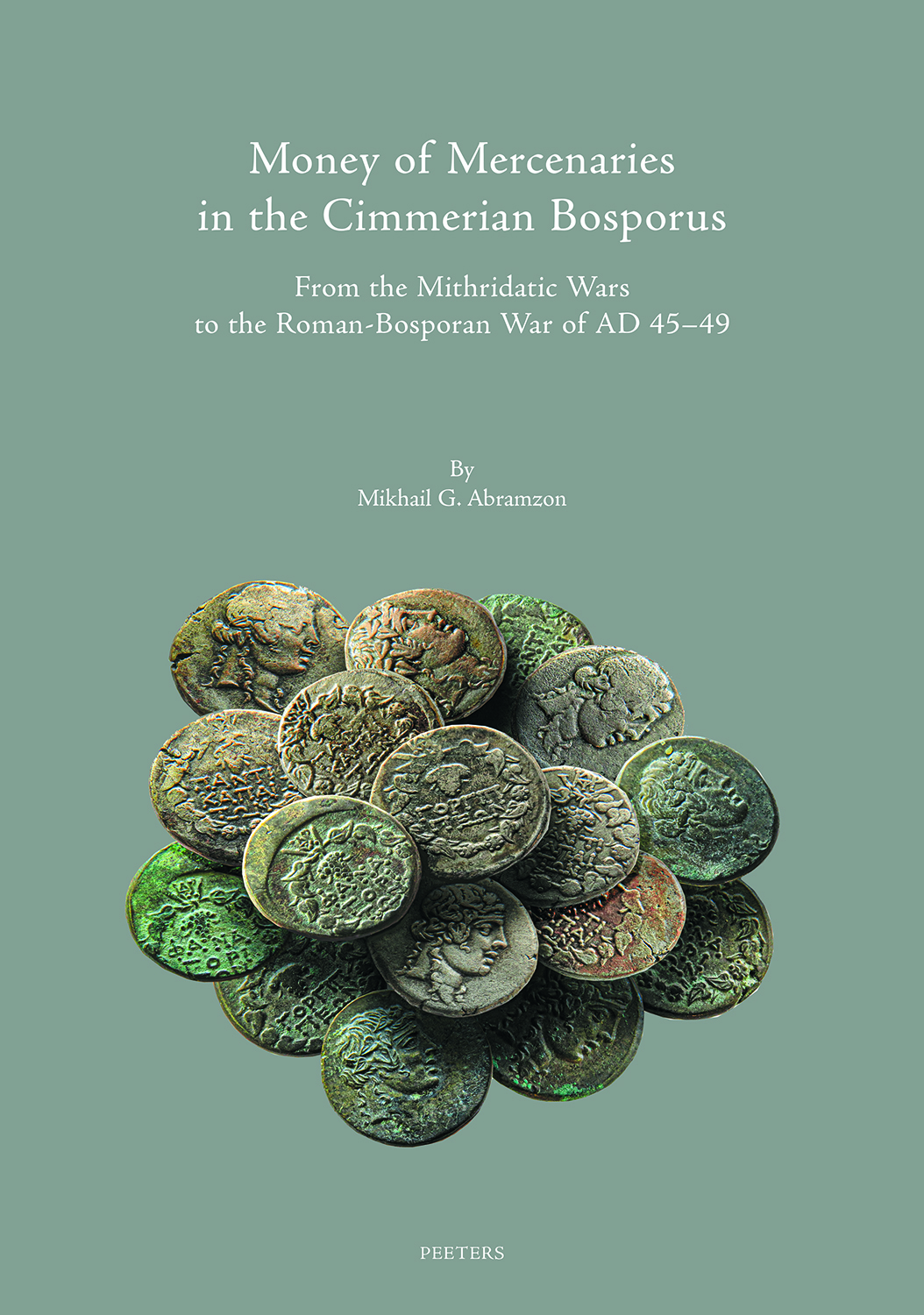 Money of Mercenaries in the Cimmerian Bosporus
From the Mithridatic Wars to the Roman-Bosporan War of AD 45-49
Volume 45


