
Renaissance Music and Culture in Croatia
By (author) Ennio Stipcevic

This book is the first more comprehensive effort dedicated to the interdisciplinary study of Renaissance music in Croatia. On the pages of this book the dramatis personae comprise priests and heretics, noblemen and tradesmen, men of learning and illiterate fishermen, ladies from high society and courtesans, printers and scribes, patrons of the arts and their proteges – in other words, people participating in one way or another in cultural and artistic events. In spite of grave political problems during the 15th and 16th centuries (the Turks established their power in the north and eastern regions), the Croatian soil was a theatre of vivid musical life. The variety of cultural influences (most important comming from Italy) has been reflectedin some specific phenomena in the Croatian cultural and musical life. Among them are the Catholic liturgy in the native language, the Petrarchan poetry in the Italian language, with which some Dalmatian poets managed to attract the attention of contemporary Italian composers, and finally, the fact that the Croatian coastland was the extreme south-eastern point reached by the widely spreading Netherland Renaissance polyphony. This book focuses on identifying, contextualing and presenting this less known European musical heritage to the wider international public.
This book is the first more comprehensive effort dedicated to the interdisciplinary study of Renaissance music in Croatia. On the pages of this book the dramatis personae comprise priests and heretics, noblemen and tradesmen, men of learning and illiterate fishermen, ladies from high society and courtesans, printers and scribes, patrons of the arts and their proteges – in other words, people participating in one way or another in cultural and artistic events. In spite of grave political problems during the 15th and 16th centuries (the Turks established their power in the north and eastern regions), the Croatian soil was a theatre of vivid musical life. The variety of cultural influences (most important comming from Italy) has been reflectedin some specific phenomena in the Croatian cultural and musical life. Among them are the Catholic liturgy in the native language, the Petrarchan poetry in the Italian language, with which some Dalmatian poets managed to attract the attention of contemporary Italian composers, and finally, the fact that the Croatian coastland was the extreme south-eastern point reached by the widely spreading Netherland Renaissance polyphony. This book focuses on identifying, contextualing and presenting this less known European musical heritage to the wider international public.
- By (author) Ennio Stipcevic
Other Titles in this Series

 Pietro Metastasio’s Operatic Storm
Texts and Musics for Didone abbandonata, Alessandro nell'Indie, Artaserse, Adriano in Siria, and Demofoonte
 Ludwig Senfl (c.1490-1543)
A Catalogue Raisonne of the Works and Sources: Vol. 1: Catalogue of the Works


 La musique en images
Instruments, voix et corps sonores dans les manuscrits enlumines (XIIIe-XVe siecles)


 Josquin and the Sublime
Proceedings of the International Josquin Symposium at Roosevelt Academy, Middelburg, 12-15 July 2009


Similar Books


 Balthasar Caymox of Nuremberg
Early Modern German Print Publishers: Popular Prints of the Seventeenth Century
 Beyond Sovereign Courts
Agents and Practices in Early Modern Spanish and Habsburg Diplomacy
Volume 3


 Circulation, Use, Impact
The Consumption of Architectural Books in the Early Modern Eastern Adriatic
Volume 1


 Councils, Conflicts, Correspondence
Urban Diplomacy in Reval (Tallinn) and Lübeck (c. 1470–1570)
Volume 67


 Innovationes Lovanienses: Arts, Law and Theology at the University of Louvain (1425–1797)
Studium Lovaniense: Learning across Borders, 2
Volume 18

 John Dunstaple Reading Boethius
John Dunstaple’s Annotations to Boethius’s “De institutione musica” in the Manuscript Oxford, Corpus Christi College Library, MS 118
 Legal Visuality
Exegesis, Ambiguity, and Dissimulation of the Donation of Constantine in the Early Modern Period
 Music and Colonialism in Fascist Italy
Identity, Propaganda, and Ethnographic Representation
Volume 13



 Naples as Laboratory / Laboratorium Neapel
Style Options, Artistic Rivalry and Self Fashioning in Neapolitan Baroque Painting / Plurale Stilbildung, Kunstlerkonkurrenz und Self Fashioning in der neapolitanischen Barockmalerei


 Power and Women in Southeast and Central Europe in Late Medieval and Early Modern Period (1300-1600)
Volume 10



 Staging the Spectacle of Majesty
Ceremonial, Courtly Space, and Collecting under the Spanish Habsburgs
Volume 9
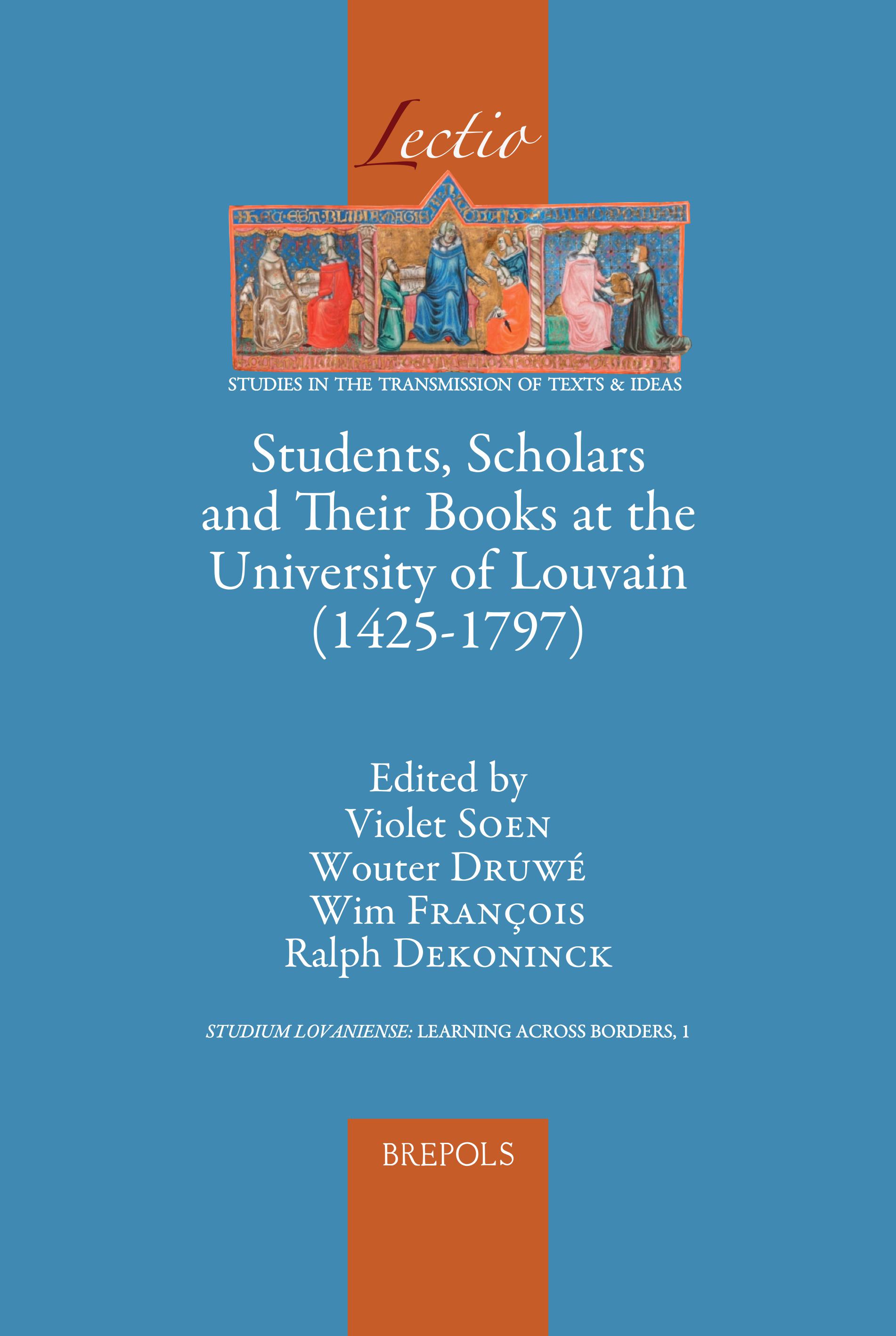 Students, Scholars and Their Books at the University of Louvain (1425-1797)
Studium Lovaniense: Learning across Borders, 1
Volume 17

