
Religion, Culture, and Mentalities in the Medieval Low Countries
Selected Essays
Edited by Jeroen Deploige Edited by Martine De Reu Edited by Walter P Simons Edited by Steven Vanderputten Edited by Laura Galoppini
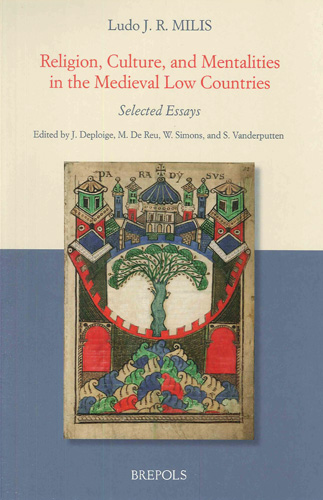
Ludo Milis graduated from Ghent University in 1961 as the last student of Francois-Louis Ganshof, who in the years after Henri Pirenne’s retirement was the most prominent representative of the famous Ghent School of medieval history. Milis’s own academic career at Ghent span four decades in which he followed in the footsteps of his masters, yet also explored new directions. Like his predecessors, Milis always attached great importance to the critical examination of primary sources, but for him, such work must serve broader historical inquiry guided by a precise set of questions and methodological rigor. His interests lay primarily in the study of religious and cultural history, which previously had been neglected at Ghent; he was also a pioneer in the history of mentalities in the Low Countries. Milis’s research and thought found expression in several books, among which his Angelic Monks and Earthly men. Monasticism and its Meaning to Medieval Society (Boydell, 1992), translated into many languages, was probably the most influential. This collection contains eleven essays published between 1969 and 1990. Most of them appeared in Dutch or French and have now been translated into English; two essays previously published in English were newly edited. All provide unique insight in the major themes of Milis’s work: the religious history of the Low Countries during the early and high Middle Ages, as well as the problem of religious conversion and persuasion; the rise of regular canons in the eleventh and twelfth centuries (also the subject of his doctoral dissertation on the order of Arrouaise, published in 1969); the uses of power and ideology; and the history of French Flanders. All bear witness to Milis’s inspiring ability to ask original, probing questions and to write historical syntheses accessible to a wide audience. The collection is presented to Ludo Milis by his students on the occasion of his retirement and his sixty-fifth birthday.
Ludo Milis graduated from Ghent University in 1961 as the last student of Francois-Louis Ganshof, who in the years after Henri Pirenne’s retirement was the most prominent representative of the famous Ghent School of medieval history. Milis’s own academic career at Ghent span four decades in which he followed in the footsteps of his masters, yet also explored new directions. Like his predecessors, Milis always attached great importance to the critical examination of primary sources, but for him, such work must serve broader historical inquiry guided by a precise set of questions and methodological rigor. His interests lay primarily in the study of religious and cultural history, which previously had been neglected at Ghent; he was also a pioneer in the history of mentalities in the Low Countries. Milis’s research and thought found expression in several books, among which his Angelic Monks and Earthly men. Monasticism and its Meaning to Medieval Society (Boydell, 1992), translated into many languages, was probably the most influential. This collection contains eleven essays published between 1969 and 1990. Most of them appeared in Dutch or French and have now been translated into English; two essays previously published in English were newly edited. All provide unique insight in the major themes of Milis’s work: the religious history of the Low Countries during the early and high Middle Ages, as well as the problem of religious conversion and persuasion; the rise of regular canons in the eleventh and twelfth centuries (also the subject of his doctoral dissertation on the order of Arrouaise, published in 1969); the uses of power and ideology; and the history of French Flanders. All bear witness to Milis’s inspiring ability to ask original, probing questions and to write historical syntheses accessible to a wide audience. The collection is presented to Ludo Milis by his students on the occasion of his retirement and his sixty-fifth birthday.
- Edited by Jeroen Deploige
- Edited by Martine De Reu
- Edited by Walter P Simons
- Edited by Steven Vanderputten
- Edited by Laura Galoppini
Similar Books
 «Solazoxa festa, stradolze e stracomplia»
Festschrift für Raymund Wilhelm zum 65. Geburtstag mit Beiträgen zu Diskurstraditionen und mittelalterlicher Philologie
Volume 249
 A Collaborative Tapestry in Honour of Shirley Ann Brown / Une fresque brodée en l’honneur de Shirley Ann Brown
The Bayeux Tapestry Seen by her Colleagues and Friends / La Tapisserie de Bayeux vue par ses collègues et amis

 Behind the Scenes of Medieval Roofs
An Overview of the Roofing Systems of Italian Churches
Volume 90

 Cahiers de recherches médiévales et humanistes – Journal of Medieval and Humanistic Studies
Volume 51








 Innovation and Medieval Communities
The Circulation of Ideas and Practices in and out of the Town (1200-1500)
Volume 63
 John Dunstaple Reading Boethius
John Dunstaple’s Annotations to Boethius’s “De institutione musica” in the Manuscript Oxford, Corpus Christi College Library, MS 118

 Medieval Debates on Foreknowledge: Future Contingents, Prophecy, and Divination
Acts of the XXVII Annual Colloquium of the SIEPM, Trento 12-15 September 2023
Volume 31

 Medieval Yeghegis, Armenia
History, Archaeology, Society. Local Multiplicities and Global Connections of a Rural Centre on the Silk Road(s)

 Nicholas of Lyra’s Commentaries on the Gospels of Matthew and Luke
Franciscan Exegesis in a Time of Crisis


 Power and Women in Southeast and Central Europe in Late Medieval and Early Modern Period (1300-1600)
Volume 10




 The Anglo-Norman Bible’s Books of Kings, a Critical Edition
(BL Royal 1 C III, fols 234r-274v)
Volume 37
