Reimagining the Ballet des Porcelaines
A Tale of Magic, Desire, and Exotic Entanglement
Edited by Meredith Martin

In September 1739 at the chateau de Morville near Paris, a group of elite amateur artists staged a ballet pantomime known as the “Ballet des Porcelaines,” and sometimes also as “The Teapot Prince.” Written by the comte de Caylus, with music by Grandval, it tells the story of a prince who searches for his beloved on a faraway island ruled by an evil magician. The magician has turned the island’s inhabitants into porcelain, an event the audience witnesses in the form of a male and female singer who spin around on stage until they transform into vases. Aside from the libretto and the score, nothing survives of the Ballet des Porcelaines. The costumes and choreography are unknown. Although it inspired later famous ballets featuring sleeping beauties and porcelain princesses, it seems to have been staged only twice: first in 1739 and again two years later on the grounds of the estate, next to a lake encircled by vases and an illuminated arch suggesting a nighttime performance. The chateau’s owner served as France’s foreign minister and promoted trade with Asia. We can assume some kind of chinoiserie imagery and context for the ballet, which can be interpreted both as a standard fairy tale love story and as an allegory for the intense European desire to know and steal the secrets of porcelain manufacture. The ballet is an example of the deep intertwining of visual and performing arts in eighteenth-century France, and to an enchantment with Asia embodied on stage and in life by porcelain goods. The plot’s animation of porcelain also relates to a period understanding of the permeable boundary between persons and things manifested in a variety of cultural forms. The ballet exemplifies the profound sense of magic, mystery, and desire that porcelain instilled in European viewers (who referred to it as “white gold”), an effect that is lost on many museumgoers today.
- Edited by Meredith Martin
Similar Books





 From the Frontiers of the Empire to the Borders of the Nations
Borderland Security and Safety in the (post-)Ottoman Spaces (1700–1939)





 John Dunstaple Reading Boethius
John Dunstaple’s Annotations to Boethius’s “De institutione musica” in the Manuscript Oxford, Corpus Christi College Library, MS 118
 Lobbying for Equality
Jacques Godard and the Struggle for Jewish Equality during the French Revolution
 Music and Colonialism in Fascist Italy
Identity, Propaganda, and Ethnographic Representation
Volume 13



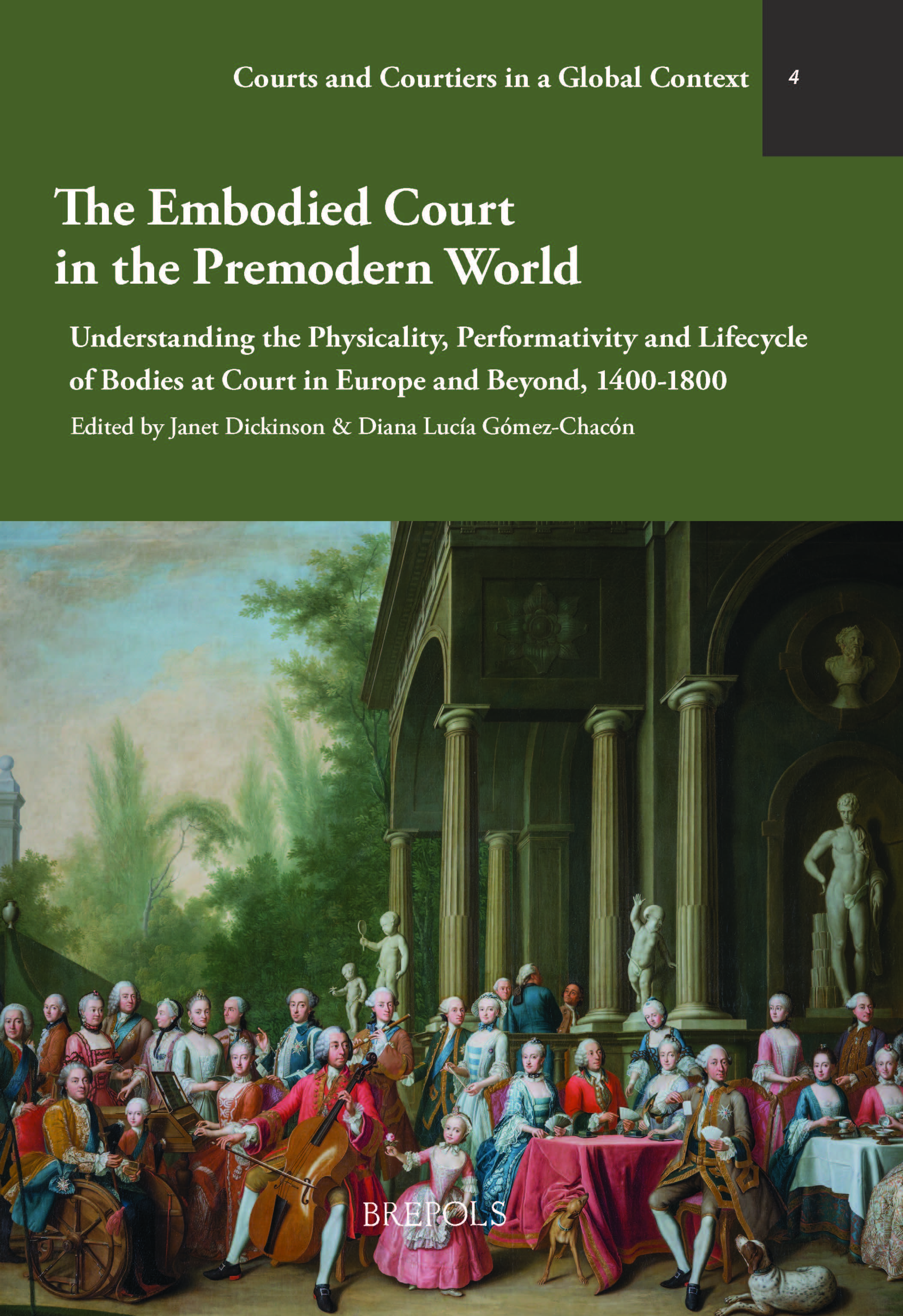 The Embodied Court in the Premodern World
Understanding the Physicality, Performativity and Lifecycle of Bodies at Court in Europe and Beyond, 1400-1800
Volume 4