
Reformations
Three Medieval Authors in Manuscript and Movable Type
By (author) Rebecca L Schoff

This volume discusses the key shift from manuscript to print culture in the history of books, taking The Canterbury Tales, The Book of Margery Kempe, and Piers Plowman as models of the way in which a medieval text’s unique tradition influenced its transition from manuscript to print. The forces of the Reformation era did not produce the same effect across the varied textual legacy of the Middle Ages. Every text that made the transition from manuscript to print brought with it a set of concerns, a tendency to address a particular readership in particular ways, a physical presence developed in manuscript culture, all of which might shape the pathways by which a text might arrive in print, and what it might look like when it got there. This study follows The Canterbury Tales, The Book of Margery Kempe, and Piers Plowman from their circulation in manuscript to their presentation in print, in order to track how each of them survived the metamorphosis of the relationship between writers and readers as the new technology was introduced. Taken together, the three case studies demonstrate to scholars of any medieval literature the variety of possible impacts made when texts composed in manuscript culture were prepared for printing. The great force exerted by the technological and cultural developments of the English Reformation, not least the more centralized legislative regulation of the press, has long been central to the study of the history of books. This volume takes into account the ways in which individual textual traditions pushed back or accelerated the forces of early modern reform, producing their own plural reformations.
This volume discusses the key shift from manuscript to print culture in the history of books, taking The Canterbury Tales, The Book of Margery Kempe, and Piers Plowman as models of the way in which a medieval text’s unique tradition influenced its transition from manuscript to print. The forces of the Reformation era did not produce the same effect across the varied textual legacy of the Middle Ages. Every text that made the transition from manuscript to print brought with it a set of concerns, a tendency to address a particular readership in particular ways, a physical presence developed in manuscript culture, all of which might shape the pathways by which a text might arrive in print, and what it might look like when it got there. This study follows The Canterbury Tales, The Book of Margery Kempe, and Piers Plowman from their circulation in manuscript to their presentation in print, in order to track how each of them survived the metamorphosis of the relationship between writers and readers as the new technology was introduced. Taken together, the three case studies demonstrate to scholars of any medieval literature the variety of possible impacts made when texts composed in manuscript culture were prepared for printing. The great force exerted by the technological and cultural developments of the English Reformation, not least the more centralized legislative regulation of the press, has long been central to the study of the history of books. This volume takes into account the ways in which individual textual traditions pushed back or accelerated the forces of early modern reform, producing their own plural reformations.
- By (author) Rebecca L Schoff
Other Titles in this Series


 Alchemy, Medicine, and Commercial Book Production
A Codicological and Linguistic Study of the Voigts-Sloane Group of Middle English Manuscripts
Volume 9


 The Making of the Vernon Manuscript
The Production and Contexts of Oxford, Bodleian Library, MS Eng. poet. a. 1
Volume 6
 Female Authorship, Patronage, and Translation in Late Medieval France
From Christine de Pizan to Louise Labe
Volume 13
Similar Books
 A Collaborative Tapestry in Honour of Shirley Ann Brown / Une fresque brodée en l’honneur de Shirley Ann Brown
The Bayeux Tapestry Seen by her Colleagues and Friends / La Tapisserie de Bayeux vue par ses collègues et amis

 Behind the Scenes of Medieval Roofs
An Overview of the Roofing Systems of Italian Churches
Volume 90








 Innovation and Medieval Communities
The Circulation of Ideas and Practices in and out of the Town (1200-1500)
Volume 63
 John Dunstaple Reading Boethius
John Dunstaple’s Annotations to Boethius’s “De institutione musica” in the Manuscript Oxford, Corpus Christi College Library, MS 118
 Linguistic and Cultural Dynamics in a Frontier Society
New Perspectives on Northeastern Bavaria and Western Bohemia in the Early Middle Ages
Volume 9

 Medieval Debates on Foreknowledge: Future Contingents, Prophecy, and Divination
Acts of the XXVII Annual Colloquium of the SIEPM, Trento 12-15 September 2023
Volume 31
 Medieval Yeghegis, Armenia
History, Archaeology, Society. Local Multiplicities and Global Connections of a Rural Centre on the Silk Road(s)




 Power and Women in Southeast and Central Europe in Late Medieval and Early Modern Period (1300-1600)
Volume 10



 The Anglo-Norman Bible’s Books of Kings, a Critical Edition
(BL Royal 1 C III, fols 234r-274v)
Volume 37


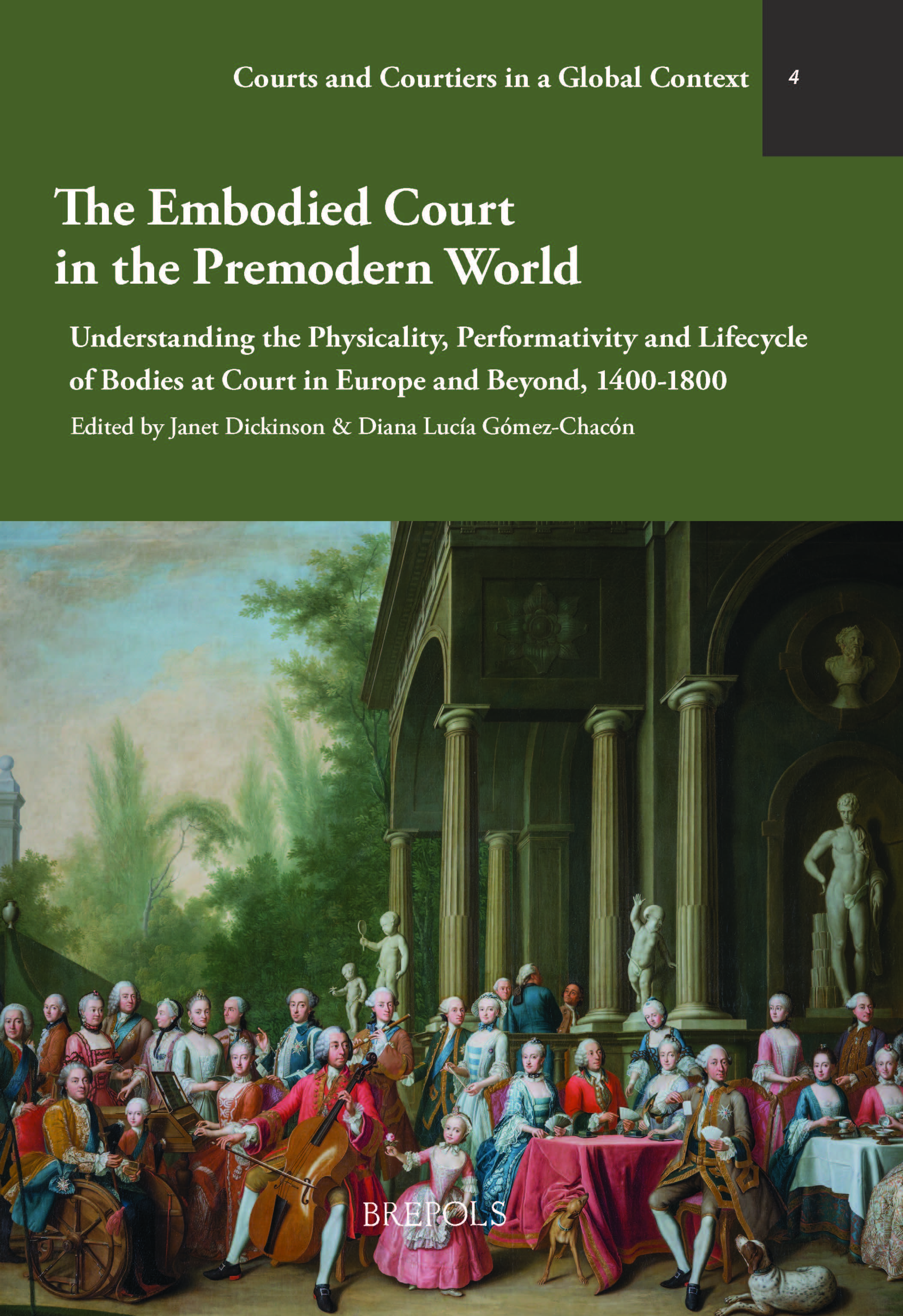 The Embodied Court in the Premodern World
Understanding the Physicality, Performativity and Lifecycle of Bodies at Court in Europe and Beyond, 1400-1800
Volume 4


