
Rächer und Gerächte
Konzeptionen, Praktiken und Loyalitäten der Rache im Spiegel der attischen Tragödie
By (author) Bernadette Descharmes Series edited by Ronald G. Asch Series edited by Sabine Dabringhaus Series edited by Hans-Helmuth Gander Series edited by Dietmar Neutatz

Hardback (Published)
(April 2013)
ISBN: 9783847101055
6.46 x 9.69 inches
Price: $94.00
On back order
Wie rachten sich die alten Griechen? Warum und wofur? Diesen Fragen widmet sich die Autorin, indem sie am Beispiel der attischen Tragodientexte ein Spektrum antiker Denk- und Handlungsmuster aufzeigt. Sie geht von einer Analyse des griechischen Vokabulars aus und beleuchtet die Regeln des Vergeltens, emotionale und religiose Begleiterscheinungen sowie unterschiedliche Gewaltformen, die sich in den Tragodien widerspiegeln. Im antiken Verstandnis erzeugt Rache aber nicht nur feindliche Beziehungen. Rache wird auch als Praxis verstanden, in der sich Verwandtschafts- und Freundschaftsbeziehungen bestatigen.
English summary: Vengeance in ancient Greece – how did it look like? Who took revenge, why and for whom? Using the example of Attic tragedy texts, the book investigates these questions by analysing patterns of thought and practice. Starting with an exploration of the Greek vocabulary of revenge, Bernadette Descharmes shows that revenge can be perfectly defined as justice as well as punishment, protection or obligation of honour. She inquires the rules of revenge, emotional and religious implications and different acts of violence as presented in tragedy. The book not only illuminates the fatal consequences resulting from betrayal and violence within families and friendship ties, but it also enlightens obligations of loyalty among kin and friends. After all, in ancient thought, revenge is not only a practice generating hostile relationships. “Help your friend and harm your enemy” is also a guideline that defines revenge as an act affirming kinship and friendship. German description: Auf welche Weisen rachten sich die alten Griechen? Warum und fur wen? Diesen Fragen widmet sich die Autorin, indem sie am Beispiel der attischen Tragodientexte ein Spektrum antiker Denk- und Handlungsmuster aufzeigt. Sie geht von einer Analyse des griechischen Vokabulars aus, das den Racher mitunter als Retter und Rache als Recht konzipiert, und beleuchtet die Regeln des Vergeltens, emotionale und religiose Begleiterscheinungen sowie unterschiedliche Gewaltformen, die sich in den Tragodien widerspiegeln. Dem antiken Verstandnis nach erzeugt Rache aber nicht nur feindliche Beziehungen. Entsprechend der Maxime Hilf deinen Freuden, und schade deinen Feinden! wird Rache auch als Praxis verstanden, in der sich Verwandtschafts- und Freundschaftsbeziehungen bestatigen. Die Autorin nimmt demnach nicht nur die fatalen Auswirkungen von Gewalt und Verrat zwischen Freunden und Verwandten in den Blick. Sie beleuchtet auch die Loyalitatsanforderungen innerhalb dieser Beziehungskonstellationen.
Dr. Bernadette Descharmes arbeitet als Wissenschaftliche Mitarbeiterin am Historischen Seminar der Technischen Universität Braunschweig.
- By (author) Bernadette Descharmes
- Series edited by Ronald G. Asch
- Series edited by Sabine Dabringhaus
- Series edited by Hans-Helmuth Gander
- Series edited by Dietmar Neutatz
Other Titles in this Series

 Die Dynamik der Freundschaft
Eine philosophische Untersuchung der Konzeptionen Montaignes, La Rochefoucaulds, Chamforts und Foucaults


 Zwischen Vertrauen und Verrat
Deutschsprachige kommunistische Intellektuelle und ihre sozialen Beziehungen (1918–1960)
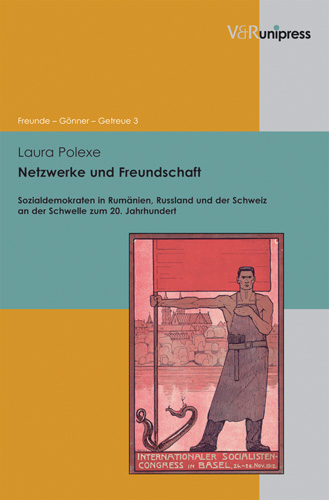 Netzwerke und Freundschaft
Sozialdemokraten in Rumänien, Russland und der Schweiz an der Schwelle zum 20. Jahrhundert
 Nahbeziehungen zwischen Freundschaft und Patronage
Zur Politik und Typologie affektiver Vergemeinschaftung

 Politische Freundschaft bei Hofe
Repräsentation und Praxis einer sozialen Beziehung im französischen Adel des 17. Jahrhunderts

Similar Books


 Contesting Labeled Identities
The Sociology of Gentilics in Biblical and Northwest Semitic Literature

 Drunk the Potion, No Whit Charmed
The Doctrine of Pure and Perfect Souls from Iamblichus to Damascius

 Epigraphic “Shades” from Hellenistic Thrace
Contextualizing Inscriptions in Greek from Thracian Tombs

 Epiphanies of the Divine in the Septuagint and the New Testament
Fifth International Symposium of the Corpus Judaeo-Hellenisticum Novi Testamenti (CJHNT), 14-17 May 2015, Nottingham


 Gold, Silver and Glass: Power Networks, Cultural Identities, Technology Transfers and Agency across the Old World (7th Century BC – 1st Century AD)
Proceedings of a Conference Held at the British Museum, 16–18 June 2023
 Language and Power in the Roman Empire and Early India
Hierarchy, Ambiguity, and the Art of Reading the Signs in Cosmopolitan Cultures
 Late Antique villae in the Balkans (3rd–7th c. AD): Current Research Questions and Perspectives
HAEMUS Companion to the Late Antique Balkans 1
Volume 4


 Nurturing the Elite
Representations of Drinking, Eating, and Religious Vessels in Palmyrene Funerary Iconography
Volume 13





 Roman Copies, Collecting, and Culture in the Bay of Naples and Beyond
Papers in Honor of Eugene J. Dwyer



 The Compositional History of the Book of Kings
An Analysis of the Evaluative Frameworks in 1 Kings 14–2 Kings 25




 Zooarchaeology of Ancient Greek Sanctuaries in Southwestern Sicily
Faunal Analysis from Selinus and Akragas as Evidence of Differences in the Treatment of Animals for Ritual Purposes


