
People from the Desert
Pre-Islamic Arabs in History and Culture
Edited by Nader Al Jallad

Hardback (Published)
(March 2012)
ISBN: 9783895008726
6.69 x 9.45 inches
Price: $152.00
In stock
“People from the Desert. Pre-Islamic Arabs in History and Culture” provides a collection of text-based studies that investigate different aspects of the history, culture and literature of the pre-Islamic period. It presents detailed studies of the poetry of Imruʼl-Qays, al-Shanfara, ʻAntarah, al-Khansaʼ and more. It also offers in-depth studies of We pre-Islamic religions, narratives, trade, women, the concepts of life and death and much more.<br/><br/>
To explore Pre-Islamic Arabia is quite a challenge for two reasons. First, the written sources which provide us with a historical account of the period are essentially written by non-local (e.g., Greeks, Romans) historians rather than Arabs. Pre-Islamic texts, essentially poetry, are perhaps the only ancient Arab documents that help us understand the history of that period. Second, the puzzling almost paradoxical structure of the Pre-Islamic society makes it even more challenging to analyze it or give a logical account of it. This explains the importance of this book. People from the Desert: Pre-Islamic Arabs in History and Culture represents a significant contribution to Arabic pre-Islamic culture and literature. The book provides a variety of studies that address different aspects of the history, culture and literature of the period. Some of the contributions focus on pre-Islamic religions while others explore trade, women, and literature. A number of well-known pre-Islamic poets are studied, such as Imru’ l-Qays, Antarah and al-Khansa’. The 13 scholars who participate in this book come from different countries (Egypt, Germany, Greece, Jordan, South Africa, Spain), as well as different disciplines (Linguistics, Literature, History of the Middle East, Arabic and Islamic Studies), representing a rich variety of ideas, perspectives and research-approaches used in the book. What they all have in common is that their studies are text based. This book is the second of the series Textualia: Jews, Christians and Muslims in their texts, which is dedicated for the text-based study of the culture of each of these three religions and the complex multiculturalism produced by the co-existence of these different religions through history. The present book is yet another attempt to approach an era where Christians, Jews and Pre-Islamic people lived and co-lived based on the texts produced during that era. The book can be of great interest for Arabists everywhere, the students of Arabic as a native language or a foreign language, students and professors of Arabic culture and literature, the students at departments of Semitic studies, Islamic studies and Middle Eastern studies at all universities. It can be also of interest for scholars studying geography, history and literature in general. The contributions presented in this book are simply eye opening, whetting our appetite for more. They definitely demonstrate that this period of Arab history is still almost a virgin field of study, providing various research ideas to pursue.
- Edited by Nader Al Jallad
Other Titles in this Series

Similar Books


 Cities through Time
Glimpses into Urbanity and Community in Mediaeval to Modern West Asia and Egypt
Volume 1
 Connecting the Dots: Counting, Writing, and the Beginnings of Civilization
The Secret Lives of Clay Tokens: A Memoir
 Cuneiform Artefacts from Archaeological Contexts: New Research on Ancient Iraq
Proceedings of a Conference Held at the Bavarian Academy of Sciences and Humanities, July 4–5, 2024
Volume 2


 Global Gulf
Geo-Economic, Geo-Political, and Geo-Technological Transformation in Saudi Arabia, the United Arab Emirates, and Qatar
 Ḫattušaš utnē išḫameški
Hittite and Other Ancient Near Eastern Studies Presented to Piotr Taracha on the Occasion of His 65th Birthday

 Ismail Hakki Bursevi’s translation of and commentary on Fusus al-Hikam By Muhyiddin Ibn ‘Arabi
Volumes 1-4
 Monastic Manuscripts from the Eastern Mediterranean (Sinai, Jerusalem, Antioch)
Production, Use, and Contexts
 New Research on Old Collections in Southwest Asian Archaeology
Proceedings of the Workshop Held at the British Museum, London, 31 July – 2 August, 2023
 Old Aramaic Inscriptions and their Contexts
An Epigraphic, Archaeological, and Historical Synthesis
Volume 63


 Punning in Odd or Elegant Constructions in Jeremiah
The Convergence of Linguistics, Rhetoric, and Textuality in the Hebrew Text of Jeremiah
 Qatar’s Societal Security
Towards the Inclusive National Concept of ‘Baladna’ Identity, Migration and External Threats Since 2017
 Shame in the Worlds of the Hebrew Bible and Akkadian Texts
A Linguistic Study and Its Implications
Volume 33
 Telling Contexts
Archaeological and Textual Studies in Honor of Elizabeth Bloch-Smith and Mark S. Smith
 The Body
Lived, Cultured, Adorned: Essays on Dress and the Body in the Bible and Ancient Near East in Honor of Nili S. Fox
 The Discourse of Rites
Shaping and Reshaping the (Counter-)Priestly Rituals Conducted Outside the Tabernacle


 »Ein elend-schönes Land«
Gattung und Gedächtnis in Lea Goldbergs hebräischer Literatur. Aus dem Hebräischen von Rainer Wenzel
 Die Entwicklung erdbebensicherer Bautechniken in der Frühen und Mittleren Eisenzeit in Ostanatolien
Volume 11
 Die JHWH-Religion und die Vorstellung göttlicher Gesetzgebung
Überschneidungen zwischen der Rechtsentwicklung und der Sphäre der Religion in der Geschichte des antiken Israel und Juda

 Kultur – Kontakt – Kultur
Beiträge anlässlich der 66. Rencontre Assyriologique Internationale in Frankfurt/Main und Mainz, 25.–29. Juli 2022
Volume 35
 Meine arabischen Freunde
Geschichten aus dem Maghreb für Aufklärung - gegen Islamismus und Unfreiheit

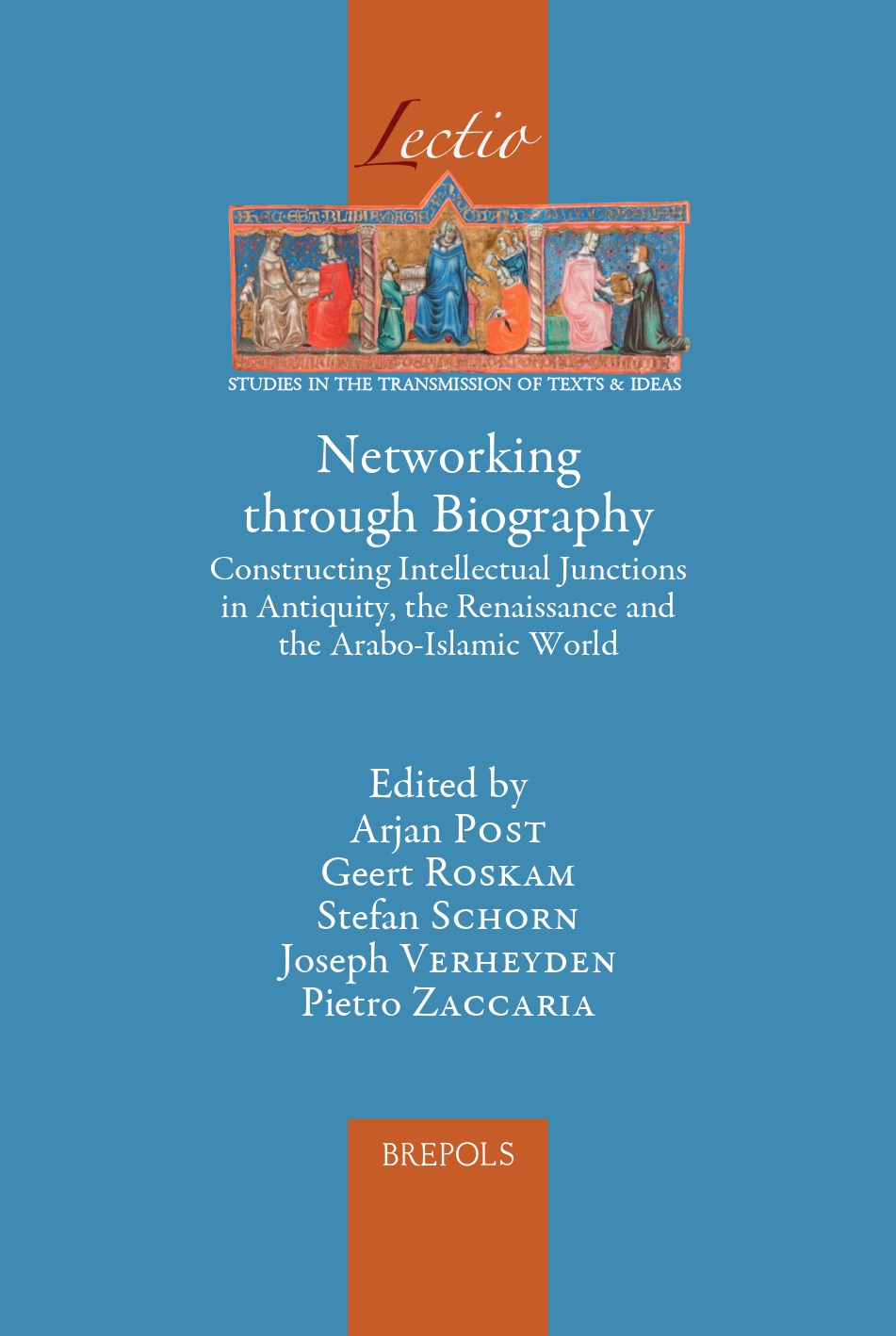 Networking through Biography
Constructing Intellectual Junctions in Antiquity, the Renaissance and the Arabo-Islamic World
Volume 19
 Sprachwissenschaftliche und kulturhistorische Reflexionen
Festschrift zu Ehren von Jörg Klinger
Volume 31