Outsiders and Forerunners
Modern Reason and Historiographical Births of Medieval Philosophy
Edited by Catherine Konig-Pralong Edited by Mario Meliado Edited by Zornitsa Radeva

This book focuses on the emergence and development of philosophical historiography as a university discipline in the 18th and 19th centuries. During that period historians of philosophy evaluated medieval philosophical theories through the lenses of modern leitmotifs and assigned to medieval thinkers positions within an imaginary map
This book focuses on the emergence and development of philosophical historiography as a university discipline in the 18th and 19th centuries. During that period historians of philosophy evaluated medieval philosophical theories through the lenses of modern leitmotifs and assigned to medieval thinkers positions within an imaginary map of cultural identities based on the juxtaposition of ‘self’ and ‘other’. Some medieval philosophers were regarded as ‘forerunners’ who had constructively paved the way for modern rationality; whereas others, viewed as ‘outsiders’, had contributed to the same effect by way of their struggle against established forms of philosophy. The contributions gathered in this volume each deal with the creative reception of a particular figure in modern history of philosophy. From the 9th century, with al-Farabi, to the 16th century, these philosophers belong to four historical worlds which have been characterized by European cultural history or have defined themselves as such: the (Jewish-)Arabic world (al-Farabi, Avicenna, Maimonides), Latin scholasticism (Roger Bacon, Henry of Ghent, William of Ockham, Marsilius of Padua), medieval lay philosophy (Ramon Lull, Petrarch), and Humanism in a broader sense (Nicholas of Cusa, Petrus Ramus, Andrea Cesalpino).
- Edited by Catherine Konig-Pralong
- Edited by Mario Meliado
- Edited by Zornitsa Radeva
Other Titles in this Series

 Shaping Authority
How did a person become an authority in Antiquity, the Middle Ages and the Renaissance?
Volume 4


 Students, Scholars and Their Books at the University of Louvain (1425-1797)
Studium Lovaniense: Learning across Borders, 1
Volume 17

 Innovationes Lovanienses: Arts, Law and Theology at the University of Louvain (1425–1797)
Studium Lovaniense: Learning across Borders, 2
Volume 18

 Networking through Biography
Constructing Intellectual Junctions in Antiquity, the Renaissance and the Arabo-Islamic World
Volume 19
 Towards the Authority of Vesalius
Studies on Medicine and the Human Body from Antiquity to the Renaissance and beyond
Volume 6


 Le pere du siecle
The Early Modern Reception of Jean Gerson (1363-1429): Theological Authority between Middle Ages and Early Modern Era
Volume 14


 On Good Authority
Tradition, Compilation and the Construction of Authority in Literature from Antiquity to the Renaissance
Volume 3
Similar Books
 A Collaborative Tapestry in Honour of Shirley Ann Brown / Une fresque brodée en l’honneur de Shirley Ann Brown
The Bayeux Tapestry Seen by her Colleagues and Friends / La Tapisserie de Bayeux vue par ses collègues et amis

 Behind the Scenes of Medieval Roofs
An Overview of the Roofing Systems of Italian Churches
Volume 90




 Drunk the Potion, No Whit Charmed
The Doctrine of Pure and Perfect Souls from Iamblichus to Damascius



 Innovation and Medieval Communities
The Circulation of Ideas and Practices in and out of the Town (1200-1500)
Volume 63
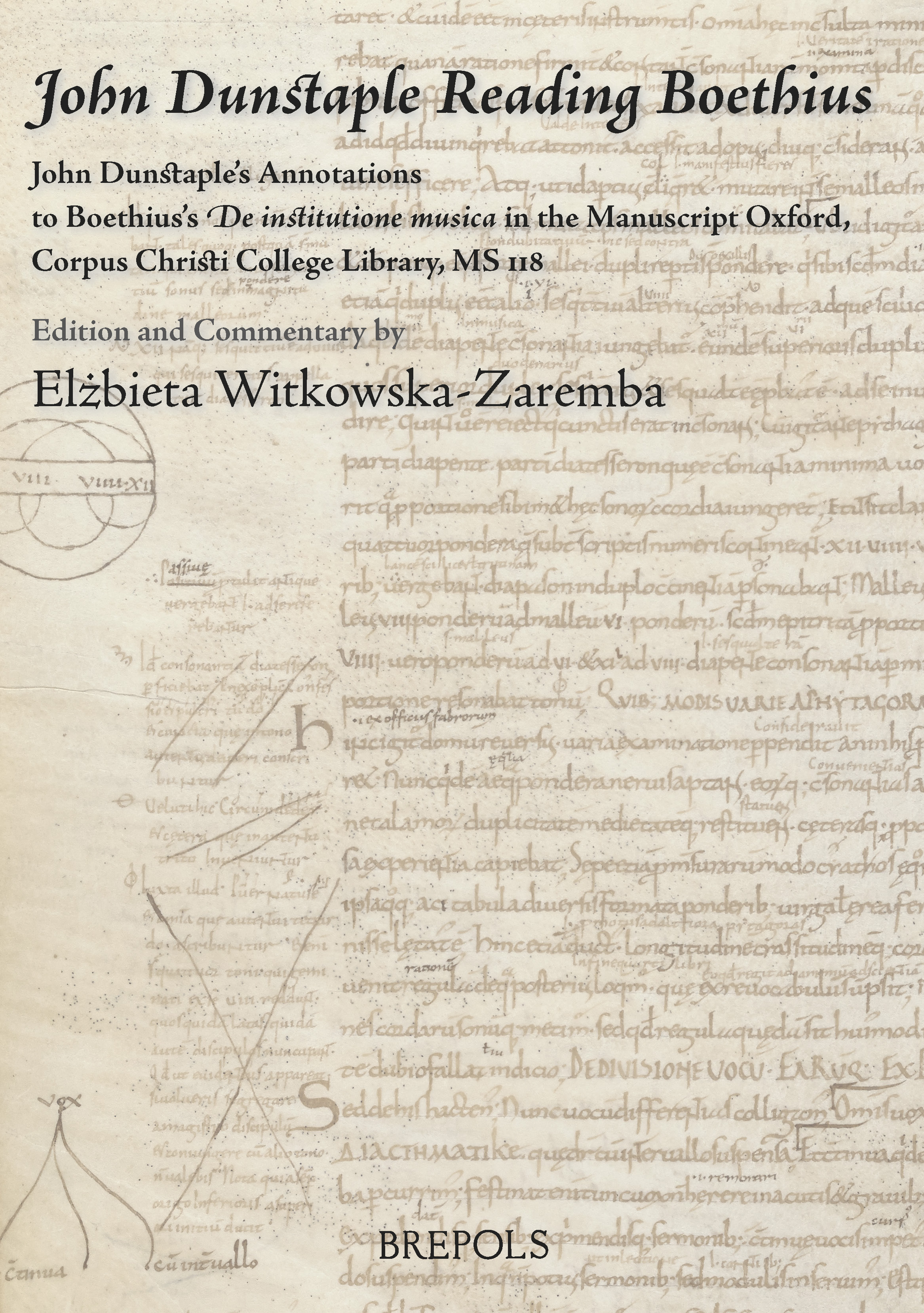 John Dunstaple Reading Boethius
John Dunstaple’s Annotations to Boethius’s “De institutione musica” in the Manuscript Oxford, Corpus Christi College Library, MS 118
 Libertinage et philosophie à l’époque classique (XVIe-XVIIIe siècle)
Athéisme, Modernité et Sécularisation / Atheism, Modernity and Secularization
Volume 23
 Linguistic and Cultural Dynamics in a Frontier Society
New Perspectives on Northeastern Bavaria and Western Bohemia in the Early Middle Ages
Volume 9
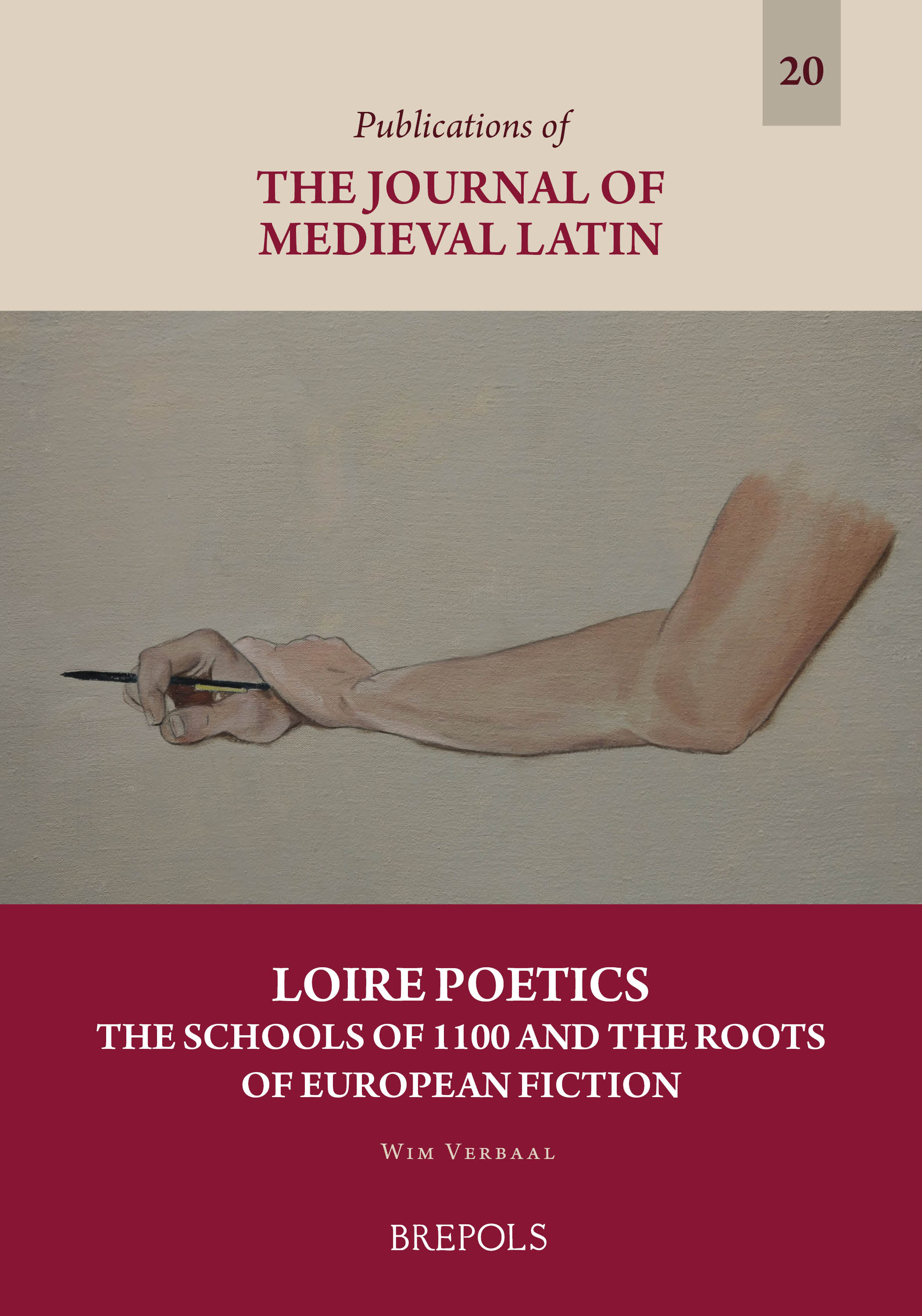
 Medieval Debates on Foreknowledge: Future Contingents, Prophecy, and Divination
Acts of the XXVII Annual Colloquium of the SIEPM, Trento 12-15 September 2023
Volume 31
 Medieval Yeghegis, Armenia
History, Archaeology, Society. Local Multiplicities and Global Connections of a Rural Centre on the Silk Road(s)



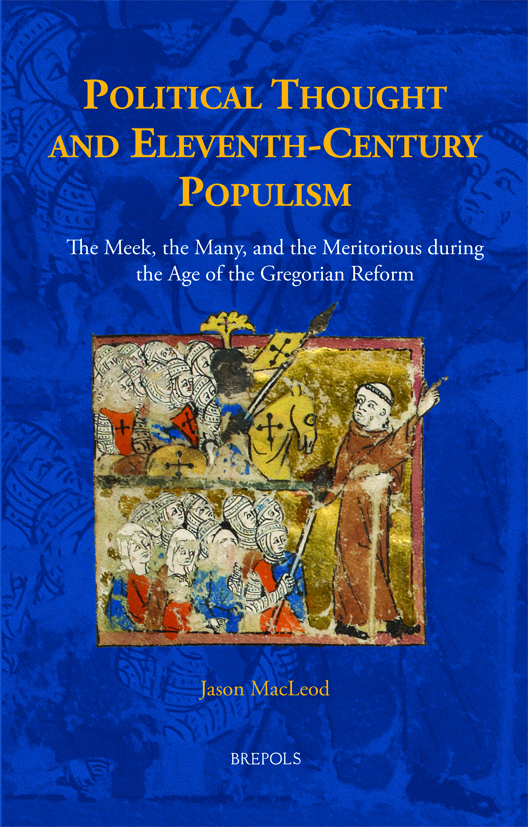 Political Thought and Eleventh-Century Populism
The Meek, the Many, and the Meritorious during the Age of the Gregorian Reform
Volume 38