
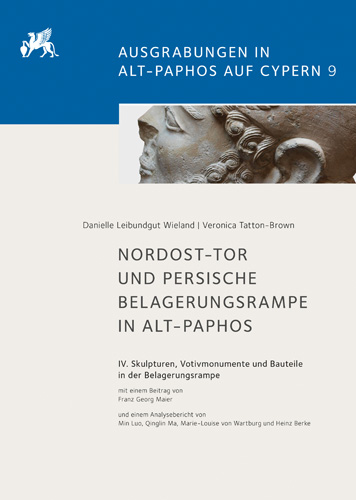
Nordost-Tor und persische Belagerungsrampe in Alt-Paphos
IV. Skulpturen, Votivmonumente und Bauteile in der Belagerungsrampe
By (author) Danielle Leibundgut Wieland By (author) Veronica Tatton-Brown Edited by Marie-Louise von Wartburg
Hardback (Published)
(November 2019)
ISBN: 9783954904105
8.27 x 11.69 inches
Price: $147.00
In stock
For the history and archaeology of the city of Palaipaphos (Old Paphos) on Cyprus, the Persian siege ramp at the Northeast Gate on the Marcello plateau is of immense interest. Since the ramp was heaped up in the context of a military siege dated to shortly after 500 BC, it forms a unique chronological reference point for Archaic Cyprus. Built into the ramp were fragments of a deliberately-destroyed sanctuary, together with its votive offerings. This volume presents the unusual assemblage in its entirety for the first time and examines its archaeological and art-historical significance. <br/>
English summary: For the history and archaeology of the city of Palaipaphos (Old Paphos) on Cyprus, seat of the kings of Paphos and famous for its large sanctuary of Aphrodite, the Persian siege ramp at the Northeast Gate on the Marcello plateau is of immense interest. Here, in a dominant position above the city, the monumental gate and a section of the defensive walls, with a tower and a dry ditch, form a key point in the ancient defences of the city. Fire debris, weapon finds and a mighty siege ramp bear witness to a war which took place shortly after 500 BC. In the heaped-up rubble of the ramp, fragments came to light of a sanctuary which had been deliberately destroyed to build the ramp and which must have stood outside the city. The original location and ground plan of the sanctuary can no longer be traced, but it has been possible to determine the nature of its architecture and some of the interior furnishings. This unusual assemblage, for which a terminus ante quem is provided by the siege, includes some of the finest Archaic sculptures found on Cyprus, along with votive stelai, small altars, blocks bearing inscriptions, stone implements, and architectural elements, including large palm capitals, moulded cornices and blind windows with balustrades. It is thought that the sanctuary was dedicated to a powerful tutelary god and to Aphrodite, goddess of Paphos. Its situation, close to the monumental Northeast Gate, its sculptural ornamentation, and the choice of pictorial motifs for the votive offerings not only indicate the high status of this cult site but show that it was closely connected with the king of Paphos and the city’s elite. Notable amongst the statuary are male figures wearing royal insignia and robes which were probably reserved for religious ceremonies. These include a particularly striking bearded head which is interpreted as a ceremonial portrait of one of the priest-kings of Paphos. His crown and hair style combine elements of Egyptian and Assyrian/Persian symbols of rulership. German description: Fur die Geschichte und Archaologie der Stadt Alt-Paphos auf Cypern, Sitz der paphischen Konige und beruhmt fur das grosse Aphrodite-Heiligtum, ist die persische Belagerungsrampe beim Nordost-Tor auf dem Marchellos-Plateau von hochstem Interesse. Hier, in dominanter Position uber der Stadt, bilden das monumentale Tor, ein Teil der Wehrmauern mit Turm und ein Trockengraben einen Schlusselpunkt der antiken Stadtbefestigung. Brandreste, Waffenfunde und eine machtige Belagerungsrampe zeugen von einem Krieg, der kurz nach 500 v. Chr. stattgefunden hat. In der Rampenaufschuttung kamen Trummer eines zum Bau der Rampe mutwillig abgebrochenen Heiligtums zutage, das ausserhalb der Stadt gestanden haben muss. Ursprungliche Lage und Grundriss der Kultstatte lassen sich nicht mehr bestimmen, doch ist es gelungen, den baulichen Charakter und Teile der Innenausstattung zu erfassen. Zum ungewohnlichen Fundkomplex, dessen spatestmogliches Datum durch die Belagerung gegeben ist, gehoren einige der qualitatvollsten auf Cypern gefundenen archaischen Skulpturen, ausserdem Votivstelen, kleine Altare, Inschriftblocke, Steingerate und Bauteile, darunter grosse Palmkapitelle, profilierte Gesimse und Scheinfenster mit Balustrade. Der Standort des vermutlich einem machtigen Schutzgott und der paphischen Aphrodite geweihten Heiligtums in der Nahe des monumentalen Nordost-Tores, seine Bauornamentik und die Wahl der Bildmotive fur die Weihgaben machen deutlich, dass die Kultstatte einen hohen Rang und zudem eine enge Verbindung zum paphischen Konig und der Elite hatte. Bemerkenswert sind mannliche Statuen mit koniglichen Insignien und Gewandern, die wahrscheinlich nur im Kult getragen wurden, darunter besonders herausragend ein bartiger Kopf, der als zeremonielles Portrat eines Priesterkonigs von Paphos gedeutet wird. Seine Krone und Haartracht vereinen Elemente agyptischer und assyrisch-persischer Herrschaftssymbolik.
- By (author) Danielle Leibundgut Wieland
- By (author) Veronica Tatton-Brown
- Edited by Marie-Louise von Wartburg
Similar Books


 Behind the Scenes of Medieval Roofs
An Overview of the Roofing Systems of Italian Churches
Volume 90
 Caesar’s Visions and Impact on the Roman Empire
Revisiting the Archaeological and Historical Record of the 40s BC
Volume 2

 Circulation, Use, Impact
The Consumption of Architectural Books in the Early Modern Eastern Adriatic
Volume 1


 Drunk the Potion, No Whit Charmed
The Doctrine of Pure and Perfect Souls from Iamblichus to Damascius

 Epiphanies of the Divine in the Septuagint and the New Testament
Fifth International Symposium of the Corpus Judaeo-Hellenisticum Novi Testamenti (CJHNT), 14-17 May 2015, Nottingham


 Etruscan and Roman Hellenistic Anatomical ex votos
Reassessing Popular Religious Expressions in Central Italy
Volume 8




 Invisible Labour in Antiquity
Visualizing Obscure Work in the Ancient Mediterannean and West Asia
Volume 1
 Language and Power in the Roman Empire and Early India
Hierarchy, Ambiguity, and the Art of Reading the Signs in Cosmopolitan Cultures
 Late Antique villae in the Balkans (3rd–7th c. AD): Current Research Questions and Perspectives
HAEMUS Companion to the Late Antique Balkans 1
Volume 4


 Nurturing the Elite
Representations of Drinking, Eating, and Religious Vessels in Palmyrene Funerary Iconography
Volume 13


 Portraying the Individual in the Roman East
Local–Imperial Entanglements in Sculpture, Mosaics, and Paintings (First–Fourth Centuries AD)
Volume 18

 Small Worlds and Relational Agencies: Local Societies in Early Medieval Iberia
Pequeños mundos y Agencias relacionales: Sociedades locales altomedievales en la Península Ibérica

 The Compositional History of the Book of Kings
An Analysis of the Evaluative Frameworks in 1 Kings 14–2 Kings 25


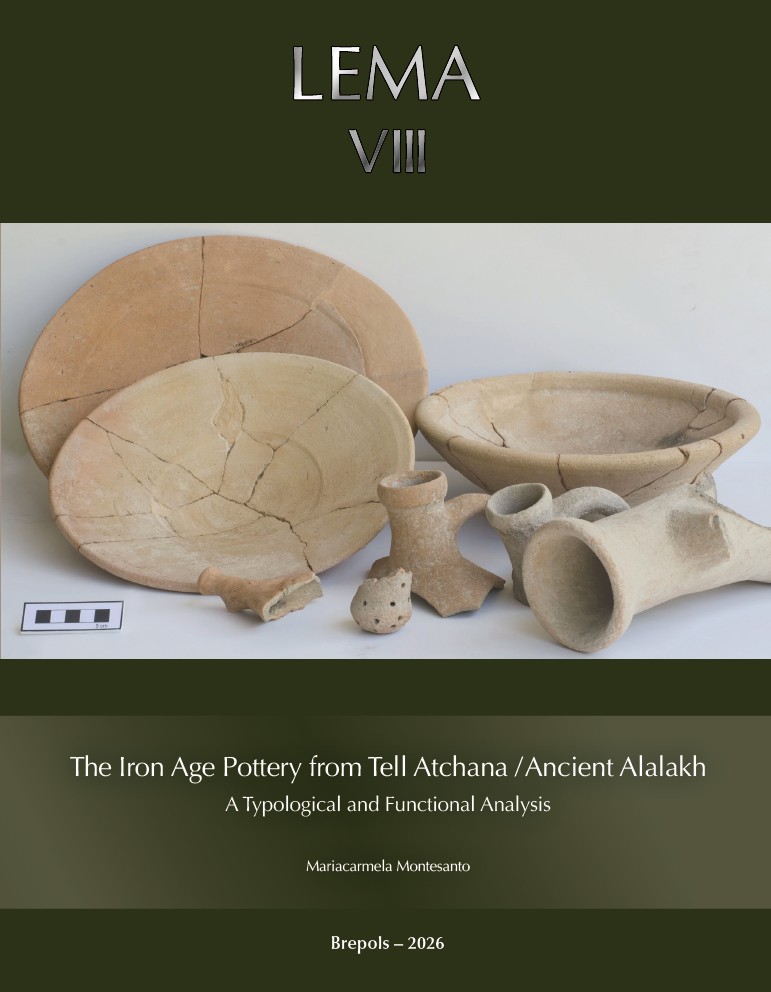 The Iron Age Pottery from Tell Atchana / Ancient Alalakh
A Typological and Functional Analysis
Volume 8



 Visual Memory and Oblivion
Monuments and Conflicts in Urban Spaces in Central and Eastern Europe from the Nineteenth Century to the Present Day
