
Murder, Rape, and Treason
Judicial Combats in the Late Middle Ages
by Steven Muhlberger and Will McLean

Paperback (Published)
(November 2019)
ISBN: 9781937439415
6.97 x 10 inches
Price: $29.95
In stock
Murder, Rape and Treason: Judicial Combats in the Late Middle Ages contains accounts of some of the most sanguine, unusual or controversial judicial duels of the late Middle Ages. These duels-formal, limited combats-are among the best-known medieval deeds of arms, and were an important part of late medieval warrior culture.
Deeds of arms – formal, limited combats – were an important part of late medieval warrior culture, allowing men-at-arms the chance to display their identities and establish their martial worth before an audience that included their peers, their lords and captains, and the ladies who inspired them. Among the most interesting, unusual and prominent deeds of arms were the judicial duels of the late Middle Ages (14th and 15th centuries). The word “duel” suggests to modern audiences a conflict over honor, but although medieval trials by combat were likewise concerned with issues of reputation and shame, their purpose was judicial: a method of reaching a verdict when other methods could not. If evidence or testimony was not clear or was rejected by participants in a legal case, one could always turn to God. But there was, in fact, no guarantee of clarity even in the case of the duel, and unlike their portrayal in popular media, it was rare for duels to be fought to a lethal conclusion. A settlement was often negotiated before the trial was ever fought, or halted by the judge in mid-combat before either combatant could be slain. For a millennium, the trial by battle had been a fairly routine part of law enforcement in many parts of Europe, but by the second half of the 13th century, they were increasingly restricted to adjudicating guilt for capital crimes such as murder, rape, and treason. Yet even as such combats became increasingly rare, their scarcity lent them an aura of prestige, making the late 14th century a golden age for duels, drawing a great deal of popular, clerical and legal attention. The cases in which duels were approved were often controversial, as was the legal procedure itself. Was the result of a judicial combat truly an expression of the will of God? Medieval lawyers and ordinary observers often had their doubts. The controversies surrounding duels resulted in a number of late medieval duels being recorded in some detail. These duels are therefore among the best-known medieval deeds of arms, and accounts of some of the most sanguine, unusual or controversial are contained herein.
- By (author) Freelance Academy Press
Similar Books
 A Collaborative Tapestry in Honour of Shirley Ann Brown / Une fresque brodée en l’honneur de Shirley Ann Brown
The Bayeux Tapestry Seen by her Colleagues and Friends / La Tapisserie de Bayeux vue par ses collègues et amis
 Behind the Scenes of Medieval Roofs
An Overview of the Roofing Systems of Italian Churches
Volume 90






 Innovation and Medieval Communities
The Circulation of Ideas and Practices in and out of the Town (1200-1500)
Volume 63
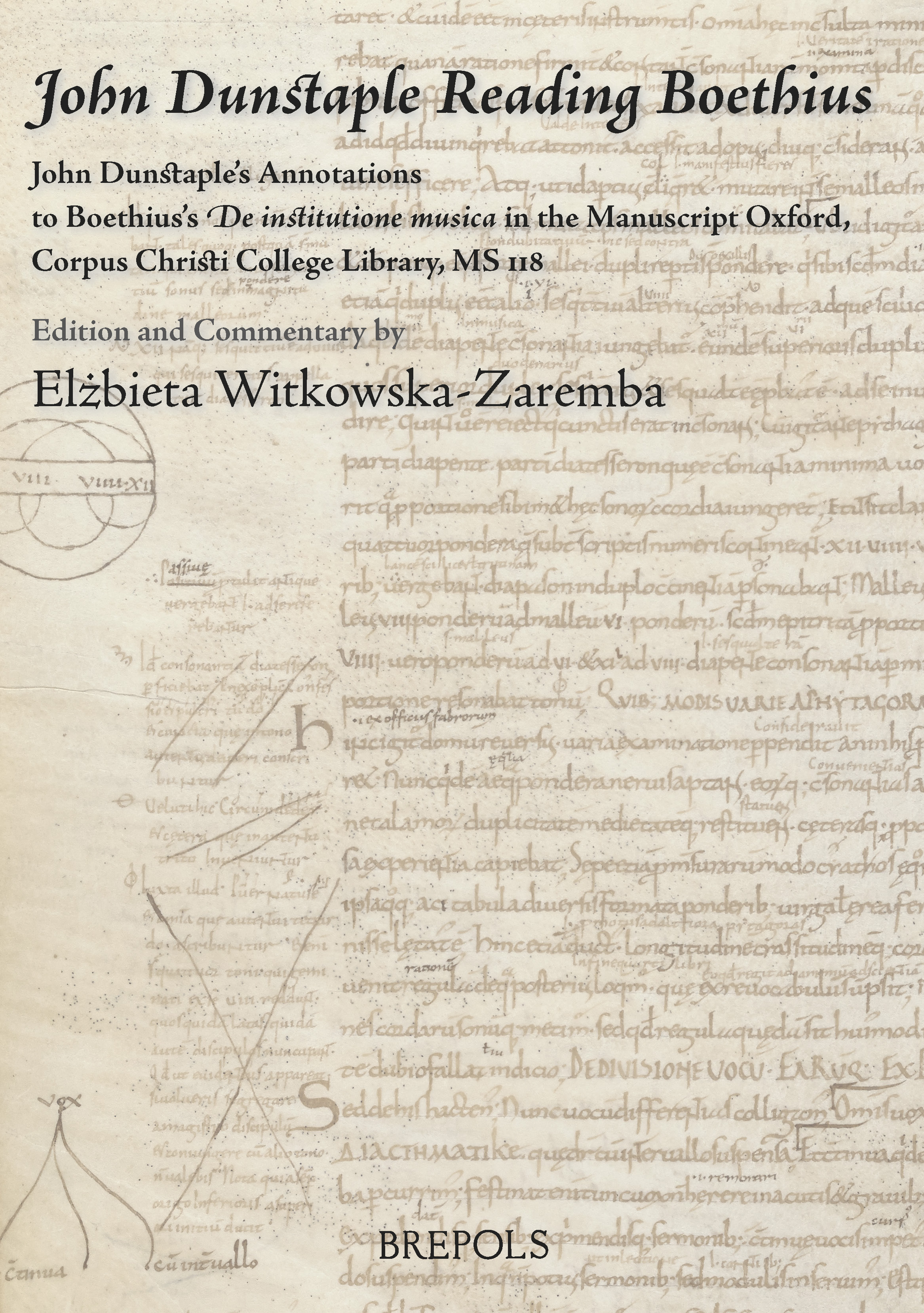 John Dunstaple Reading Boethius
John Dunstaple’s Annotations to Boethius’s “De institutione musica” in the Manuscript Oxford, Corpus Christi College Library, MS 118
 Legal Pluralism and the Tajik Experience of Xinjiang
Between Custom and the Chinese State: An Ethnographic Perspective
 Linguistic and Cultural Dynamics in a Frontier Society
New Perspectives on Northeastern Bavaria and Western Bohemia in the Early Middle Ages
Volume 9
 Liturgia semper reformanda
Adaptations and accommodations in the liturgy in light of canon 838 of the Code of Canon Law

 Medieval Debates on Foreknowledge: Future Contingents, Prophecy, and Divination
Acts of the XXVII Annual Colloquium of the SIEPM, Trento 12-15 September 2023
Volume 31
 Medieval Yeghegis, Armenia
History, Archaeology, Society. Local Multiplicities and Global Connections of a Rural Centre on the Silk Road(s)




 Power and Women in Southeast and Central Europe in Late Medieval and Early Modern Period (1300-1600)
Volume 10


 The Anglo-Norman Bible’s Books of Kings, a Critical Edition
(BL Royal 1 C III, fols 234r-274v)
Volume 37


 The Embodied Court in the Premodern World
Understanding the Physicality, Performativity and Lifecycle of Bodies at Court in Europe and Beyond, 1400-1800
Volume 4
 The EPPO/OLAF Compendium of National Procedures: Estonia
Desktop codes on the procedural law of the Member States with annotations by national experts
 The EPPO/OLAF Compendium of National Procedures: Greece
Desktop codes on the procedural law of the Member States with annotations by national experts