
Minoan Cushion Seals
Innovation in Form, Style, and Use in Bronze Age Glyptic
by Giulia Dionisio, Anna Margherita Jasink and Judith Weingarten

This book is the first to examine all aspects of cushion seals and to compare them with other contemporary forms of glyptic art. It aims to cast new light on style and form at the transition from the Protopalatial to early Neopalatial period on Crete.
This book is about a single Minoan seal shape, the cushion seal – a rectangular stone with biconvex faces — so called because its profile resembles a cushion. This shape is specific to Minoan culture. The first securely-dated cushions appear in Middle Minoan IIB but its floruit is Middle Minoan III-Late Minoan IA, after which it essentially dies out. While, in its early days, the materials, style, and motifs were similar to those of other seal shapes, it later developed a recognizable, perhaps semi-independent style and iconography of its own. Some of the finest examples of Minoan glyptic art appear on cushions. Who crafted them? Had they any special meaning? Why did the shape so abruptly disppear? This book is the first to examine all aspects of cushion seals and to compare them with other contemporary forms of glyptic art. It aims to cast new light on style and form at the transition from the Protopalatial to early Neopalatial period on Crete.
Preface Introduction 1. Organisation of the study 2. Origin and development of the cushion shape 3. Distribution and dating (Maps I-IV) 4. Terminology Chapter I 1. Materials and colours (Tables I 1-2) 2. Manufacturing techniques 3. Cushions with two engraved faces (Table I 3
Images I 1) 4. Cushions in vertical orientation (Table I 4
Images I 2) Chapter II Decorative and ornamental iconography (Table II 1
Images II 1-3)) 1. Architectonic and related motifs 2. Concentric circles with central dot 3. Geometric motifs Chapter III Scribal (Hieroglyphic) and post-scribal (talismanic) signs and motifs 1. Hieroglyphic script (Images III 1) 2. Talismanic and related motifs ((Table III 1
Images III 2) Chapter IV Figurative Iconography (Table IV 1
Images IV 1-3) 1. Animals: Sea creatures Caprids Bovines Lions Bucrania Birds Scorpions Hybrid and fantastic creatures 2. Human figures with animals 3. Human figures alone Chapter V Cushion seals in metal (Images V 1) Chapter VI Seal impressions stamped by cushion seals (Images VI 1) Chapter VII 1. Stylistic groups and workshops Chapter VIII Conclusions: the role of the cushion seals in Minoan glyptic Concordances Appendices A. Published and unpublished cushion seals without CMS numbers B. The on-line database catalog Catalogue Illustrations References
- By (author) Giulia Dionisio
- By (author) Anna Margherita Jasink
- By (author) Judith Weingarten
Other Titles in this Series


 Il sepolcreto al III miglio della via Prenestina
Tituli pedaturae dagli scavi di Lorenzo Fortunati (Roma, 1861)
Volume 205
 Il Tornio, la nave e le terre lontane
Ceramografici attici in Magna Grecia nella seconda meta del V sec. a. C. Rotte e vie di distribuzione
Volume 152


 El priscilianismo. Arqueologia y prosopografia
Estudio de un movimiento aristocratico en la Gallaecia tardorromana
Volume 222
 La Vittoria di Kassel e l’Augusteum di Forum Sempronii
A return to the two thousandth anniversary of Augustus. Forum Sempronii 2
Volume 197
 Theodor Mommsen e il Lazio Antico
Giornata di Studi in memoria dell'illustre storico, epigrafista e giurista
Volume 172


 Monumenti e Culture nell’Appennino in eta’ romana
Atti del Convegno. Sestino 1989, 12 novembre
Volume 65
 Nautica Antica
Itinerari nel mondo della navigazione,tra storia, archeologia ed etnografia
Volume 254


Similar Books


 Caesar’s Visions and Impact on the Roman Empire
Revisiting the Archaeological and Historical Record of the 40s BC
Volume 2


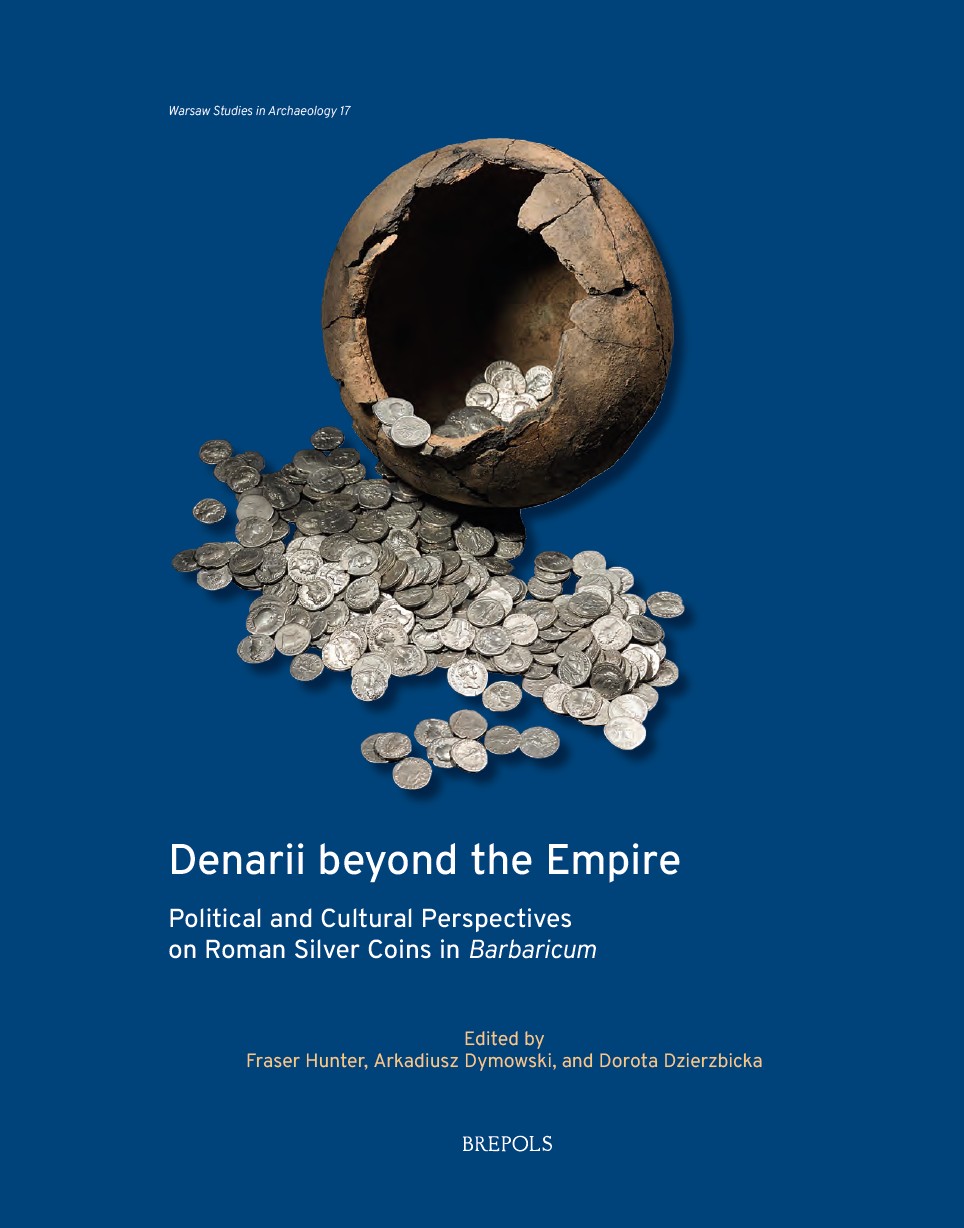 Denarii beyond the Empire
Political and Cultural Perspectives on Roman Silver Coins in Barbaricum
Volume 17


 Etruscan and Roman Hellenistic Anatomical ex votos
Reassessing Popular Religious Expressions in Central Italy
Volume 8

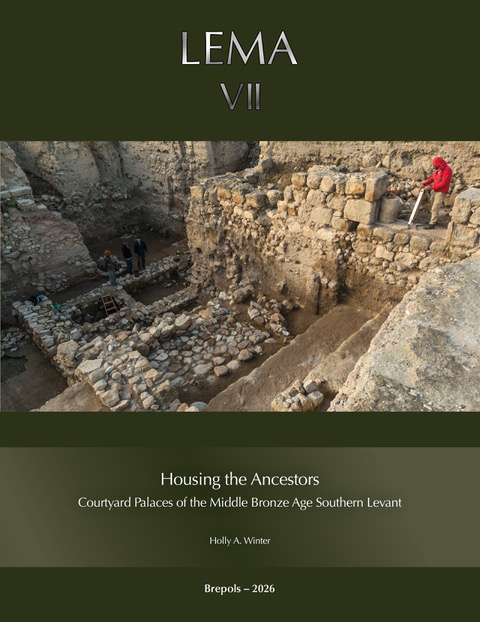

 Invisible Labour in Antiquity
Visualizing Obscure Work in the Ancient Mediterannean and West Asia
Volume 1

 Late Antique villae in the Balkans (3rd–7th c. AD): Current Research Questions and Perspectives
HAEMUS Companion to the Late Antique Balkans 1
Volume 4


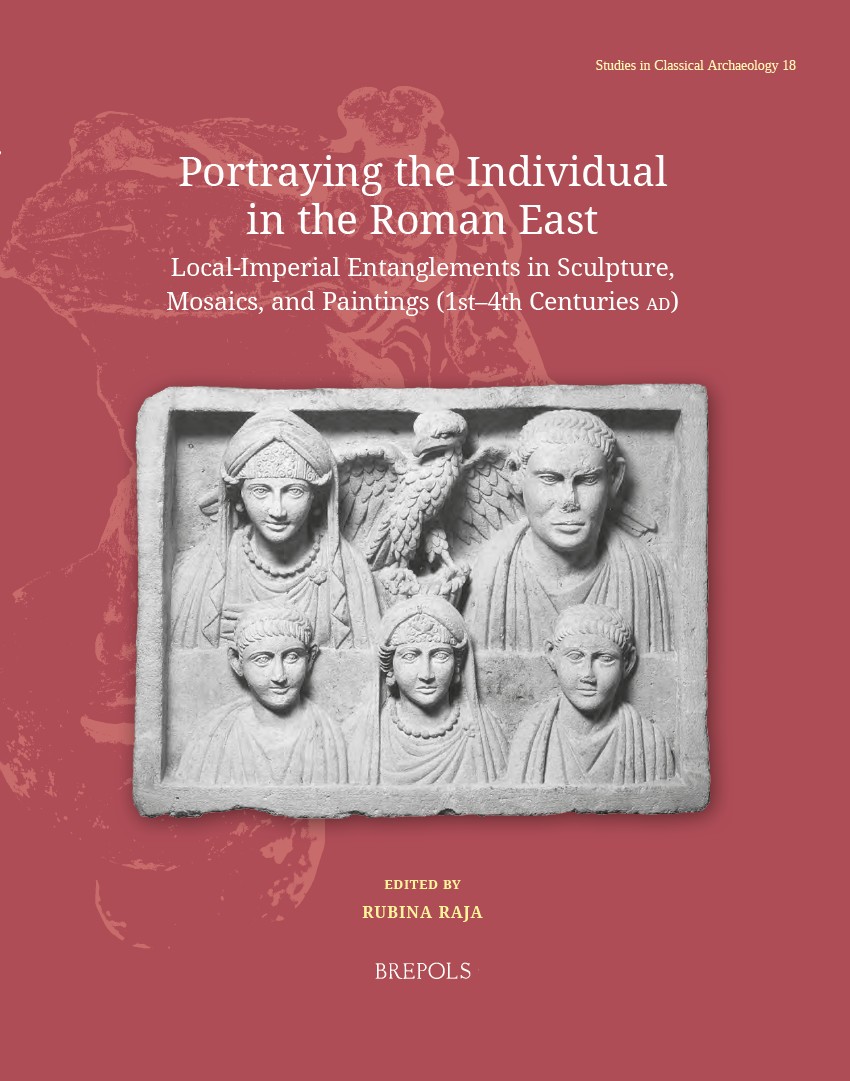 Portraying the Individual in the Roman East
Local–Imperial Entanglements in Sculpture, Mosaics, and Paintings (First–Fourth Centuries AD)
Volume 18


 Small Worlds and Relational Agencies: Local Societies in Early Medieval Iberia
Pequeños mundos y Agencias relacionales: Sociedades locales altomedievales en la Península Ibérica


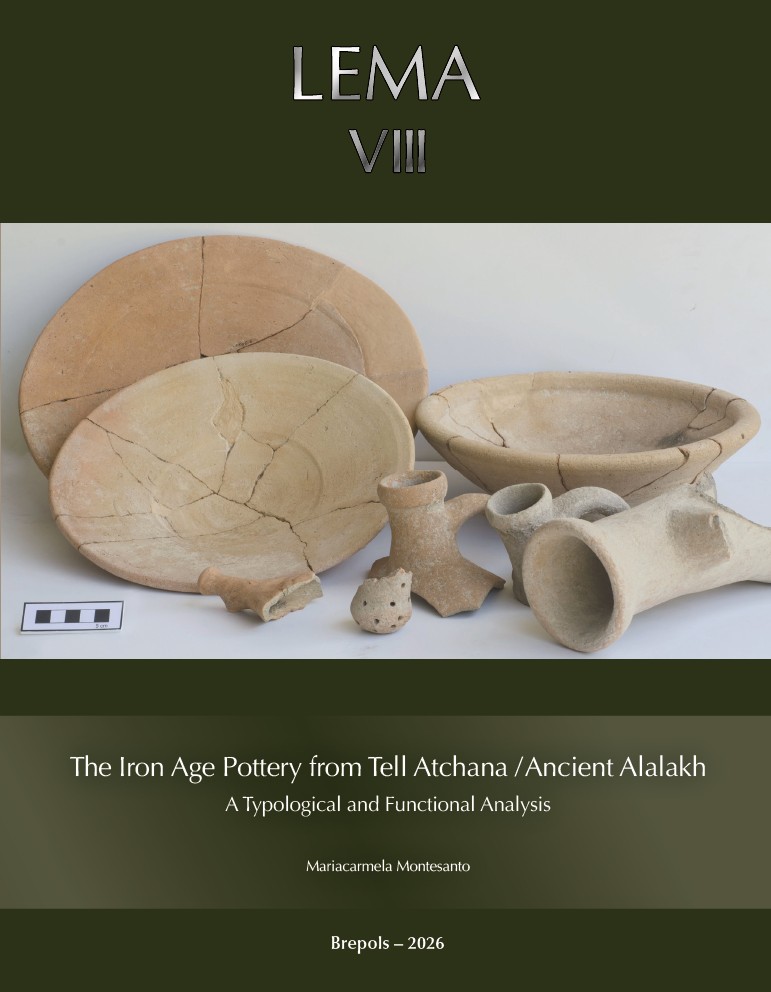 The Iron Age Pottery from Tell Atchana / Ancient Alalakh
A Typological and Functional Analysis
Volume 8

 Writing in the Church of the Nativity in Bethlehem
Inscription and Graffiti in a Multilingual and Multigraphic Perspective
Volume 45


 Atlante tematico di topografia antica 36-2026
Urbanistica e monumenti, porti, Roma. Ricerche sui monti Aurunci
Volume 36
 Cerámica común romana y ciclo haliéutico
Análisis de los contextos de las cetariae de Iulia Traducta

 Nuove scoperte e progressi nelle metodologie di rilievo e analisi dell’arte rupestre post-paleolitica in Italia
New discoveries and progress in the tracing and analysis methodologies of the post-Paleolithic rock art in Italy


