
Micromorphological Analysis of Activity Areas Sealed by Vesuvius’ Avellino Eruption
The Early Bronze Age Village of Afragola in Southern Italy
By (author) Tiziana Matarazzo

Paperback (Published)
(October 2015)
ISBN: 9781784912116
8.27 x 11.69 inches
Price: $76.00
In stock
Buried under a meter of volcanic ash deposited by the eruption of Vesuvius, the remarkable preservation of this Early Bronze Age village in Southern Italy is unmatched in Europe. Here, micromorphology is used to identify the type and range of human activities, the function of features and buildings, and the intensity of site occupation.
The remarkable preservation of the Early Bronze Age village of Afragola on the Campania Plain of Southern Italy is unmatched in Europe. The site was buried under nearly a meter of volcanic ash deposited by the Avellino eruption of Vesuvius ca. 3945+10 cal. BP. The site boasts a large number of well-preserved structures, built features and organic materials and thus provides a laboratory-type setting in which to investigate variability in artifact distribution and activity areas across a single village. This research utilizes micromorphological analysis of thin sections of undisturbed sediment collected at the site to understand how people used living spaces, organized daily activities and, when possible, to connect village life to broad issues related to the emergence of social complexity on the Campanian Plain. In particular, micromorphology is used to identify the type and range of human activities, the function of features and buildings, and the intensity of site occupation. The micromorphological analysis at Afragola provides a unique example of a briefly occupied agricultural village with what appears to be minimally stratified social organization during the Early Bronze Age of southern Italy.
- By (author) Tiziana Matarazzo
Similar Books


 Caesar’s Visions and Impact on the Roman Empire
Revisiting the Archaeological and Historical Record of the 40s BC
Volume 2


 Etruscan and Roman Hellenistic Anatomical ex votos
Reassessing Popular Religious Expressions in Central Italy
Volume 8


 Invisible Labour in Antiquity
Visualizing Obscure Work in the Ancient Mediterannean and West Asia
Volume 1
 Late Antique villae in the Balkans (3rd–7th c. AD): Current Research Questions and Perspectives
HAEMUS Companion to the Late Antique Balkans 1
Volume 4
 Making and Meaning in the Bronze and Iron Ages
Chronology, Landscapes and Societies across Europe. Proceedings from the METALAGES2024 Colloquium (Florence, 23 October 2024)


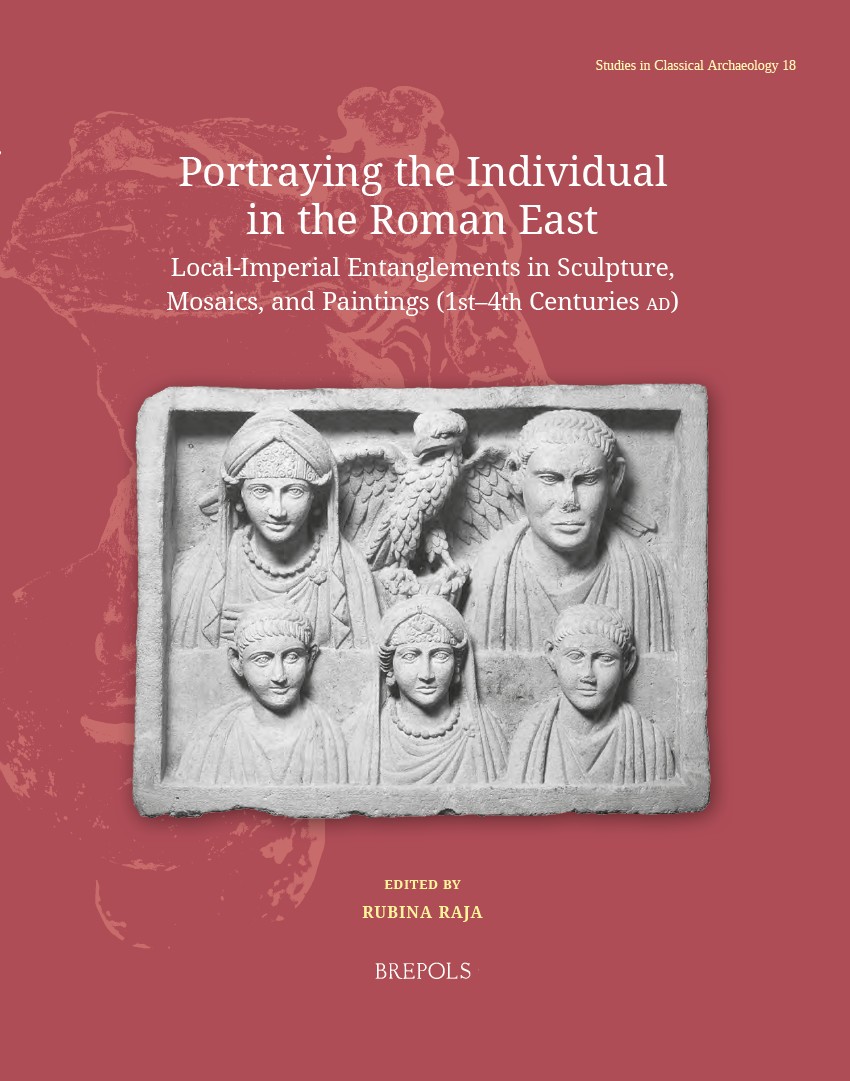 Portraying the Individual in the Roman East
Local–Imperial Entanglements in Sculpture, Mosaics, and Paintings (First–Fourth Centuries AD)
Volume 18


 Small Worlds and Relational Agencies: Local Societies in Early Medieval Iberia
Pequeños mundos y Agencias relacionales: Sociedades locales altomedievales en la Península Ibérica


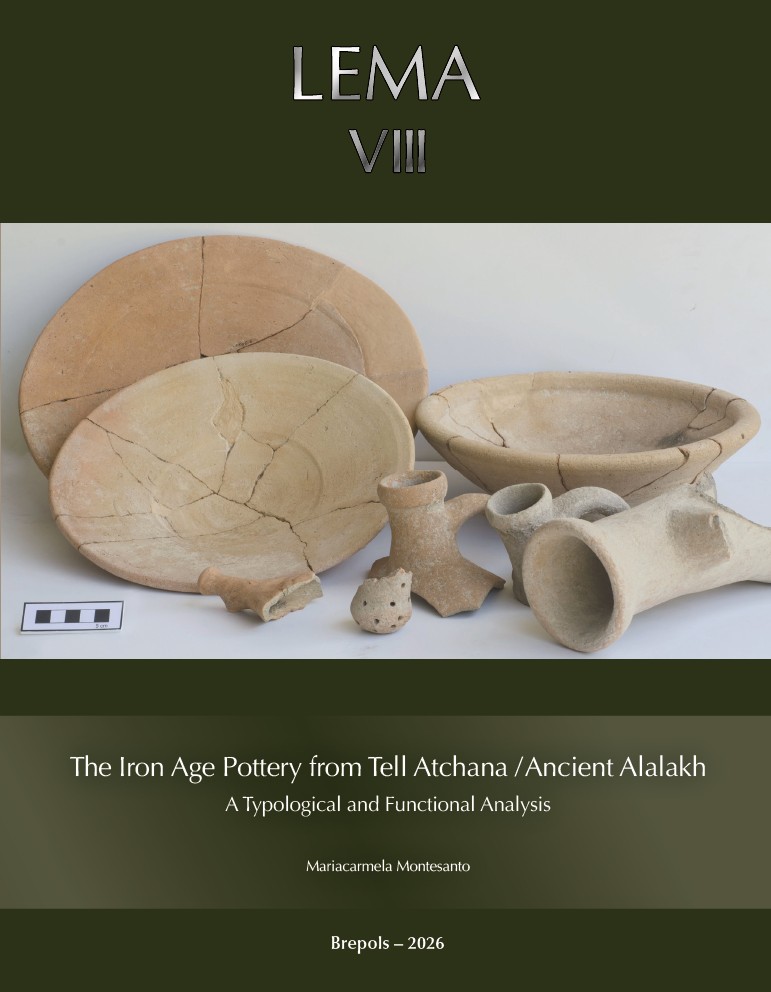 The Iron Age Pottery from Tell Atchana / Ancient Alalakh
A Typological and Functional Analysis
Volume 8

 Writing in the Church of the Nativity in Bethlehem
Inscription and Graffiti in a Multilingual and Multigraphic Perspective
Volume 45


 Atlante tematico di topografia antica 36-2026
Urbanistica e monumenti, porti, Roma. Ricerche sui monti Aurunci
Volume 36
 Cerámica común romana y ciclo haliéutico
Análisis de los contextos de las cetariae de Iulia Traducta

 Nuove scoperte e progressi nelle metodologie di rilievo e analisi dell’arte rupestre post-paleolitica in Italia
New discoveries and progress in the tracing and analysis methodologies of the post-Paleolithic rock art in Italy


 A Dramatic Event in Late Roman Florence
The Anomalous Burial Site Discovered beneath the Uffizi Gallery

 Alexander the Great and the Campaign of Gaugamela
New Research on Topography and Chronology. IAMNI 1 (Italian Archaeological Mission to Northern Iraq)
Volume 53