
London’s Waterfront and its World, 1666–1800
By (author) John Schofield By (author) Stephen Freeth Contributions by I. M. Betts Contributions by Lyn Blackmore Contributions by Julian Bowsher Contributions by Jacqui Pearce Contributions by Alan Pipe

Hardback (Published)
(December 2023)
ISBN: 9781803276540
8.07 x 11.42 inches
Price: $80.00
In stock
This volume, covering the period 1666-1800, considers the archaeology of the port of London on a wide scale, from the City down the Thames to Deptford. During this period, with the waterfront at its centre, London became the hub of the new British empire, contributing to the exploitation of people from other lands known as slavery.
London’s Waterfront and its World, 1666-1800 presents the results of archaeological excavations of 1974 to 1983 in the central waterfront area of the City of London. The archaeology of the port of London is considered on a wide scale, from the City down the Thames to Deptford. The Great Fire of London in 1666 prompted some changes to the topography of streets and buildings, but there were also many continuities in life and work. The waterfront changed during the 18th century as warehousing replaced houses. This process is illustrated by archaeological excavation, documentary study and the survival of plans of properties surveyed for land-owning institutions. The artefacts and pottery recovered from these sites include many pieces from overseas, and London’s waterfront can be compared with those of other port cities in Europe, North America and the Caribbean. Perhaps in late 17th- and 18th-century London we can study urban tastes and consumption from an archaeological viewpoint. During this period London became the hub of the new British empire, but contributed to the exploitation of people from other lands known as slavery. The waterfront on both sides of the Thames was at the centre of the new empire.
Summary 1 The waterfront of the City of London, 1666 to 1800: introduction to the study Conventions, methods and the archive 2 The port of London, 1666 to about 1750 Major public works on the City waterfront after the Great Fire The reconstruction plans of Wren and Evelyn and the New Quay London Bridge Public buildings and places in central and eastern Thames Street Transport networks: wharves, stairs and how shipping was managed; carmen and their carts Conclusions: the structure of the port 3 The archaeological excavations of 1974-84 Thames Street above the Bridge, 1666-1780: the Swan Lane and Seal House excavations and their setting Swan Lane (site A) - John Schofield, with contributions by Lyn Blackmore and Jacqui Pearce Seal House (site B) - John Schofield, with contributions by Lyn Blackmore, Jacqui Pearce and Stephen Freeth Fishmongers' Hall New Fresh Wharf (site C) - John Schofield with contributions by Stephen Freeth Billingsgate (site D): documentary evidence - Stephen Freeth Billingsgate (site D): excavation - John Schofield, with contributions by I M Betts, Jacqui Pearce and Alan Pipe 4 Living and working in London, 1666 to 1750 Settlements and buildings along the Thames Buildings, material culture and lifestyle in post-Fire London Conclusions to this chapter 5 The waterfront from 1750 to 1800, and the growth of large-scale warehousing Custom House, London Bridge, Billingsgate and the Coal Exchange, 1750-1800 Upstream of the Bridge 1750 to 1800 The growth of large-scale warehousing in the City from 1730 to 1800 The Sufferance Wharves and other wharves nearby Public buildings as celebrations of empire in the 18th and early 19th centuries 6 London and slavery, to 1800 7 From 1796 to the 20th century Congestion, the debates of 1796 and proposals Nineteenth-century developments on the City waterfront and immediately to the east 8 London's connections with other ports, 1666 to 1800; post-medieval waterfront archaeology elsewhere British ports and coastal shipping Foreign and colonial ports 9 The port of London, 1666 to 1800: a summary and some questions for further research General arguments Detailed questions on the sites and their setting, 1666 to 1800 Overall conclusions 10 Specialist reports and appendices Pottery and other artefacts - Jacqui Pearce and Lyn Blackmore Post-medieval coins from Billingsgate - Julian Bowsher Ceramic building material from Billingsgate - I M Betts Cowrie shells from Billingsgate - Alan Pipe Introduction and methodology Inventories of Richard Beckford (1679) and Francis Minshull (1704) - Stephen Freeth Resume Zusammenfassung Documentary sources, bibliography and abbreviations Primary Sources Printed Sources and Abbreviations Index,
Summary
1 The waterfront of the City of London, 1666 to 1800: introduction to the study
Conventions, methods and the archive
2 The port of London, 1666 to about 1750
Major public works on the City waterfront after the Great Fire
The reconstruction plans of Wren and Evelyn and the New Quay
London Bridge
Public buildings and places in central and eastern Thames Street
Transport networks: wharves, stairs and how shipping was managed; carmen and their carts
Conclusions: the structure of the port
3 The archaeological excavations of 1974–84
Thames Street above the Bridge, 1666–1780: the Swan Lane and Seal House excavations and their setting
Swan Lane (site A) – John Schofield, with contributions by Lyn Blackmore and Jacqui Pearce
Seal House (site B) – John Schofield, with contributions by Lyn Blackmore, Jacqui Pearce and Stephen Freeth
Fishmongers’ Hall
New Fresh Wharf (site C) – John Schofield with contributions by Stephen Freeth
Billingsgate (site D): documentary evidence – Stephen Freeth
Billingsgate (site D): excavation – John Schofield, with contributions by I M Betts, Jacqui Pearce and Alan Pipe
4 Living and working in London, 1666 to 1750
Settlements and buildings along the Thames
Buildings, material culture and lifestyle in post-Fire London
Conclusions to this chapter
5 The waterfront from 1750 to 1800, and the growth of large-scale warehousing
Custom House, London Bridge, Billingsgate and the Coal Exchange, 1750–1800
Upstream of the Bridge 1750 to 1800
The growth of large-scale warehousing in the City from 1730 to 1800
The Sufferance Wharves and other wharves nearby
Public buildings as celebrations of empire in the 18th and early 19th centuries
6 London and slavery, to 1800
7 From 1796 to the 20th century
Congestion, the debates of 1796 and proposals
Nineteenth-century developments on the City waterfront and immediately to the east
8 London’s connections with other ports, 1666 to 1800; post-medieval waterfront archaeology elsewhere
British ports and coastal shipping
Foreign and colonial ports
9 The port of London, 1666 to 1800: a summary and some questions for further research
General arguments
Detailed questions on the sites and their setting, 1666 to 1800
Overall conclusions
10 Specialist reports and appendices
Pottery and other artefacts – Jacqui Pearce and Lyn Blackmore
Post-medieval coins from Billingsgate – Julian Bowsher
Ceramic building material from Billingsgate – I M Betts
Cowrie shells from Billingsgate – Alan Pipe
Introduction and methodology
Inventories of Richard Beckford (1679) and Francis Minshull (1704) – Stephen Freeth
Résumé
Zusammenfassung
Documentary sources, bibliography and abbreviations
Primary Sources
Printed Sources and Abbreviations
Index
- By (author) John Schofield
- By (author) Stephen Freeth
- Contributions by I. M. Betts
- Contributions by Lyn Blackmore
- Contributions by Julian Bowsher
- Contributions by Jacqui Pearce
- Contributions by Alan Pipe
'Focusing not only on the development of maritime infrastructure during this period of rapid development, the book also illuminates the lives of the everyday people who inhabited this area: from wealthy tradesmen to enslaved African people, and everyone in between.' – Dr Kathryn Krakowka (2024): Current Archaeology 408
—
'The authors are to be congratulated for their efforts to bring this wealth of archaeological and documentary evidence for London's post-medieval waterfront together in such an informative and engaging manner. It is an impressive piece of work and I would highly recommend it.' – Peter Rowsome (2024), London Archaeologist
—
'This is a magnificently produced and well-illustrated book, 208 figures in all, which brings together the archaeological and documentary evidence from the study of four waterfront sites excavated by the Museum of London in Thames Street between 1974 and 1984... The skilful planning of the volume, encompassing excavation reports and a wider study, which justifies the expense and effort expended on investigating four major development sites, make this an exemplar for other archaeologists to note when planning the publication of their own work in the field.' – Roger Leech (2024), Transactions of the London & Middlesex Archaeological Society
—
‘…the real strengths of the book are its arguments that the capital’s waterfront should be considered holistically, from the City to Deptford, and that post-medieval waterfronts must be understood by comparison with other British, European, and North American ports… [Ports] are usually studied in isolation or within national and regional studies— international comparisons are ‘still rare’. This book, therefore, is a welcome addition to the historiography of the port of London, and port history more generally.’ – Guy Collender, The London Journal
—
‘This is a handsomely produced volume, from the design of the cover, with Canaletto’s contemporary painting of the Thames, to the layout of the text and quality of the illustrations. The text itself runs to 215 pages and is followed by appendices that include artifact analyses, a bibliography, and an index. The book is available in hard cover and printed on heavy bond A4 paper (the format we reviewed), or in digital form. It is among several titles by Archaeopress that are part of their open access content, available for personal use as a pdf file in a free download, as is the companion 2018 study of the medieval period.
London’s Waterfront and its World, 1666–1800 is largely an archival study, relying heavily on the analysis of an extensive documentary record. The archaeological work, however, while supplemental, serves to inform the archival analysis, documenting physical alterations to the waterfront structures during the period and affording evidence for studies of consumer tastes and consumption, “reveal[ing] a rich urban culture with many elements of foreign fashions.” The book is a prime example of a comprehensive historical archaeology study that serves as a model for maritime and non-maritime researchers alike.’ – Dennis Knepper (2024): Maritime Archaeological and Historical Society
—
'A very stimulating and accessible read for those with an interest in the history and archaeology of London. Early modern port cities elsewhere are less well documented. It is a lovely book, a labour of love, beautifully illustrated and a relatively under-explored period. At its heart are site reports, straightforward examples of how archaeology can be the jumping off point for deeper historical analysis. This beautifully-produced monograph has the detailed results of four excavated sites, with important thematic sections, notably that of London and slavery, that places these discoveries in their historical, economic and social context.' - Judges' comments, London Archaeologist competition, Spring 2025
—
Similar Books


 Balthasar Caymox of Nuremberg
Early Modern German Print Publishers: Popular Prints of the Seventeenth Century
 Behind the Scenes of Medieval Roofs
An Overview of the Roofing Systems of Italian Churches
Volume 90
 Beyond Sovereign Courts
Agents and Practices in Early Modern Spanish and Habsburg Diplomacy
Volume 3

 Circulation, Use, Impact
The Consumption of Architectural Books in the Early Modern Eastern Adriatic
Volume 1

 Councils, Conflicts, Correspondence
Urban Diplomacy in Reval (Tallinn) and Lübeck (c. 1470–1570)
Volume 67


 Innovationes Lovanienses: Arts, Law and Theology at the University of Louvain (1425–1797)
Studium Lovaniense: Learning across Borders, 2
Volume 18
 Late Antique villae in the Balkans (3rd–7th c. AD): Current Research Questions and Perspectives
HAEMUS Companion to the Late Antique Balkans 1
Volume 4
 Legal Visuality
Exegesis, Ambiguity, and Dissimulation of the Donation of Constantine in the Early Modern Period
 Lobbying for Equality
Jacques Godard and the Struggle for Jewish Equality during the French Revolution


 Naples as Laboratory / Laboratorium Neapel
Style Options, Artistic Rivalry and Self Fashioning in Neapolitan Baroque Painting / Plurale Stilbildung, Kunstlerkonkurrenz und Self Fashioning in der neapolitanischen Barockmalerei

 Power and Women in Southeast and Central Europe in Late Medieval and Early Modern Period (1300-1600)
Volume 10



 Staging the Spectacle of Majesty
Ceremonial, Courtly Space, and Collecting under the Spanish Habsburgs
Volume 9
 Students, Scholars and Their Books at the University of Louvain (1425-1797)
Studium Lovaniense: Learning across Borders, 1
Volume 17


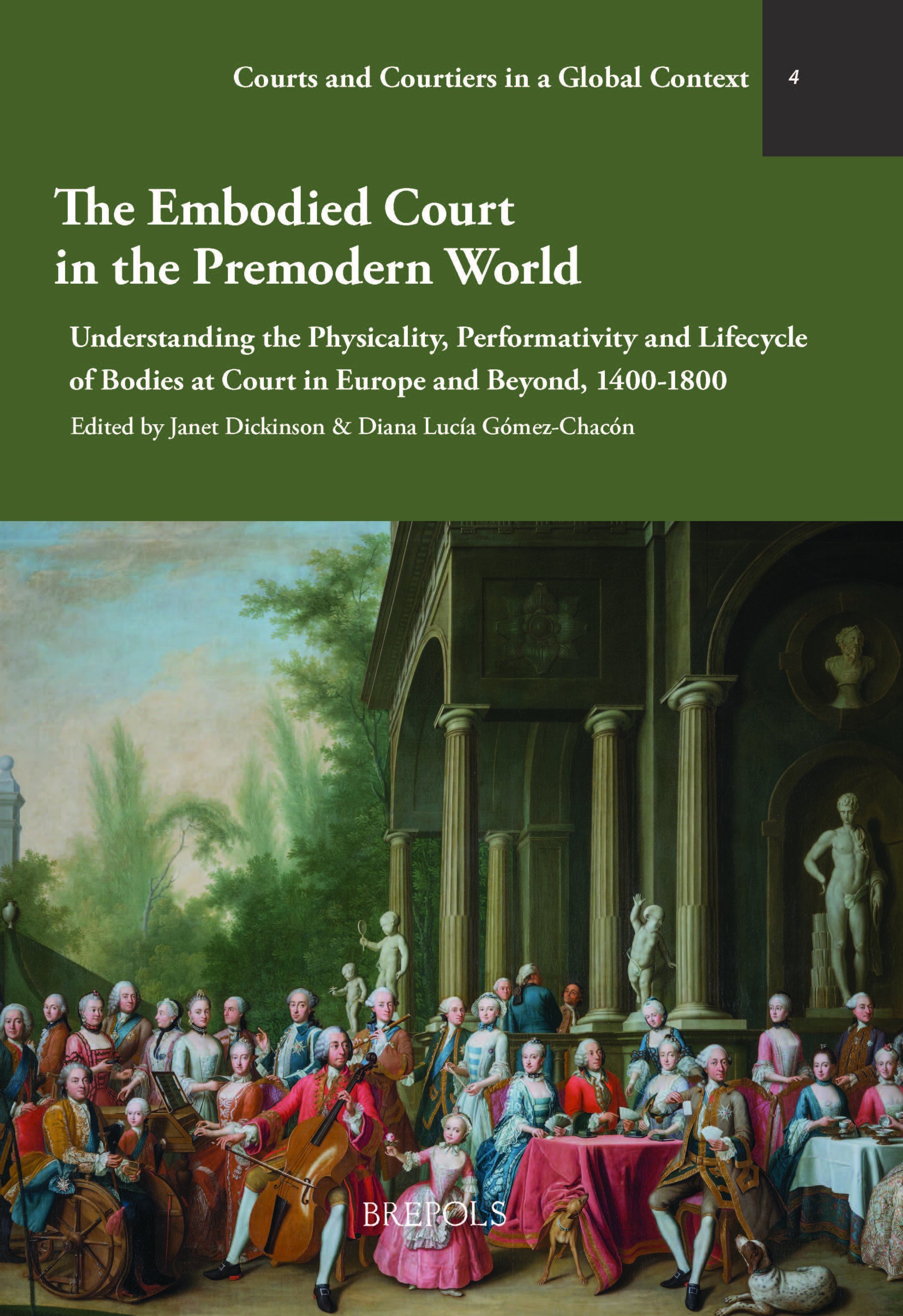 The Embodied Court in the Premodern World
Understanding the Physicality, Performativity and Lifecycle of Bodies at Court in Europe and Beyond, 1400-1800
Volume 4


