
Kulte – Orte – Körperteile
Eine Neubewertung der Weihung anatomischer Votive in Latiums Heiligtümer
By (author) Velia Boecker

Hardback (Published)
(May 2023)
ISBN: 9783752007114
8.27 x 11.69 inches
Price: $102.00
In stock
The study focuses on the phenomenon of anatomical votives dedicated into the sanctuaries of ancient Latium (Italy) in the 4th to 1st cent. BC. These anatomical votives have previously been understood as indicators of healing cult sites. For the first time, this work evaluates the archaeological contexts of the finds on a large scale and analyses more than 100 sites with a total of over 15,000 anatomical votives. This contextualisation enables new insights into the sites that were previously addressed as healing cult sites and allows a new perspective of the dedication of anatomical votives.
English summary: Among the most interesting finds from ancient Latium are terracotta replicas of body parts that can be dated to the 4th to 1st centuries BC. These anatomical votives were previously understood as indicators for healing cults and components of Greek or Roman religion, which were adopted into the sanctuaries of Latium in the course of Roman expansion. This monograph takes a fresh, new look at these votives and their interpretation. Featuring a contextualising approach, it analyses more than 100 sites with a total of over 15,000 anatomical votives not only quantitatively, but also with regard to their connection to topographical features and the connection to roads and settlements. Based on this data, two types of sites can be classified, which can be distinguished from each other in terms of their location, the composition of the votive complexes, the venerated deities and in gender-specific terms. Both groups are presumably rooted in older, regional cult traditions and do not reveal a specific focus as a “healing cult” with regard to the architecture of the sites or the deities addressed. Instead, the quantitative analysis of the votive complexes and their associated finds show the anatomical votives as media that were used in situations associated with uncertainty, stress or personal crises. They thus served to strengthen personal resilience by addressing these uncertainties and fears, making them visible or symbolising their overcoming. Thus, anatomical votives are most likely not to be understood as offerings with a static meaning in a fixed cultic context, but rather as multivalent objects in a flexible frame of reference. It can be assumed that the meaning of the anatomical votives was individually determined by their donors and could vary depending on the context. The contextualisation of the finds allows a new view of the sites, which were previously regarded as healing cult sites, and permits a new interpretation of the body part dedications as evidence of local, closely networked communities with a horizon of ideas influenced by autochthonous traditions. Thus, they can also be understood as part of an independent identity within a larger frame of reference. This change of perspective contributes to new insights into the tradition and subject of archaeological sites formerly addressed as healing cult sites. German description: Zu den interessantesten Funden aus den Heiligtumern des antiken Latium gehoren aus Terrakotta gefertigte Nachbildungen von Korperteilen, die sich ins 4. bis 1. Jh. v. Chr. datieren lassen. Diese anatomischen Votive galten bisher als Indikatoren fur Heilkulte und als Bestandteile griechischer oder romischer Religion, die im Laufe der romischen Expansion in die Heiligtumer Latiums ubernommen wurden. Auf diese Korperteilweihungen und ihre Deutung wirft diese Monographie einen neuen, frischen Blick. Sie wertet die archaologischen Kontexte aus und analysiert mehr als 100 Fundorte mit insgesamt uber 15.000 anatomischen Votiven nicht nur quantitativ, sondern auch hinsichtlich ihrer Verbindung zu topographischen Merkmalen und der Anbindung an Strassen und Siedlungen. Auf dieser Grundlage lassen sich zwei Gruppen von Statten klassifizieren, die sich hinsichtlich ihrer Lage, der Zusammensetzung der Votivkomplexe, der adressierten Gottheiten und in geschlechtsspezifischer Hinsicht voneinander abgrenzen lassen. Beide Gruppen wurzeln vermutlich in alteren, regionalen Kulttraditionen und lassen mit Blick auf die Architektur der Statten oder hinsichtlich der adressierten Gottheiten keinen spezifischen Schwerpunkt als “Heilkult” erkennen. Stattdessen zeigen die quantitative Analyse der Votivkomplexe und die Untersuchung der Vergesellschaftung der Korperteilweihungen mit anderen Votivgaben die anatomischen Votive als Medien, die in Situationen eingesetzt wurden, die mit Unsicherheit, Stress oder personlichen Krisen verbunden waren. Sie dienten somit der Starkung der personlichen Resilienz, indem sie diese Unsicherheiten und Angste thematisierten, sichtbar machten oder ihre Uberwindung symbolisierten. Damit sind anatomische Votive hochstwahrscheinlich nicht als Opfergaben mit einer statischen Bedeutung in einem festen kultischen Kontext zu verstehen, sondern vielmehr als multivalente Objekte in einem flexiblen Bezugsrahmen. Es ist davon auszugehen, dass die Bedeutung der Korperteilweihungen von ihren Stiftern und Stifterinnen individuell festgelegt wurde und je nach Kontext variieren konnte. Die Kontextualisierung der Funde ermoglicht eine neue Sicht auf die Statten, die bislang als Heilkultstatten betrachtet wurden und erlaubt die Neu-Deutung der Korperteilweihungen als Zeugnis lokaler, eng vernetzter Gemeinschaften mit einem von autochthonen Traditionen beeinflussten Vorstellungshorizont. Damit lassen sie sich auch als Teil einer eigenstandigen Identitat innerhalb eines grosseren Bezugsrahmens verstehen. Dieser Perspektivwechsel tragt zu neuen Einsichten in die Tradition und Thematik archaologischer Statten bei, die fruher als Heilkultstatten betrachtet wurden.
- By (author) Velia Boecker
Other Titles in this Series
 From Sedentarisation to the Complex Society
Settlement, Economy, Environment, Cult. Proceedings of the workshops in Lisbon, Tehran and Lima (2016 − 2019)
 Heiligtumer
Kulttopographie und Kommunikationsformen im sakralen Kontext. Ergebnisse der Clustertagungen (2012-2018)
Volume 19
 Kontaktmodi
Ergebnisse der gemeinsamen Treffen der Arbeitsgruppen 'Mobilitat und Migration' und 'Zonen der Interaktion' (2013-2018)
Volume 17
 Hafen, Stadt, Mikroregion
Beitrage der Arbeitsgruppe 5 Hafenorte des Forschungsclusters 6 Connecting Cultures und einer Tagung am 26. und 27. Mai 2017 an der Abteilung Istanbul des DAI
Volume 18
Similar Books

 Caesar’s Visions and Impact on the Roman Empire
Revisiting the Archaeological and Historical Record of the 40s BC
Volume 2


 Drunk the Potion, No Whit Charmed
The Doctrine of Pure and Perfect Souls from Iamblichus to Damascius

 Epiphanies of the Divine in the Septuagint and the New Testament
Fifth International Symposium of the Corpus Judaeo-Hellenisticum Novi Testamenti (CJHNT), 14-17 May 2015, Nottingham


 Etruscan and Roman Hellenistic Anatomical ex votos
Reassessing Popular Religious Expressions in Central Italy
Volume 8



 Invisible Labour in Antiquity
Visualizing Obscure Work in the Ancient Mediterannean and West Asia
Volume 1
 Language and Power in the Roman Empire and Early India
Hierarchy, Ambiguity, and the Art of Reading the Signs in Cosmopolitan Cultures
 Late Antique villae in the Balkans (3rd–7th c. AD): Current Research Questions and Perspectives
HAEMUS Companion to the Late Antique Balkans 1
Volume 4

 Nurturing the Elite
Representations of Drinking, Eating, and Religious Vessels in Palmyrene Funerary Iconography
Volume 13


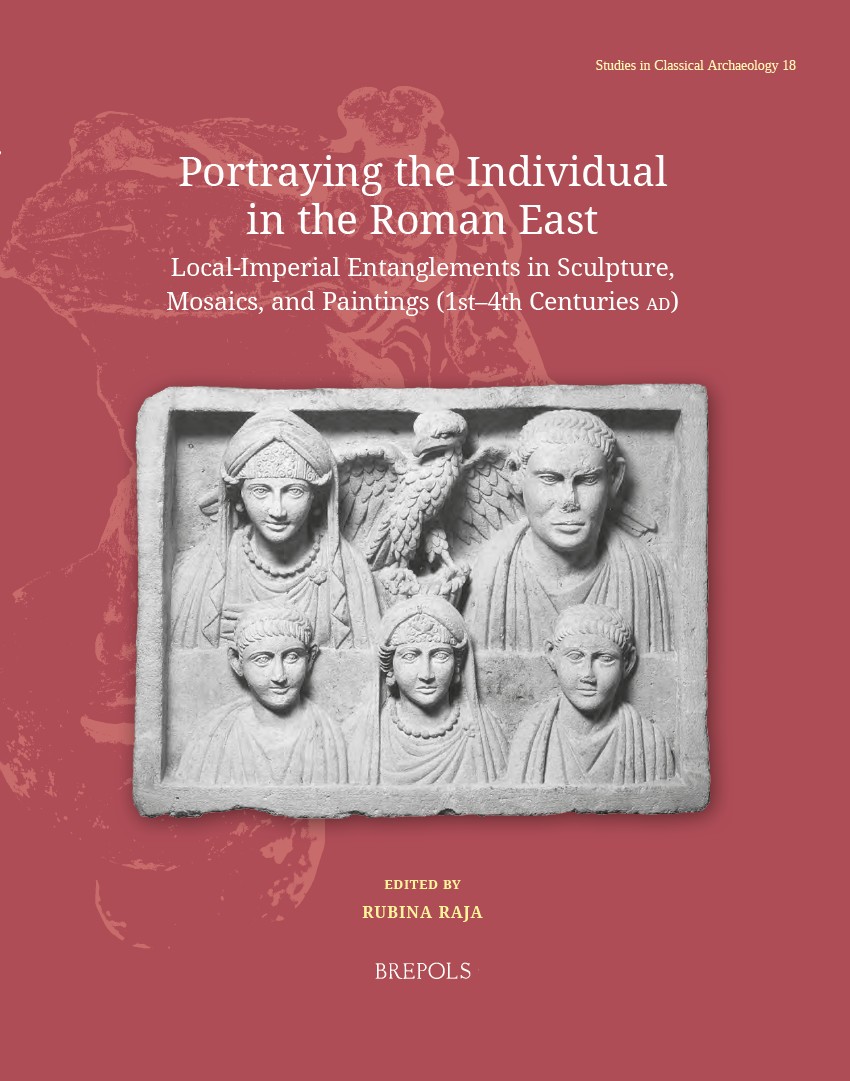 Portraying the Individual in the Roman East
Local–Imperial Entanglements in Sculpture, Mosaics, and Paintings (First–Fourth Centuries AD)
Volume 18

 Small Worlds and Relational Agencies: Local Societies in Early Medieval Iberia
Pequeños mundos y Agencias relacionales: Sociedades locales altomedievales en la Península Ibérica
 The Compositional History of the Book of Kings
An Analysis of the Evaluative Frameworks in 1 Kings 14–2 Kings 25

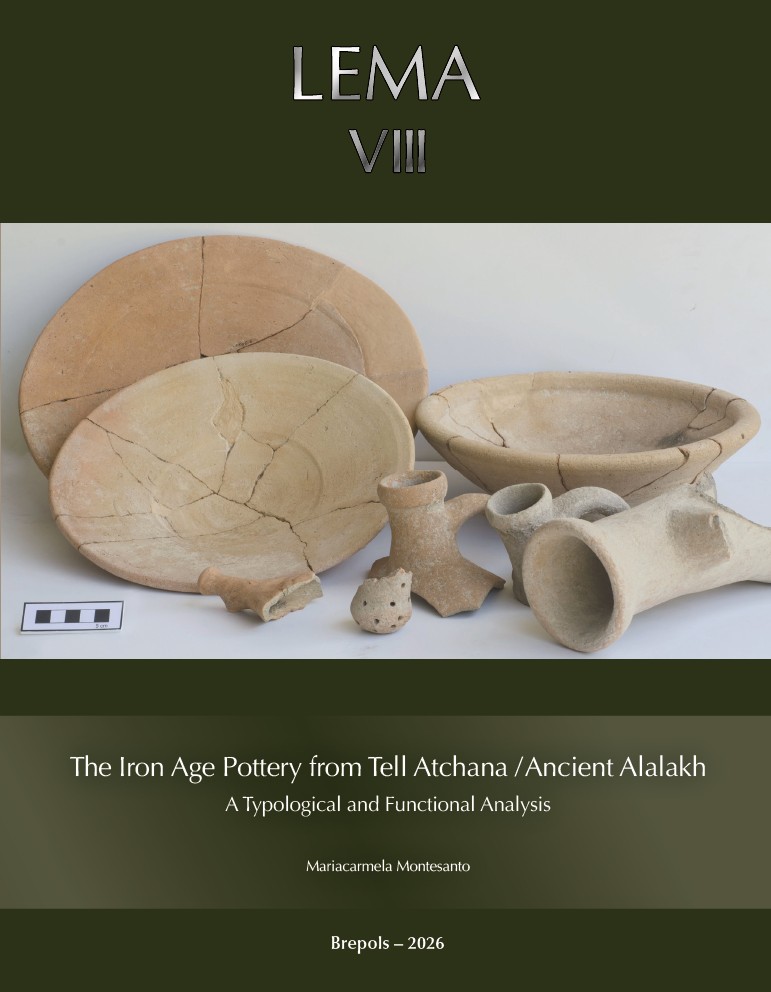 The Iron Age Pottery from Tell Atchana / Ancient Alalakh
A Typological and Functional Analysis
Volume 8

 Writing in the Church of the Nativity in Bethlehem
Inscription and Graffiti in a Multilingual and Multigraphic Perspective
Volume 45
 Contesting Labeled Identities
The Sociology of Gentilics in Biblical and Northwest Semitic Literature


 After Life in Roman Paganism. L’Égypte des astrologues. Les Mages hellénisés
Introductions historiographiques
Volume 7

 Atlante tematico di topografia antica 36-2026
Urbanistica e monumenti, porti, Roma. Ricerche sui monti Aurunci
Volume 36
 Cerámica común romana y ciclo haliéutico
Análisis de los contextos de las cetariae de Iulia Traducta


 Diodor über den ersten Sklavenaufstand auf Sizilien
Ein philologischer und historischer Kommentar
Volume 67