
Iranisches Personennamenbuch Band 2 / Faszikel 1
Iranische Personennamen in manichaischer Uberlieferung
by Iris Colditz

This volume presents for the first time a full collection of the personal names attested in Iranian sources of Manichaeism, an ancient dualistic and syncretistic world religion (3rd-14th century). This extremely heterogeneous corpus from the Central Asian Turfan oasis (Xinjiang, China) goes back to the golden age of Manichaeism in the Uygur steppe empire and the kingdom of Qo?o (8th-11th century) but can be partly traced back to more ancient originals. It comprises ca. 4700 text fragments in Middle Persian, Parthian, Sogdian, Bactrian and New Persian written in Manichaean, Sogdian and Old Turkish runic scripts. The 766 entries contain Iranian, hybrid, and non-Iranian names, which reflect the ethnic and religious diversity of the peoples along the Silk Road. The name bearers are historical persons as well as fictitious characters from myth and literature. Obsolete and differing readings as well as “ghost names” are specifically marked. The presentation of the names follows the guidelines of the Iranisches Personennamenbuch. Each entry lists transliteration, transcription and all references of the name, including spelling variants, text duplicates and versions in other scripts or languages, followed by prosopographical data: titles, designations of offices or professions. Reference is made to indirect transmissions of the name (“Nebenuberlieferung”) in non-Iranian Manichaica, the writings of Arabic historians and in antiheretical Christian and Zoroastrian scriptures. At the end follows the morphological and etymological interpretation of the name. The explored material is displayed in detailed indexes. The volume is of special interest to specialists in Iranian studies, linguistics, religious studies and history.
This volume presents for the first time a full collection of the personal names attested in Iranian sources of Manichaeism, an ancient dualistic and syncretistic world religion (3rd-14th century). This extremely heterogeneous corpus from the Central Asian Turfan oasis (Xinjiang, China) goes back to the golden age of Manichaeism in the Uygur steppe empire and the kingdom of Qo?o (8th-11th century) but can be partly traced back to more ancient originals. It comprises ca. 4700 text fragments in Middle Persian, Parthian, Sogdian, Bactrian and New Persian written in Manichaean, Sogdian and Old Turkish runic scripts. The 766 entries contain Iranian, hybrid, and non-Iranian names, which reflect the ethnic and religious diversity of the peoples along the Silk Road. The name bearers are historical persons as well as fictitious characters from myth and literature. Obsolete and differing readings as well as “ghost names” are specifically marked. The presentation of the names follows the guidelines of the Iranisches Personennamenbuch. Each entry lists transliteration, transcription and all references of the name, including spelling variants, text duplicates and versions in other scripts or languages, followed by prosopographical data: titles, designations of offices or professions. Reference is made to indirect transmissions of the name (“Nebenuberlieferung”) in non-Iranian Manichaica, the writings of Arabic historians and in antiheretical Christian and Zoroastrian scriptures. At the end follows the morphological and etymological interpretation of the name. The explored material is displayed in detailed indexes. The volume is of special interest to specialists in Iranian studies, linguistics, religious studies and history.
- By (author) Iris Colditz
Similar Books


 Cities through Time
Glimpses into Urbanity and Community in Mediaeval to Modern West Asia and Egypt
Volume 1
 Cuneiform Artefacts from Archaeological Contexts: New Research on Ancient Iraq
Proceedings of a Conference Held at the Bavarian Academy of Sciences and Humanities, July 4–5, 2024
Volume 2
 Des mots aux actes
Traduction épistémique et littéraire. Nouvelles tendances en histoire et didactique
Volume 15


 Global Gulf
Geo-Economic, Geo-Political, and Geo-Technological Transformation in Saudi Arabia, the United Arab Emirates, and Qatar


 Ismail Hakki Bursevi’s translation of and commentary on Fusus al-Hikam By Muhyiddin Ibn ‘Arabi
Volumes 1-4


 Monastic Manuscripts from the Eastern Mediterranean (Sinai, Jerusalem, Antioch)
Production, Use, and Contexts


 Punning in Odd or Elegant Constructions in Jeremiah
The Convergence of Linguistics, Rhetoric, and Textuality in the Hebrew Text of Jeremiah
 Qatar’s Societal Security
Towards the Inclusive National Concept of ‘Baladna’ Identity, Migration and External Threats Since 2017


 The Discourse of Rites
Shaping and Reshaping the (Counter-)Priestly Rituals Conducted Outside the Tabernacle


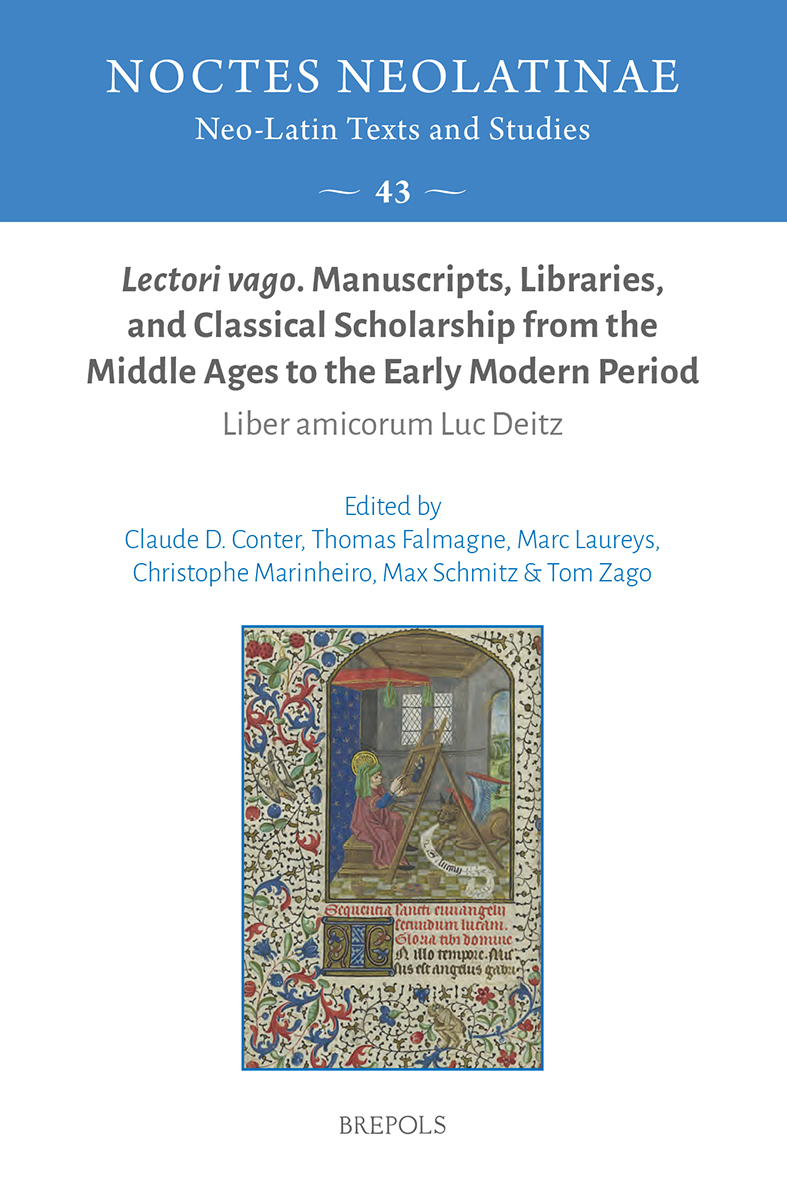 Lectori vago. Manuscripts, Libraries, and Classical Scholarship from the Middle Ages to the Early Modern Period
Liber amicorum Luc Deitz
Volume 43

 »Ein elend-schönes Land«
Gattung und Gedächtnis in Lea Goldbergs hebräischer Literatur. Aus dem Hebräischen von Rainer Wenzel


