
Grasp and Dissent
Cicero and Epicurean Philosophy
By (author) Stefano Maso

The present study centers on the distinctive characteristics of Cicero’s philosophical training; for the first time in a volume, the Roman philosopher’s relationship with Epicurean philosophy is accurately recreated. Not only does Cicero exhibit his lofty philosophical proficiency anchored in the Academic school, but he also proves a
The present study centers on the distinctive characteristics of Cicero’s philosophical training; for the first time in a volume, the Roman philosopher’s relationship with Epicurean philosophy is accurately recreated. Not only does Cicero exhibit his lofty philosophical proficiency anchored in the Academic school, but he also proves an excellent authority on Epicurus’s proposed philosophy. At the conclusion of the research, of course, Cicero will prove to be a fierce opponent of Epicureanism – an intelligent adversary, capable of studiose dicere contra Epicurum: understanding and criticizing, but also (and this is surely quite important for us today) reiterating the opposing party’s thought with great acumen. Epicureanism accordingly played a pivotal role in Cicero’s philosophical development within the fields of physics, theology and ethics, paradoxically proving useful both in the formulation of a more skeptical and probabilistic philosophy and in the individuation of a path open to but even more strongly bound to Stoicism. Unyielding and dogmatically binding, Epicurus’s doctrine endured throughout this dramatic historical moment situated at the end of the Roman Republic.
- By (author) Stefano Maso
Other Titles in this Series


 Stoic Presocratics – Presocratic Stoics
Studies in the Stoic Reception of Early Greek Philosophy
Volume 17
 Natura aut voluntas?
Recherches sur la pensee politique et ethique hellenistique et romaine et son influence
Volume 11


 Plato Latinus. Aspects de la transmission de Platon en latin dans l’Antiquite
Actes des Diatribai de Gargnano
Volume 8

 Une piete de la raison, philosophie et religion dans le stoicisme imperial
Des Lettres a Lucilius de Seneque aux Pensees de Marc-Aurele
Volume 3

Similar Books



 Contesting Labeled Identities
The Sociology of Gentilics in Biblical and Northwest Semitic Literature


 Drunk the Potion, No Whit Charmed
The Doctrine of Pure and Perfect Souls from Iamblichus to Damascius

 Epigraphic “Shades” from Hellenistic Thrace
Contextualizing Inscriptions in Greek from Thracian Tombs

 Epiphanies of the Divine in the Septuagint and the New Testament
Fifth International Symposium of the Corpus Judaeo-Hellenisticum Novi Testamenti (CJHNT), 14-17 May 2015, Nottingham


 Éthique, politique, religions
Superstition (XVIIe - XXIe siècles). Sémantique, histoires et cultures


 Gold, Silver and Glass: Power Networks, Cultural Identities, Technology Transfers and Agency across the Old World (7th Century BC – 1st Century AD)
Proceedings of a Conference Held at the British Museum, 16–18 June 2023

 La Lettre clandestine
La littérature philosophique clandestine, ses éditeurs et ses éditions
Volume 34
 Language and Power in the Roman Empire and Early India
Hierarchy, Ambiguity, and the Art of Reading the Signs in Cosmopolitan Cultures
 Late Antique villae in the Balkans (3rd–7th c. AD): Current Research Questions and Perspectives
HAEMUS Companion to the Late Antique Balkans 1
Volume 4
 Libertinage et philosophie à l’époque classique (XVIe-XVIIIe siècle)
Athéisme, Modernité et Sécularisation / Atheism, Modernity and Secularization
Volume 23


 Nurturing the Elite
Representations of Drinking, Eating, and Religious Vessels in Palmyrene Funerary Iconography
Volume 13


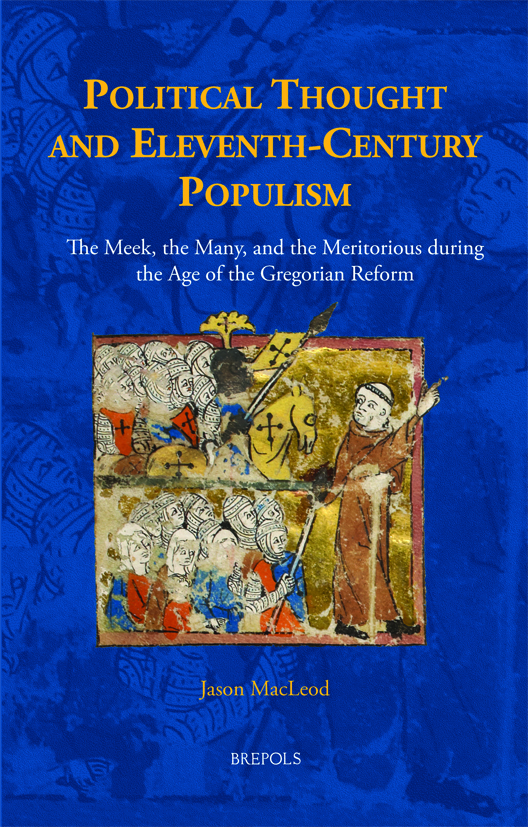 Political Thought and Eleventh-Century Populism
The Meek, the Many, and the Meritorious during the Age of the Gregorian Reform
Volume 38



