
Gesiegelt – Versiegelt – Entsiegelt
Studien zum Siegel(n) als Kulturtechnik von der Antike bis zum fruhen Mittelalter
edited by Johannes Auenmuller and Nikola Moustakis
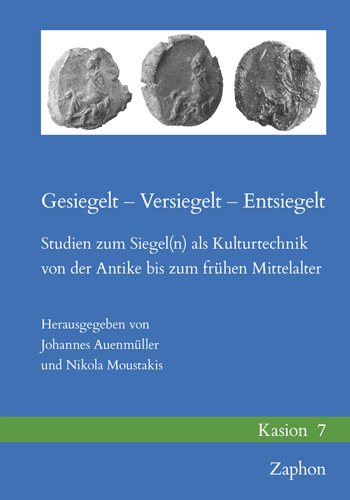
Seals represent a category of objects that have been and are used in the most varied of times, spaces and cultures, and which, as ‘cultural artifacts’ conceived and made by humans, fulfill the roles and functions ascribed to them. Seals and seals are considered in the focus of cultural technology, so that the functions of sealing and the people who seal them come to the fore. In the interdisciplinary environment, new questions are raised and methods are applied that allow the evidence to speak in its social and temporal context.
In all their material and symbolic manifestations, seals are not only central objects of archaeological and cultural studies research, they also constitute an essential topic in interdisciplinary discourse. Seals represent a category of objects that have been and are used in the most varied of times, spaces and cultures, and which, as ‘cultural artefacts’ conceived and made by humans, fulfill the roles and functions ascribed to them. Seals and seals are considered in the focus of cultural technology, so that the functions of sealing and the people who seal them come to the fore. In the interdisciplinary environment, new questions are raised and methods are applied that allow the evidence to speak in its social and temporal context. For example, ancient oriental epics, images of pharaonic Egypt and epigraphic documents of the Greek world are brought into the discourse. The interdisciplinary composition makes this versatile access as well as the chronological foray through almost four millennia – from the 3rd millennium B.C. to the end of the 1st millennium AD – possible. J. Auenmuller brings to life the images of pharaonic Egypt in which seals are represented as objects and the sealing as an action. He presents market scenes as well as locations where wine, beer, oil and honey are produced and thereby discusses both the iconographic reality of the images in temples and elite tombs and the pictorial discourse on the seal(s) in pharaonic culture. – The four-winged scarab is a widespread motif on official Iron Age seals in the Syrian-Palestinian region. R. Schmitt discusses the origin and mediation of this motif and states that parallel developments are most likely. – The considerable number of around 200,000 seal impressions that were applied to documents have been preserved from Hellenistic and Roman times. However, the research faces the challenge that almost all of the associated documents have been destroyed. The contributions by N. Moustakis and T. Schreiber make this discrepancy clear and present methods for reconstructing the functions and contexts of sealing. N. Moustakis uses epigraphic sources to approach the phenomenon of sealing in the Greek world. She does not focus on the seal artifact, but analyzes inventory lists, contracts and decrees of honor that document the use of seals. T. Schreiber focuses on the meaning and function of Hellenistic seals with portraits of rulers. Using seal impressions from the archives of Uruk/Orchoi and Seleucia on the Tigris, which bear the portrait of Seleucid rulers, as well as seal impressions with portraits of Ptolemaic rulers from the archives of Kallipolis, Edfu and Nea Paphos, he pursues the central question of who held these seals sealed. In another contribution, he examines the sigla from Doliche, today’s Gaziantep, near the Turkish-Syrian border, which are closely linked to the cult of Iuppiter Dolichenus. – M. Grunbart also takes up the public function of these artefacts through his analysis of metal stamps from Byzantium (6th-12th centuries AD). On the one hand, he emphasizes the widespread use of identical stamps, which indicates duplication. So not only seal impressions would be serial objects, but also the stamps themselves. – The contribution by M. Odenweller finally presents a classification of the seal rings of the Merovingian period.
- Edited by Johannes Auenmuller
- Edited by Nikola Moustakis
Other Titles in this Series
 Gestaltung, Funktion und Bedeutung antiker Treppenanlagen
Multiperspektivische Analyse einer transkulturellen Konstante
Volume 11
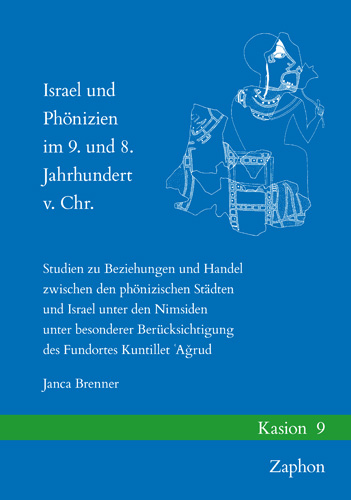 Israel und Phonizien im 9. und 8. Jahrhundert v. Chr.
Studien zu Beziehungen und Handel zwischen den phonizischen Stadten und Israel unter den Nimsiden unter besonderer Berucksichtigung des Fundortes Kuntillet 'Agrud
Volume 9
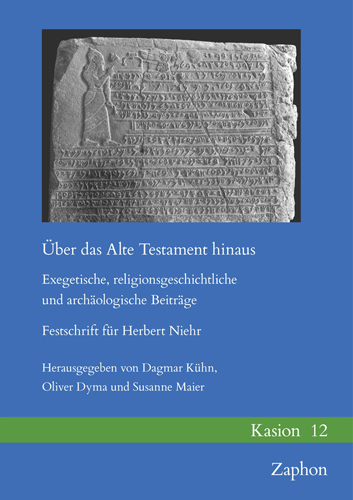 Uber das Alte Testament hinaus
Exegetische, religionsgeschichtliche und archaologische Beitrage. Festschrift fur Herbert Niehr
Volume 12
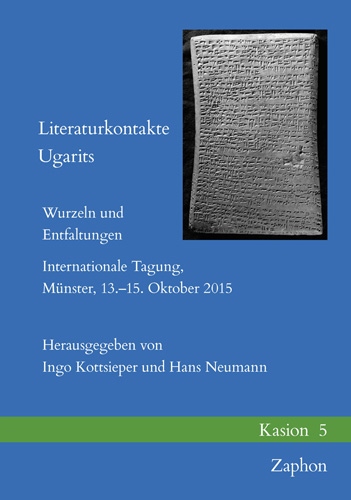 Literaturkontakte Ugarits
Wurzeln und Entfaltungen: Internationale Tagung, Munster, 13-15. Oktober 2015
Volume 5
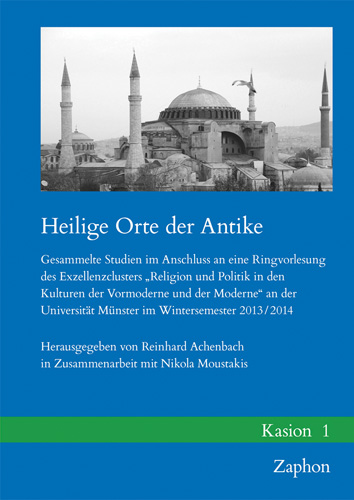 Heilige Orte der Antike
Gesammelte Studien im Anschluss an eine Ringvorlesung des Exzellenzclusters Religion und Politik in den Kulturen der Vormoderne und der Moderne an der Universitat Munster im Wintersemester 2013/2014
Volume 1
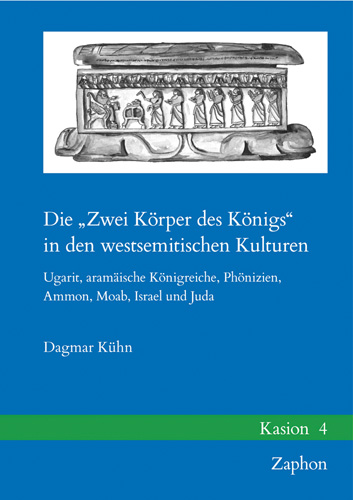 Die ‘Zwei Korper des Konigs’ in den westsemitischen Kulturen
Ugarit, aramaische Konigreiche, Phonizien, Ammon, Moab, Israel und Juda
Volume 4
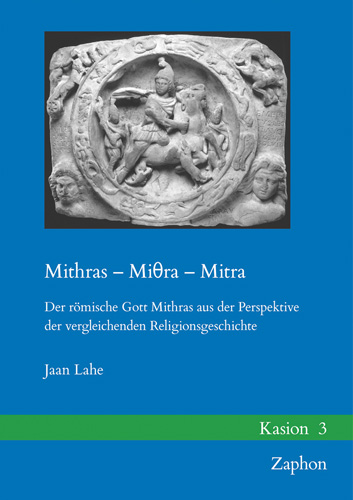 Mithras – Miθra – Mitra
Der romische Gott Mithras aus der Perspektive der vergleichenden Religionsgeschichte
Volume 3
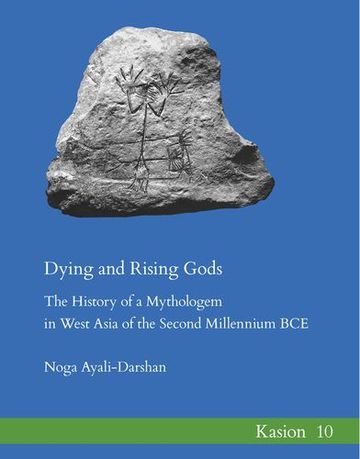 Dying and Rising Gods
The History of a Mythologem in West Asia of the Second Millennium BCE
Volume 10
 talugaes wittes
Ancient Near Eastern Studies Presented to Stefano de Martino on the Occasion of his 65th Birthday
Volume 2
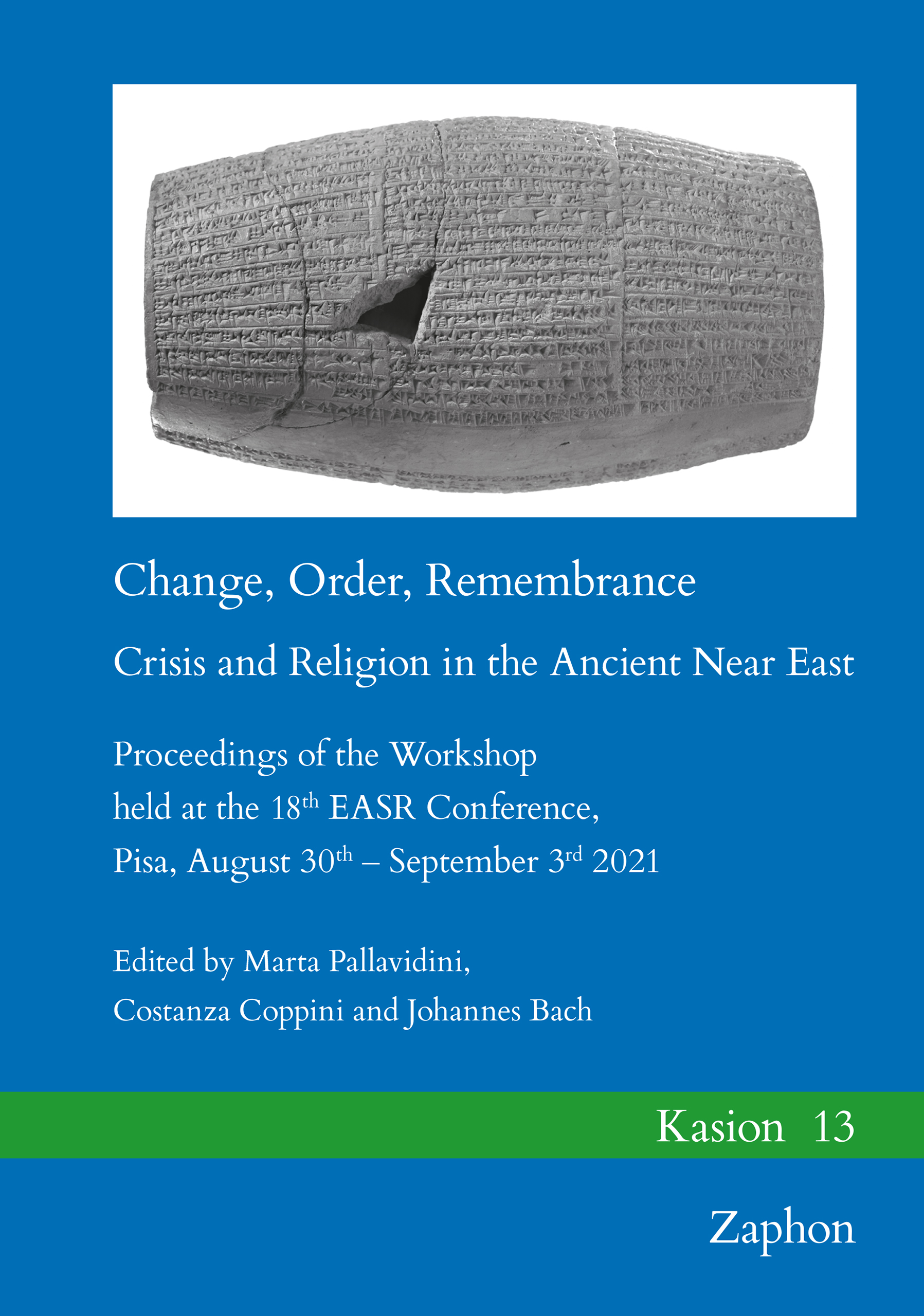 Change, Order, Remembrance
Crisis and Religion in the Ancient Near East: Proceedings of the Workshop held at the 18th EASR Conference, Pisa, August 30th - September 3rd 2021
Volume 13
Similar Books





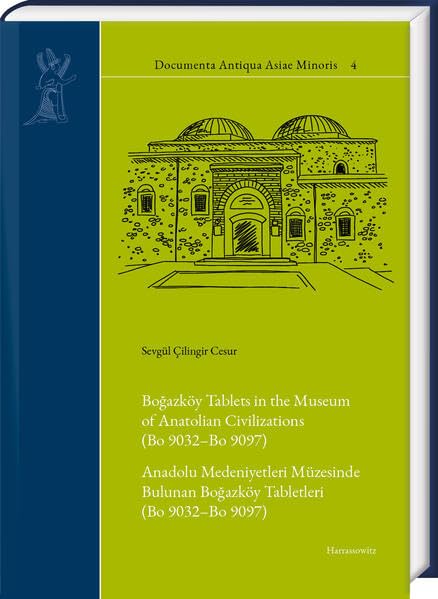 Boğazköy Tablets in the Museum of Anatolian Civilizations (Bo 9032–Bo 9097)
Anadolu Medeniyetleri Müzesinde Bulunan Boğazköy Tabletleri (Bo 9032–Bo 9097)
Volume 4
 Caesar’s Visions and Impact on the Roman Empire
Revisiting the Archaeological and Historical Record of the 40s BC
Volume 2


 Connecting the Dots: Counting, Writing, and the Beginnings of Civilization
The Secret Lives of Clay Tokens: A Memoir
 Construction Processes in Historical Western Societies (5th c. BC – 10th c. AD)
Case Studies on Techniques, Models, and Costs
 Contesting Labeled Identities
The Sociology of Gentilics in Biblical and Northwest Semitic Literature

 Curating the Prehistoric Past
Studies on West Asian Archaeology and Beyond in Honour of Yoshihiro Nishiaki
 Drunk the Potion, No Whit Charmed
The Doctrine of Pure and Perfect Souls from Iamblichus to Damascius

 Epigraphic “Shades” from Hellenistic Thrace
Contextualizing Inscriptions in Greek from Thracian Tombs

 Epiphanies of the Divine in the Septuagint and the New Testament
Fifth International Symposium of the Corpus Judaeo-Hellenisticum Novi Testamenti (CJHNT), 14-17 May 2015, Nottingham


 Etruscan and Roman Hellenistic Anatomical ex votos
Reassessing Popular Religious Expressions in Central Italy
Volume 8


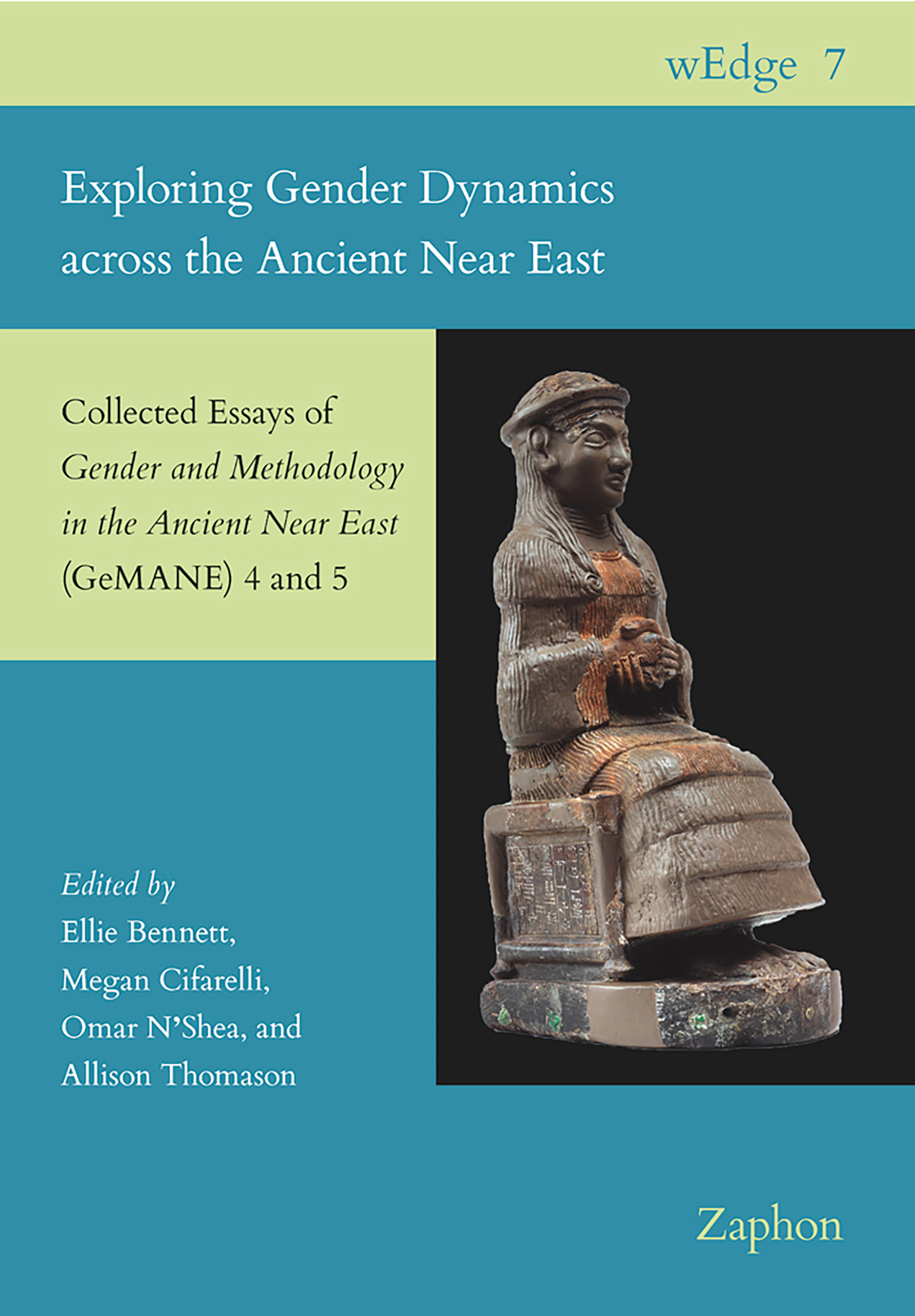 Exploring Gender Dynamics across the Ancient Near East
Collected Essays of Gender and Methodology in the Ancient Near East (GeMANE) 4 and 5
Volume 7


 Gold, Silver and Glass: Power Networks, Cultural Identities, Technology Transfers and Agency across the Old World (7th Century BC – 1st Century AD)
Proceedings of a Conference Held at the British Museum, 16–18 June 2023
 Ḫattušaš utnē išḫameški
Hittite and Other Ancient Near Eastern Studies Presented to Piotr Taracha on the Occasion of His 65th Birthday




 Invisible Labour in Antiquity
Visualizing Obscure Work in the Ancient Mediterannean and West Asia
Volume 1