
Excavations at Stanground South, Peterborough
Prehistoric, Roman and Post-Medieval Settlement along the Margins of the Fens
By (author) William A Boismier By (author) Edmund Taylor By (author) Yvonne Wolframm-Murray

Paperback (Published)
(February 2021)
ISBN: 9781789698442
8.07 x 11.42 inches
Price: $76.00
In stock
This volume is a report of archaeological excavations at Stanground South undertaken by MOLA between September 2007 and November 2009 on behalf of Persimmon Homes (East Midlands) Ltd and in accordance with a programme of works overseen by CgMs Heritage. The work involved five areas of set-piece excavation and a series of strip map an
MOLA (formerly Northamptonshire Archaeology) undertook archaeological excavations at Stanground South between September 2007 and November 2009 on behalf of Persimmon Homes (East Midlands) Ltd and in accordance with a programme of works designed and overseen by CgMs Heritage. The site is situated on the south-eastern outskirts of Peterborough, on glacial tills overlooking along the Fen edge. The works comprised five areas of set-piece excavation and a series of strip map and record areas, targeted on areas of archaeological potential identified by previous evaluation works. In total, an area of 70ha was subject to archaeological mitigation. The excavations recorded archaeological remains dating from the Bronze Age to the medieval period. The earliest features comprised four burnt mounds dating to the early Bronze Age, one of which was associated with two superimposed buildings and a small group of up to six cremations. In the middle Bronze Age there was a substantial unenclosed cemetery (urnfield) comprising 78 cremations (as well as a further possible three outlying cremations to the urnfield). In the late Bronze Age/early Iron Age a substantial droveway, up to 65m wide, was constructed leading northwards from the Fen edge to higher ground. A series of post-built roundhouses were later constructed within the confines of the droveway. In the middle Iron Age, the droveway was partitioned to form a series of enclosures, within one of which a settlement was established adjacent to the Fen edge. This included roundhouses and a number of two-post and four-post structures. In the later Iron Age, an enclosed settlement had developed to the north-west. This comprised several roundhouses within a substantial rectangular enclosure, which was open at its southern end. It appears that this began as an unenclosed site, which was later enclosed. Removal of cattle horn for working may have been occurring. In the Roman period (2nd and late 4th centuries AD) a series of small enclosures were constructed on the eastern side of the later Iron Age enclosed settlement. These contained structures and features apparently associated with rural industry, which may have also exported surplus to market. Industries including the processing of hide, late Roman cheese making (with seven presses recovered), late Roman pottery production and some metalworking. The economy of the site from the later Bronze Age onwards was focussed on pastoralism, with limited evidence for grain cultivation. During the Roman period, this seems to have specialised further towards dairy farming. The environment of the site seems to have undergone little change from the later Bronze Age, being largely open with areas of woodland and wetter areas. Peat growth during the Iron Age resulted in the covering of some of the Bronze Age features. During the medieval period, large portions of the site were given over to open field cultivation, evidenced by the remains of ridge and furrow cultivation. The area was partitioned in the post-medieval period by the construction of a series of drainage ditches, which form the basis of the current field pattern.
Summary Chapter 1: Introduction Location, topography and geology - by WA Boismier, Steve Critchley and Helen Keeley Planning background - by WA Boismier and Rebecca Casa-Hatton Investigation Strategies - by WA Boismier, Ed Taylor and Yvonne Wolframm Murray Archive Location - by Theodora Anastasidou and Tora Hylton Site phasing - by WA Boismier Chapter 2: The archaeological evidence Period 1: Early prehistoric activity (Mesolithic to early Bronze Age) - by Yvonne Wolframm-Murray Period 2: Bronze and early Iron Age - by WA Boismier, Ed Taylor and Yvonne Wolframm-Murray Period 3: Middle to late Iron Age - by WA Boismier, Ed Taylor and Yvonne Wolframm-Murray Period 4: Roman - by Ed Taylor and Yvonne Wolframm-Murray Period 5: Medieval to post-medieval - by Ed Taylor and Yvonne Wolframm-Murray Chapter 3: Finds Worked Flint - by Yvonne Wolframm-Murray Worked Flint from burnt mounds - by W.A. Boismier The Bronze Age pottery - by Andy Chapman The late prehistoric and Roman pottery - by E.R. McSloy Roman Ceramic building material and kiln furniture - by Pat Chapman Plaster and mortar - by Pat Chapman Utilised stone - by Andy Chapman Metalworking debris and fuel ash slag - by Andy Chapman Small finds - by Tora Hylton with Ian Meadows and Don Mackreth Possible fired clay artefacts - by Pat Chapman Chapter 4: Human, faunal and environmental evidence Human remains - by Anwen Caffell and Malin Holst Mammal, bird, fish, amphibian and reptile bones - by Philip L. Armitage Charcoal - by Dana Challinor Waterlogged wood - by Michael Bamford with contributions from Maise Taylor Pollen - by C.R. Batchelor Mollusca - by Karen Deighton Chapter 5: Discussion - by WA Boismier, Ed Taylor, Rob Atkins, Philip Armitage, Val Fryer and Yvonne Wolframm-Murray Introduction Settlement chronology ; Bibliography, Summary
Chapter 1: Introduction
Location, topography and geology – by WA Boismier, Steve Critchley and Helen Keeley
Planning background – by WA Boismier and Rebecca Casa-Hatton
Investigation Strategies – by WA Boismier, Ed Taylor and Yvonne Wolframm Murray
Archive Location – by Theodora Anastasidou and Tora Hylton
Site phasing – by WA Boismier
Chapter 2: The archaeological evidence
Period 1: Early prehistoric activity (Mesolithic to early Bronze Age) – by Yvonne Wolframm-Murray
Period 2: Bronze and early Iron Age – by WA Boismier, Ed Taylor and Yvonne Wolframm-Murray
Period 3: Middle to late Iron Age – by WA Boismier, Ed Taylor and Yvonne Wolframm-Murray
Period 4: Roman – by Ed Taylor and Yvonne Wolframm-Murray
Period 5: Medieval to post-medieval – by Ed Taylor and Yvonne Wolframm-Murray
Chapter 3: Finds
Worked Flint – by Yvonne Wolframm-Murray
Worked Flint from burnt mounds – by W.A. Boismier
The Bronze Age pottery – by Andy Chapman
The late prehistoric and Roman pottery – by E.R. McSloy
Roman Ceramic building material and kiln furniture – by Pat Chapman
Plaster and mortar – by Pat Chapman
Utilised stone – by Andy Chapman
Metalworking debris and fuel ash slag – by Andy Chapman
Small finds – by Tora Hylton with Ian Meadows and Don Mackreth
Possible fired clay artefacts – by Pat Chapman
Chapter 4: Human, faunal and environmental evidence
Human remains – by Anwen Caffell and Malin Holst
Mammal, bird, fish, amphibian and reptile bones – by Philip L. Armitage
Charcoal – by Dana Challinor
Waterlogged wood – by Michael Bamford with contributions from Maise Taylor
Pollen – by C.R. Batchelor
Mollusca – by Karen Deighton
Chapter 5: Discussion – by WA Boismier, Ed Taylor, Rob Atkins, Philip Armitage, Val Fryer and Yvonne Wolframm-Murray
Introduction ;
Settlement chronology ;
Bibliography
- By (author) William A Boismier
- By (author) Edmund Taylor
- By (author) Yvonne Wolframm-Murray
Similar Books
 A Collaborative Tapestry in Honour of Shirley Ann Brown / Une fresque brodée en l’honneur de Shirley Ann Brown
The Bayeux Tapestry Seen by her Colleagues and Friends / La Tapisserie de Bayeux vue par ses collègues et amis
 Behind the Scenes of Medieval Roofs
An Overview of the Roofing Systems of Italian Churches
Volume 90






 Innovation and Medieval Communities
The Circulation of Ideas and Practices in and out of the Town (1200-1500)
Volume 63
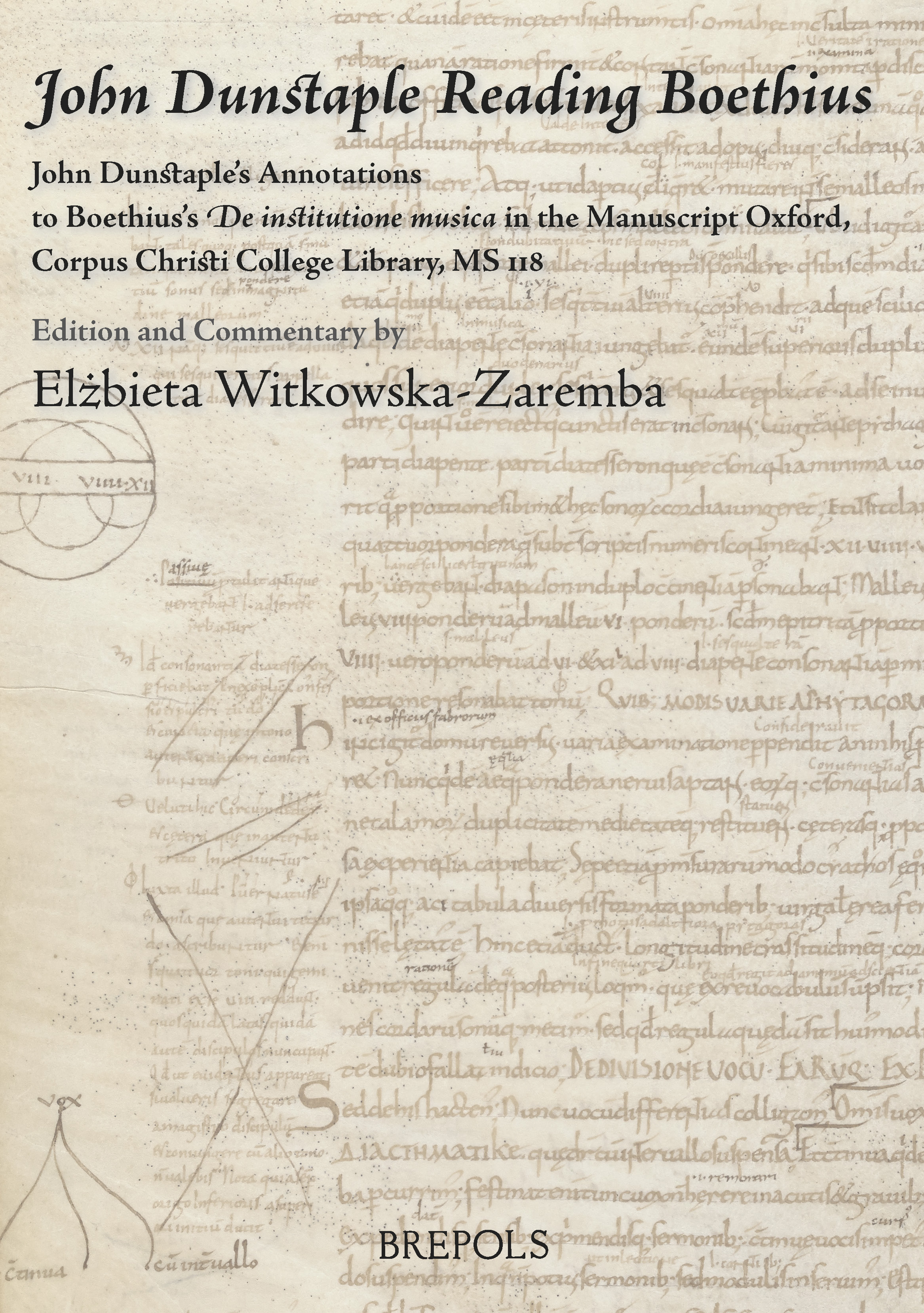 John Dunstaple Reading Boethius
John Dunstaple’s Annotations to Boethius’s “De institutione musica” in the Manuscript Oxford, Corpus Christi College Library, MS 118
 Linguistic and Cultural Dynamics in a Frontier Society
New Perspectives on Northeastern Bavaria and Western Bohemia in the Early Middle Ages
Volume 9
 Making and Meaning in the Bronze and Iron Ages
Chronology, Landscapes and Societies across Europe. Proceedings from the METALAGES2024 Colloquium (Florence, 23 October 2024)
 Medieval Debates on Foreknowledge: Future Contingents, Prophecy, and Divination
Acts of the XXVII Annual Colloquium of the SIEPM, Trento 12-15 September 2023
Volume 31
 Medieval Yeghegis, Armenia
History, Archaeology, Society. Local Multiplicities and Global Connections of a Rural Centre on the Silk Road(s)




 Power and Women in Southeast and Central Europe in Late Medieval and Early Modern Period (1300-1600)
Volume 10




 The Anglo-Norman Bible’s Books of Kings, a Critical Edition
(BL Royal 1 C III, fols 234r-274v)
Volume 37

