
Epigraphy in the Digital Age
Opportunities and Challenges in the Recording, Analysis and Dissemination of Inscriptions
Edited by Isabel Velázquez Soriano Edited by David Espinosa Espinosa

Paperback (Published)
(August 2021)
ISBN: 9781789699876
8.07 x 11.46 inches
Price: $59.00
In stock
This volume presents epigraphic research using digital and computational tools, comparing the outcomes of both well-established and newer projects to consider the most innovative investigative trends. Papers consider open-access databases, SfM Photogrammetry and Digital Image Modelling applied to textual restoration, Linked Open Data
Epigraphy in the Digital Age: Opportunities and Challenges in the Recording, Analysis and Dissemination of Inscriptions originates from the International Conference El patrimonio epigrafico en la era digital: Documentacion, analisis y socializacion (Madrid, 20-21 June 2019), organized by the Complutense University of Madrid and the University of Santiago de Compostela. Taking the results of the conference as a starting point, the book presents epigraphic research using digital and computational tools, bringing together and comparing the outcomes of both well-established projects and newer ones, so as to establish a comprehensive view according to the most innovative trends in investigation. 21 contributions have been gathered together, involving 38 scholars, which address issues related to open-access databases, SfM Photogrammetry and Digital Image Modelling applied to textual restoration, EpiDoc (TEI-XML edition), and Linked Open Data. In this manner, the book offers a dialogue based on very different perspectives and previous experiences to generate common research questions, methodologies, practical solutions, and significant results. The outcome is intended more a starting point and platform for future research than as a definitive point of arrival in terms of so-called ‘digital epigraphy’.
Foreword - Isabel Velazquez Soriano and David Espinosa Espinosa Part 1: Preliminary Issues Chapter 1: Digital Projects in Epigraphy: Research Needs, Technical Possibilities, and Funding Problems - Silvia Orlandi Chapter 2: The Need for an Innovative Approach to the Study of Latin Epigraphic Poetry - Concepcion Fernandez-Martinez Chapter 3: The Role Played by Epigraphy in Archaeological Divulgation - Rosario Cebrian Fernandez Part 2: Digital Recording and Analysis Techniques in Epigraphy Chapter 4: Virtual Epigraphy: Virtual Museums and 3D Epigraphy - Javier Andreu Pintado and Pablo Serrano Basterra Chapter 5: Digital Epigraphy: New Technologies and 3D Modelling - Aroa Gutierrez Alonso, Mercedes Farjas Abadia and Rocio Gutierrez Gonzalez Chapter 6: Reconstructing the Texts of Funerary Inscriptions from Augusta Emerita for the CIL II2 Merida Project with the Aid of New Technologies - Jonathan Edmondson Chapter 7: Tools Integration for Understanding and Deciphering Inscriptions in the PETRAE Database - Florent Comte, Hernan Gonzalez Bordas, Milagros Navarro Caballero and Nathalie Prevot Chapter 8: A Sample of the Application of Digital Photogrammetry to Latin Epigraphy: The Epitaphs of the Vadinienses in 3D - David Martino Garcia and Luis Coya Alaez Chapter 9: The 'Toros de Guisando' in the Digital Age - J. Francisco Fabian, Helena Gimeno Pascual, Maria del Rosario Hernando Sobrino and Hugo Pires Chapter 10: 'Rough-and-Ready': 3D Models Rescuing some Roman Inscriptions from Lusitania - Joaquin L. Gomez-Pantoja and Ignacio Triguero Part 3: Computational Epigraphy and Digital Dissemination Chapter 11: Where Can Our Inscriptions Take Us? Harnessing the Potential of Linked Open Data for Epigraphy - Charlotte Tupman Chapter 12: Linguistic Markup and Dialectal Variants. The Perspective of the Digital Corpus Supplementum Epigraphicum Creticum (e-SEC) - Alcorac Alonso Deniz Chapter 13: Digital Publication of Texts in Palaeo-European Languages and Script. The State-of-the-Art - Maria Jose Estaran Tolosa Chapter 14: Philology and Technology in the Hesperia and AEHTAM Databanks - Eduardo Orduna, Eugenio R. Lujan and Isabel Velazquez Chapter 15: The Epigraphica 3.0 Project: Making Accessible and More Readable the Roman Epigraphy from Ourense Province (Galicia, Spain) - David Espinosa Espinosa, Borja Paz Rodriguez and Miguel Carrero Pazos Chapter 16: Roman Open Data. CEIPAC's Amphora Epigraphy Database - Jose Remesal Rodriguez and Guillem Rull Fort Chapter 17: From CIL XV to the CEIPAC Database: Some Results of Dissemination Data - Juan Manuel Bermudez Lorenzo Chapter 18: M(agistratus) H(ispaniae) R(omanae): A Database of Magistrates from Roman Iberia - Silvia Gazzoli Chapter 19: Doing Epigraphy with Digital Support: Tools for the Study of Lapidary Epigraphy - The Case of Roman Goldsmiths - Jordi Perez Gonzalez Chapter 20: Inscriptions by Christians in Late Antique Rome. Some Issues and Perspectives for the Epigraphic Database Bari (EDB) - Antonio E. Felle Chapter 21: EPIHUM, a Database for Renaissance Epigraphy from Portugal and Spain - Manuel Blazquez-Ochando and Manuel Ramirez-Sanchez, Foreword – Isabel Velázquez Soriano and David Espinosa Espinosa Part 1: Preliminary Issues Chapter 1: Digital Projects in Epigraphy: Research Needs, Technical Possibilities, and Funding Problems – Silvia Orlandi Chapter 2: The Need for an Innovative Approach to the Study of Latin Epigraphic Poetry – Concepción Fernández-Martínez Chapter 3: The Role Played by Epigraphy in Archaeological Divulgation – Rosario Cebrián Fernández Part 2: Digital Recording and Analysis Techniques in Epigraphy Chapter 4: Virtual Epigraphy: Virtual Museums and 3D Epigraphy – Javier Andreu Pintado and Pablo Serrano Basterra Chapter 5: Digital Epigraphy: New Technologies and 3D Modelling – Aroa Gutiérrez Alonso, Mercedes Farjas Abadía and Rocío Gutiérrez González Chapter 6: Reconstructing the Texts of Funerary Inscriptions from Augusta Emerita for the CIL II2 Mérida Project with the Aid of New Technologies – Jonathan Edmondson Chapter 7: Tools Integration for Understanding and Deciphering Inscriptions in the PETRAE Database – Florent Comte, Hernán González Bordas, Milagros Navarro Caballero and Nathalie Prévôt Chapter 8: A Sample of the Application of Digital Photogrammetry to Latin Epigraphy: The Epitaphs of the Vadinienses in 3D – David Martino García and Luis Coya Aláez Chapter 9: The ‘Toros de Guisando’ in the Digital Age – J. Francisco Fabián, Helena Gimeno Pascual, María del Rosario Hernando Sobrino and Hugo Pires Chapter 10: ‘Rough-and-Ready’: 3D Models Rescuing some Roman Inscriptions from Lusitania – Joaquín L. Gómez-Pantoja and Ignacio Triguero Part 3: Computational Epigraphy and Digital Dissemination Chapter 11: Where Can Our Inscriptions Take Us? Harnessing the Potential of Linked Open Data for Epigraphy – Charlotte Tupman Chapter 12: Linguistic Markup and Dialectal Variants. The Perspective of the Digital Corpus Supplementum Epigraphicum Creticum (e-SEC) – Alcorac Alonso Déniz Chapter 13: Digital Publication of Texts in Palaeo-European Languages and Script. The State-of-the-Art – María José Estarán Tolosa Chapter 14: Philology and Technology in the Hesperia and AEHTAM Databanks – Eduardo Orduña, Eugenio R. Luján and Isabel Velázquez Chapter 15: The Epigraphica 3.0 Project: Making Accessible and More Readable the Roman Epigraphy from Ourense Province (Galicia, Spain) – David Espinosa Espinosa, Borja Paz Rodríguez and Miguel Carrero Pazos Chapter 16: Roman Open Data. CEIPAC’s Amphora Epigraphy Database – José Remesal Rodríguez and Guillem Rull Fort Chapter 17: From CIL XV to the CEIPAC Database: Some Results of Dissemination Data – Juan Manuel Bermúdez Lorenzo Chapter 18: M(agistratus) H(ispaniae) R(omanae): A Database of Magistrates from Roman Iberia – Silvia Gazzoli Chapter 19: Doing Epigraphy with Digital Support: Tools for the Study of Lapidary Epigraphy – The Case of Roman Goldsmiths – Jordi Pérez González Chapter 20: Inscriptions by Christians in Late Antique Rome. Some Issues and Perspectives for the Epigraphic Database Bari (EDB) – Antonio E. Felle Chapter 21: EPIHUM, a Database for Renaissance Epigraphy from Portugal and Spain – Manuel Blázquez-Ochando and Manuel Ramírez-Sánchez
Isabel Velázquez Soriano is Professor of Latin Philology in the Department of Classical Philology at the Complutense University of Madrid. She is the principal Investigator of the Research Group ‘Textos epigráficos antiguos de la Península Ibérica y el Mediterráneo griego’ (TEAPIMeG no. 930750) at the Complutense University of Madrid, Director of the Epigraphic Archive of Hispania, and editor of Hispania Epigraphica series at the same university. Isabel Velázquez Soriano is a specialist in the study of epigraphic and literary texts from Late Antiquity and the Middle Ages. ;
David Espinosa Espinosa has a PhD in Ancient History from the Complutense University of Madrid. A Postdoctoral Fellow at the University of Santiago de Compostela and the University of Vienna, he is now Lecturer in Ancient History at the University of Oviedo. His research focuses on the granting of Latin rights in the western Roman provinces, the Roman civil wars during the Republic, and Roman epigraphy. Director of the digital epigraphic corpus Epigraphica 3.0, he has among his book publications Plinio y los ‘oppida de antiguo Lacio’. El proceso de difusión del Latium en Hispania Citerior (2014).
- Edited by Isabel Velázquez Soriano
- Edited by David Espinosa Espinosa
‘In conclusion, this volume represents a significant collection of recent epigraphic projects developed through digital technologies, offering also a rich apparatus of bibliographical references to deepen readers’ knowledge in this field. … The book will be useful especially for epigraphists who are planning to include digital tools in their future research, but also for students who are willing to discover more about the possibilities offered by technologies for the analysis and dissemination of ancient inscriptions.’ - Tatiana Tommasi (2025): GNOMON 97
—
Similar Books


 Archaeological Excavations at Irmis Rka: An Investigation of a Multi-Layered Settlement in Southwest Georgia
Results from the 2020 Season: Early Bronze Age to Medieval Occupations


 Caesar’s Visions and Impact on the Roman Empire
Revisiting the Archaeological and Historical Record of the 40s BC
Volume 2


 Catuvellaunia and Rome: Economic and Political Relations during the Final Decades Pre-conquest
The Role of Grain from Southeastern Britain and Its Potential for Maintenance of the Roman Military along the Frontier on the Rhine
 Circulation, Use, Impact
The Consumption of Architectural Books in the Early Modern Eastern Adriatic
Volume 1

 Colour Concept “Secoli bui” a colori
Codici cromatici e architetture dipinte nell’età tardoantica e medievale

 Construction Processes in Historical Western Societies (5th c. BC – 10th c. AD)
Case Studies on Techniques, Models, and Costs

 Crossing Disciplines in the Study of Archaeology and Prehistoric Art: Insights from the Sahara and Mediterranean Africa
Proceedings of the XX UISPP World Congress (5–9 September 2023, Timișoara, Romania) Volume / Session 18
 Crossing Sacred Landscapes
Contacts and Continuities in the Desert Cults and Beliefs of Ancient Northern Arabia and the Arid Southern Levant
 Cuneiform Artefacts from Archaeological Contexts: New Research on Ancient Iraq
Proceedings of a Conference Held at the Bavarian Academy of Sciences and Humanities, July 4–5, 2024
Volume 2


 ENTANGLED AFRICA
Intra-African Relations Between Rain Forest and Mediterranean from Around 4,000 BCE to 1,500 CE


 Etruscan and Roman Hellenistic Anatomical ex votos
Reassessing Popular Religious Expressions in Central Italy
Volume 8


 Exploring Prehistoric Pottery in Japan
A Study of Organic Inclusions, Adhering Materials, and Impressions of Woven Items


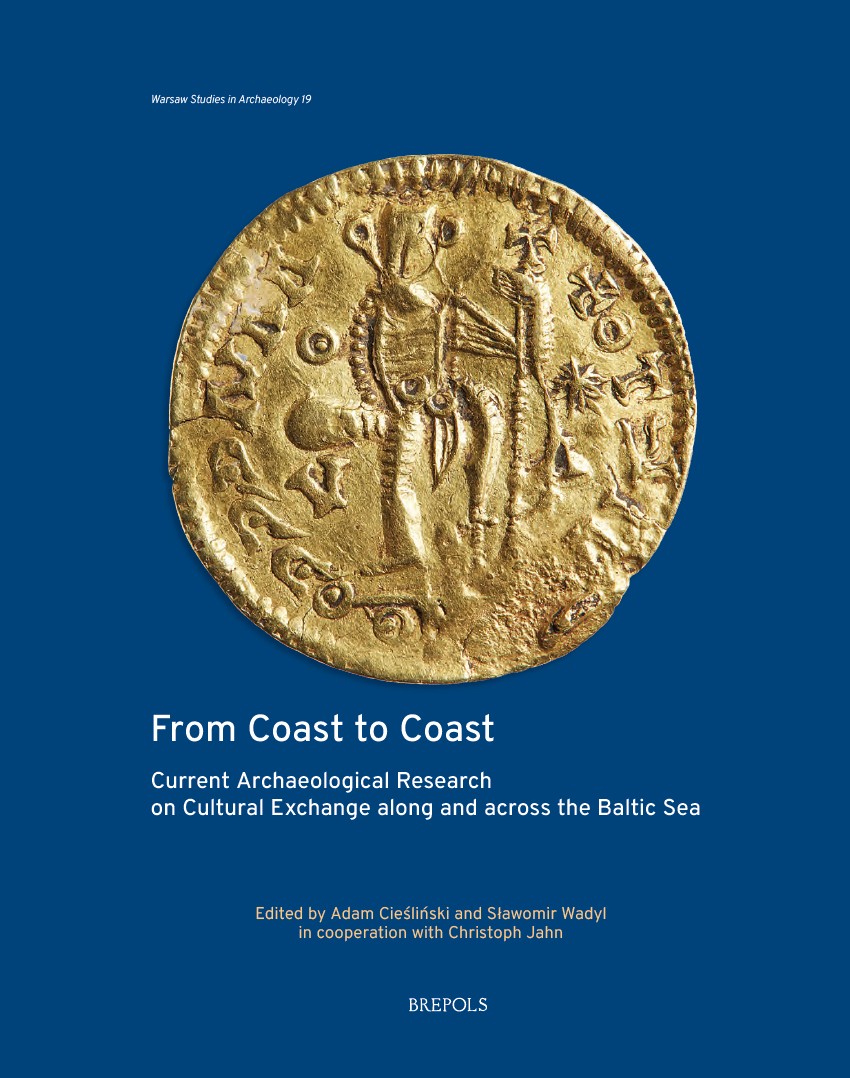 From Coast to Coast
Current Archaeological Research on Cultural Exchange along and across the Baltic Sea
Volume 19
 Frontiers of the Roman Empire: The Frontier of the Roman Province of Raetia
Grenzen des Römischen Reiches: Die Grenze der Römischen Provinz Raetien