
Ephyra-Epirus: The Mycenaean Acropolis
Results of the Excavations 1975-1986 and 2007-2008
By (author) Thanasis I. Papadopoulos By (author) Evangelia Papadopoulou

Paperback (Published)
(July 2020)
ISBN: 9781789693713
8.07 x 11.42 inches
Price: $42.00
In stock
This volume presents the results of the 1975-1986 and 2007-2008 excavations on the prehistoric-Mycenaean acropolis of Ephyra, one of the most important Bronze Age sites of Epirus. Ephyra is a small coastal fortified site in the region of the lower Acheron valley, and it has produced impressive and, in some cases, unique Bronze Age re
Ephyra-Epirus: The Mycenaean Acropolis presents the results of the 1975-1986 and 2007-2008 excavations on the prehistoric-Mycenaean acropolis of Ephyra, one of the most important Bronze Age sites of Epirus. Ephyra is a small coastal fortified site in the region of the lower Acheron valley and the only one that has been systematically excavated, producing impressive and, in some cases, unique Bronze Age remains (architectural, burial, pottery, artefacts). It stands on a high hill, in an exceptional position that overlooks and commands the lower Acheron valley and provides easy access both to the nearby Glykis Limin, the Ionian sea and the hinterland. Moreover, it is surrounded by three successive perivoloi, two of which (middle and lower) belong to LH III times, with a monumental south entrance gate. Ephyra fits the criteria of a major fortified settlement, as it covers an important and strategic prehistoric citadel, cemetery, residence and port of call for those travelling to the West. Strictly based on the archaeological data presented, this study suggests that the acropolis had a permanent Mycenaean population during the entire LH III period and continued to thrive after the collapse of Mycenaean centres until (and including) the Archaic period. Finally, it is tempting to suggest a correlation of the archaeological record with the Homeric tradition (Homeric Efyra, Od.a..259,b.238).
"Preface and acknowledgements ; Introduction ; I. EPIRUSII. EPHYRAThe prehistoric pottery of Epirus. Fabric and technique, TypologyThe prehistoric pottery of Ephyra. Fabric and technique. TypologyPotteryArtefacts Introduction ;
I. EPIRUS Topography, Geomorphology, Climate and the history of previous research. ;
II. EPHYRA
1: Environment, myth, literary evidence and history of the excavation ;
2: Description of the acropolis and architectural remains ;
3: Tombs and burial customs in Epirus ;
4: The Prehistoric cemetery of tumuli at Ephyra ;
5: Pottery: ;
The prehistoric pottery of Epirus. Fabric and technique, Typology
The prehistoric pottery of Ephyra. Fabric and technique. Typology
6: Indicative catalogue of prehistoric pottery and artefacts of Ephyra: ;
Pottery
Artefacts
7: Classical and Hellenistic pottery ;
8: Conclusions ;
9: Selected Bibliography ;
- By (author) Thanasis I. Papadopoulos
- By (author) Evangelia Papadopoulou
Similar Books


 Caesar’s Visions and Impact on the Roman Empire
Revisiting the Archaeological and Historical Record of the 40s BC
Volume 2


 Etruscan and Roman Hellenistic Anatomical ex votos
Reassessing Popular Religious Expressions in Central Italy
Volume 8


 Invisible Labour in Antiquity
Visualizing Obscure Work in the Ancient Mediterannean and West Asia
Volume 1
 Late Antique villae in the Balkans (3rd–7th c. AD): Current Research Questions and Perspectives
HAEMUS Companion to the Late Antique Balkans 1
Volume 4
 Making and Meaning in the Bronze and Iron Ages
Chronology, Landscapes and Societies across Europe. Proceedings from the METALAGES2024 Colloquium (Florence, 23 October 2024)


 Portraying the Individual in the Roman East
Local–Imperial Entanglements in Sculpture, Mosaics, and Paintings (First–Fourth Centuries AD)
Volume 18


 Small Worlds and Relational Agencies: Local Societies in Early Medieval Iberia
Pequeños mundos y Agencias relacionales: Sociedades locales altomedievales en la Península Ibérica


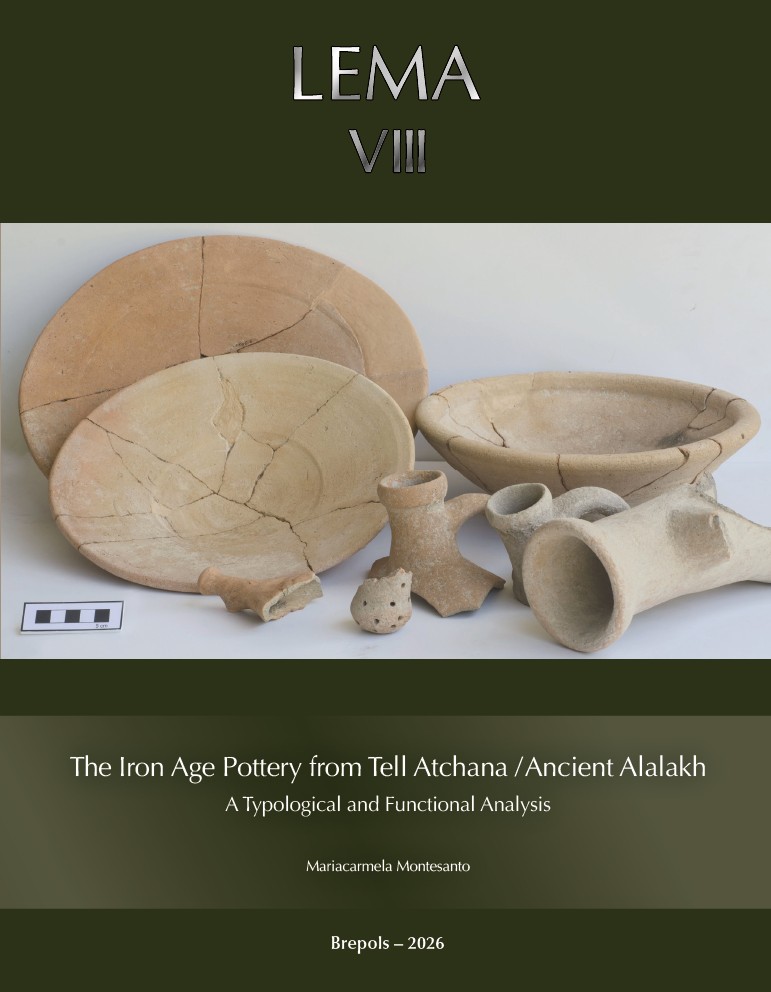 The Iron Age Pottery from Tell Atchana / Ancient Alalakh
A Typological and Functional Analysis
Volume 8

 Writing in the Church of the Nativity in Bethlehem
Inscription and Graffiti in a Multilingual and Multigraphic Perspective
Volume 45


 Atlante tematico di topografia antica 36-2026
Urbanistica e monumenti, porti, Roma. Ricerche sui monti Aurunci
Volume 36
 Cerámica común romana y ciclo haliéutico
Análisis de los contextos de las cetariae de Iulia Traducta

 Nuove scoperte e progressi nelle metodologie di rilievo e analisi dell’arte rupestre post-paleolitica in Italia
New discoveries and progress in the tracing and analysis methodologies of the post-Paleolithic rock art in Italy


 A Dramatic Event in Late Roman Florence
The Anomalous Burial Site Discovered beneath the Uffizi Gallery

 Alexander the Great and the Campaign of Gaugamela
New Research on Topography and Chronology. IAMNI 1 (Italian Archaeological Mission to Northern Iraq)
Volume 53