
Elias Ashmole
The Quartecentenary Biography
by Vittoria Feola

Paperback (Published)
(November 2017)
ISBN: 9788891316141
6.65 x 9.45 inches
Price: $209.00
In stock
The Quartercentenary Biography of Elias Ashmole aims to complement previous scholarship about him both by eminent past historians and by myself, while telling an incredible rags-to-riches story. Having spent most of the last twenty years on Elias Ashmole’s collection of manuscripts and books, I felt I owed it to Ashmole that I should write his Quartercentenary Biography. The year 2017 marks 400 years since Elias Ashmole’s birth, in Lichfield. The son of a modest saddler, Ashmole died as the founder of the first public museum in the British Isles. His successful life against all the odds is a great tale. Tercentenary celebrations for the foundation of the Ashmolean Museum, in Oxford, focussed more on the worth of that institution than on the merits of its founder. It belongs to the very nature of celebrations the tendency to overemphasise some positive aspects over other, less positive ones. Historians, moreover, sometimes prefer winning arguments rhetorically rather than balancing facts, thereby coming up with a less powerful, far more nuanced argument. They fear appearing weak, as if historians were lawyers in imaginary academic courts. We are not. When historians feel the urge to win arguments by omitting crucial evidence, they behave like propagandists. Take the importance of book collecting for Ashmole and his Museum, for example. Ever since the magisterial studies of Robert Theodore Gunther, back in the 1930s, theoretically we should all have been aware of the extent, composition, and value of Ashmole’s collection of printed works. Instead, Ashmole has received some bad publicity, his own collected books having often been omitted from the picture. He has been treated as almost a thief of Tradescant’s collections, as if those curiosities were the only founding nucleus of Ashmole’s Museum.
The Quartercentenary Biography of Elias Ashmole aims to complement previous scholarship about him both by eminent past historians and by myself, while telling an incredible rags-to-riches story. Having spent most of the last twenty years on Elias Ashmole’s collection of manuscripts and books, I felt I owed it to Ashmole that I should write his Quartercentenary Biography. The year 2017 marks 400 years since Elias Ashmole’s birth, in Lichfield. The son of a modest saddler, Ashmole died as the founder of the first public museum in the British Isles. His successful life against all the odds is a great tale. Tercentenary celebrations for the foundation of the Ashmolean Museum, in Oxford, focussed more on the worth of that institution than on the merits of its founder. It belongs to the very nature of celebrations the tendency to overemphasise some positive aspects over other, less positive ones. Historians, moreover, sometimes prefer winning arguments rhetorically rather than balancing facts, thereby coming up with a less powerful, far more nuanced argument. They fear appearing weak, as if historians were lawyers in imaginary academic courts. We are not. When historians feel the urge to win arguments by omitting crucial evidence, they behave like propagandists. Take the importance of book collecting for Ashmole and his Museum, for example. Ever since the magisterial studies of Robert Theodore Gunther, back in the 1930s, theoretically we should all have been aware of the extent, composition, and value of Ashmole’s collection of printed works. Instead, Ashmole has received some bad publicity, his own collected books having often been omitted from the picture. He has been treated as almost a thief of Tradescant’s collections, as if those curiosities were the only founding nucleus of Ashmole’s Museum.
- By (author) Vittoria Feola
Other Titles in this Series
 The Heart in Antiquity
A Journey through Egypt, Mesopotamia, India, China, Pre-Hispanic America, and Greece
Volume 6

 Emergenza Covid
Niguarda Case History: Un'esperienza italiana nella lotta alla pandemia COVID-19
Volume 3


Similar Books


 Balthasar Caymox of Nuremberg
Early Modern German Print Publishers: Popular Prints of the Seventeenth Century

 Beyond Sovereign Courts
Agents and Practices in Early Modern Spanish and Habsburg Diplomacy
Volume 3

 Circulation, Use, Impact
The Consumption of Architectural Books in the Early Modern Eastern Adriatic
Volume 1

 Councils, Conflicts, Correspondence
Urban Diplomacy in Reval (Tallinn) and Lübeck (c. 1470–1570)
Volume 67


 Innovationes Lovanienses: Arts, Law and Theology at the University of Louvain (1425–1797)
Studium Lovaniense: Learning across Borders, 2
Volume 18
 Legal Visuality
Exegesis, Ambiguity, and Dissimulation of the Donation of Constantine in the Early Modern Period

 Naples as Laboratory / Laboratorium Neapel
Style Options, Artistic Rivalry and Self Fashioning in Neapolitan Baroque Painting / Plurale Stilbildung, Kunstlerkonkurrenz und Self Fashioning in der neapolitanischen Barockmalerei

 Power and Women in Southeast and Central Europe in Late Medieval and Early Modern Period (1300-1600)
Volume 10

 Schloss – Gefängnis – Inferno
Historischer Abriss und ethische Aufarbeitung der NS-Krankenmorde in Erlangen



 Staging the Spectacle of Majesty
Ceremonial, Courtly Space, and Collecting under the Spanish Habsburgs
Volume 9
 Students, Scholars and Their Books at the University of Louvain (1425-1797)
Studium Lovaniense: Learning across Borders, 1
Volume 17


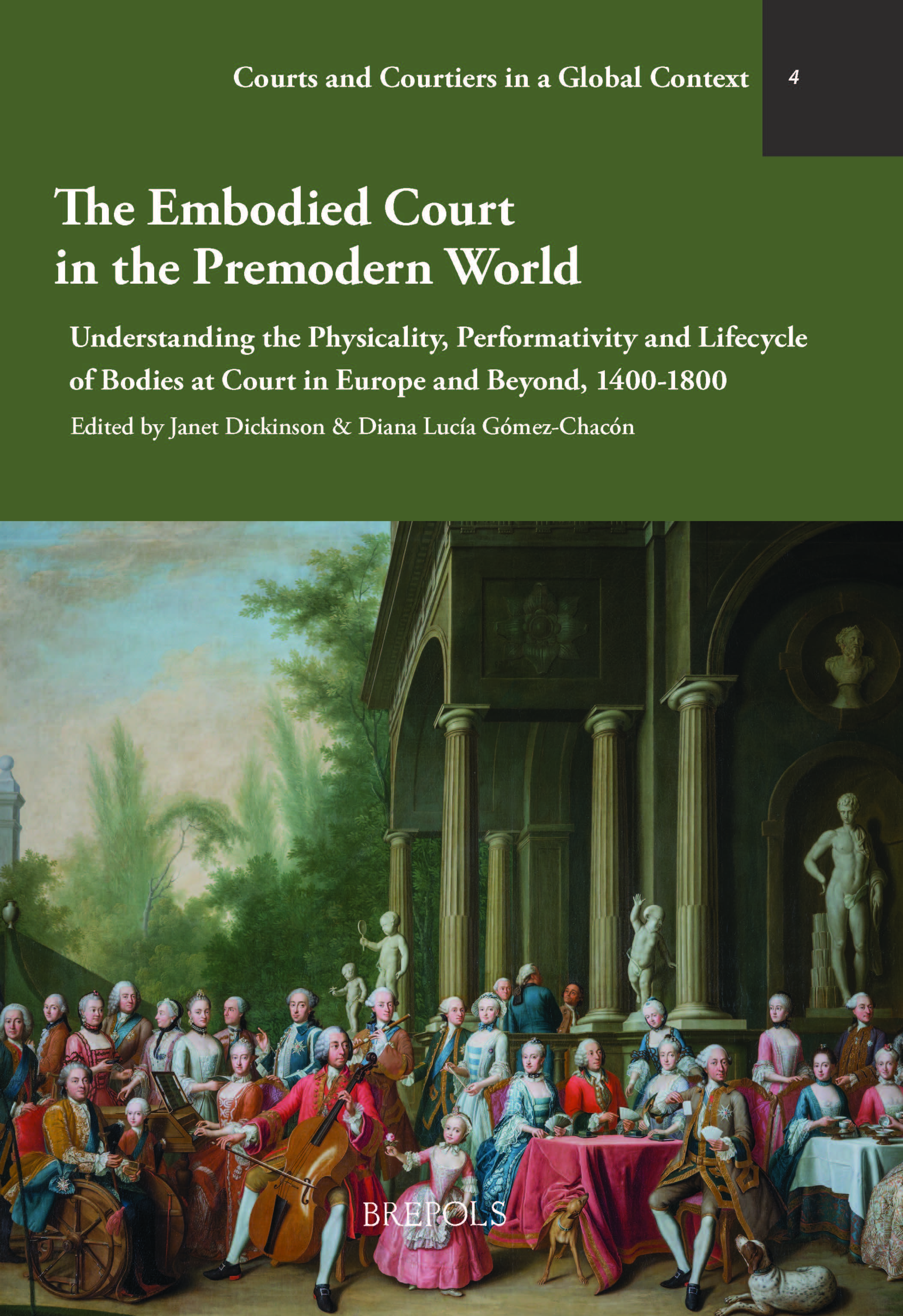 The Embodied Court in the Premodern World
Understanding the Physicality, Performativity and Lifecycle of Bodies at Court in Europe and Beyond, 1400-1800
Volume 4

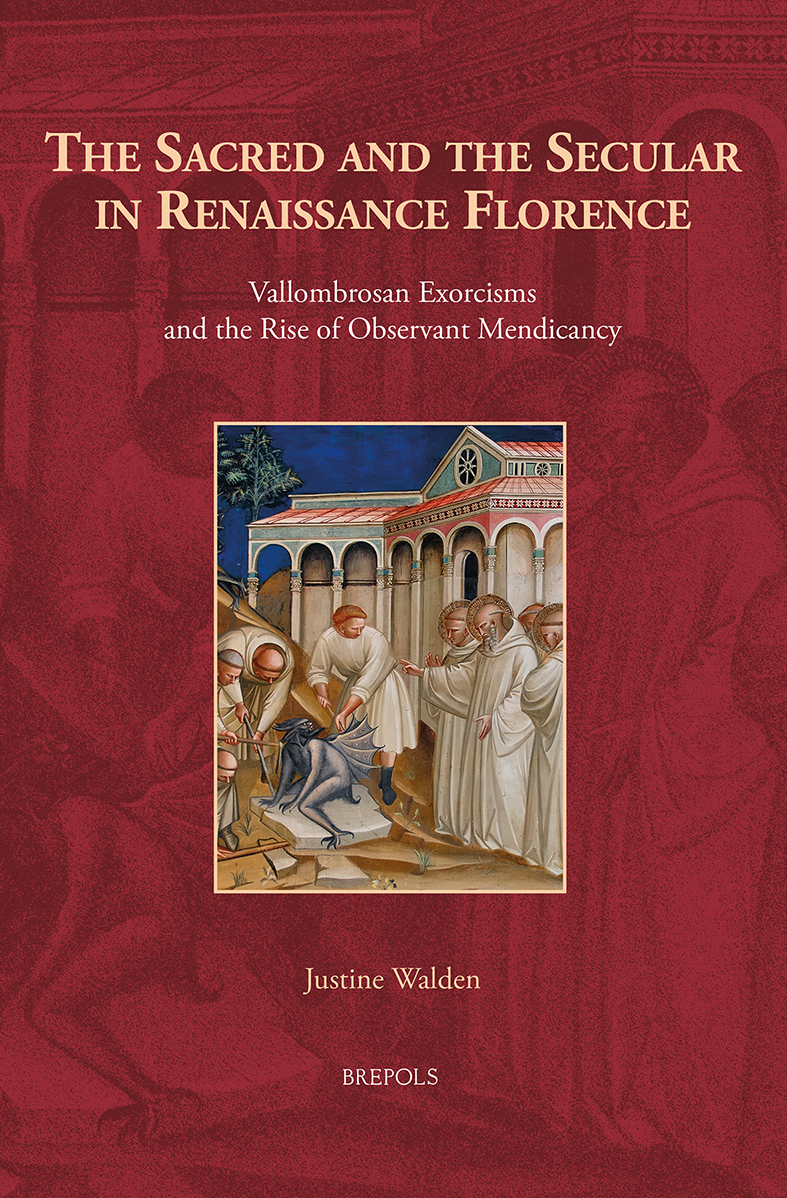 The Sacred and the Secular in Renaissance Florence
Vallombrosan Exorcisms and the Rise of Observant Mendicancy
Volume 31
 Tradition, Interpretation, and Change
Developments in the Liturgy of Medieval and Early Modern Ashkenaz


 À la recherche des normes de traduction
Textes spécialisés dans le monde hispanophone et francophone (1450–1850)
