
Ecrits gastronomiques
Almanach des gourmands suivi de Manuel des Amphitryons
by Grimod de la Reyniere, edited by Jean-Claude Bonnet

Paperback (Published)
(November 2024)
ISBN: 9782251456294
4.92 x 7.56 inches
Price: $18.00
In stock
If eating is a necessity, knowing how to eat is an art where knowledge of food matters just as much as tasting it. In this sense, the honorable Grimod de La Reyniere (1758-1837) is one of the greatest artists of good food, one of those who, before Brillat-Savarin, best codified and organized the appetite of gourmands and gourmets. [] What should we remember from this book where the jubilation of the writing is on a par with the pleasure of feasting? A few phrases of unparalleled humor. But beyond the happiness of the style and the accurate observation of things in nature, it is a whole philosophy that Grimod de La Reyniere transmits to us. A philosophy that can be compared to that of the divine Marquis de Sade: let us indulge in the worst debauchery, provided that we carry it out in a certain order. [] Disorderly gluttons, abstain! Alexandre Balthazar Laurent Grimod de La Reyniere (1758-1837) was a French lawyer, journalist, serial writer and writer who achieved fame under Napoleon I for his witty and sometimes acerbic criticism, his mystifications and his love of gastronomy. Posterity has mainly remembered this last aspect of his personality and considers him, alongside Brillat-Savarin, as one of the founding fathers of modern Western gastronomy.
If eating is a necessity, knowing how to eat is an art where knowledge of food matters just as much as tasting it. In this sense, the honorable Grimod de La Reyniere (1758-1837) is one of the greatest artists of good food, one of those who, before Brillat-Savarin, best codified and organized the appetite of gourmands and gourmets. [] What should we remember from this book where the jubilation of the writing is on a par with the pleasure of feasting? A few phrases of unparalleled humor. But beyond the happiness of the style and the accurate observation of things in nature, it is a whole philosophy that Grimod de La Reyniere transmits to us. A philosophy that can be compared to that of the divine Marquis de Sade: let us indulge in the worst debauchery, provided that we carry it out in a certain order. [] Disorderly gluttons, abstain! Alexandre Balthazar Laurent Grimod de La Reyniere (1758-1837) was a French lawyer, journalist, serial writer and writer who achieved fame under Napoleon I for his witty and sometimes acerbic criticism, his mystifications and his love of gastronomy. Posterity has mainly remembered this last aspect of his personality and considers him, alongside Brillat-Savarin, as one of the founding fathers of modern Western gastronomy.
- By (author) Grimod de la Reyniere
- Edited by Jean-Claude Bonnet
Other Titles in this Series


 Des hommes ordinaires
Le 101e bataillon de reserve de la police allemande et la Solution finale en Pologne


Similar Books


 From the Frontiers of the Empire to the Borders of the Nations
Borderland Security and Safety in the (post-)Ottoman Spaces (1700–1939)
 Lobbying for Equality
Jacques Godard and the Struggle for Jewish Equality during the French Revolution
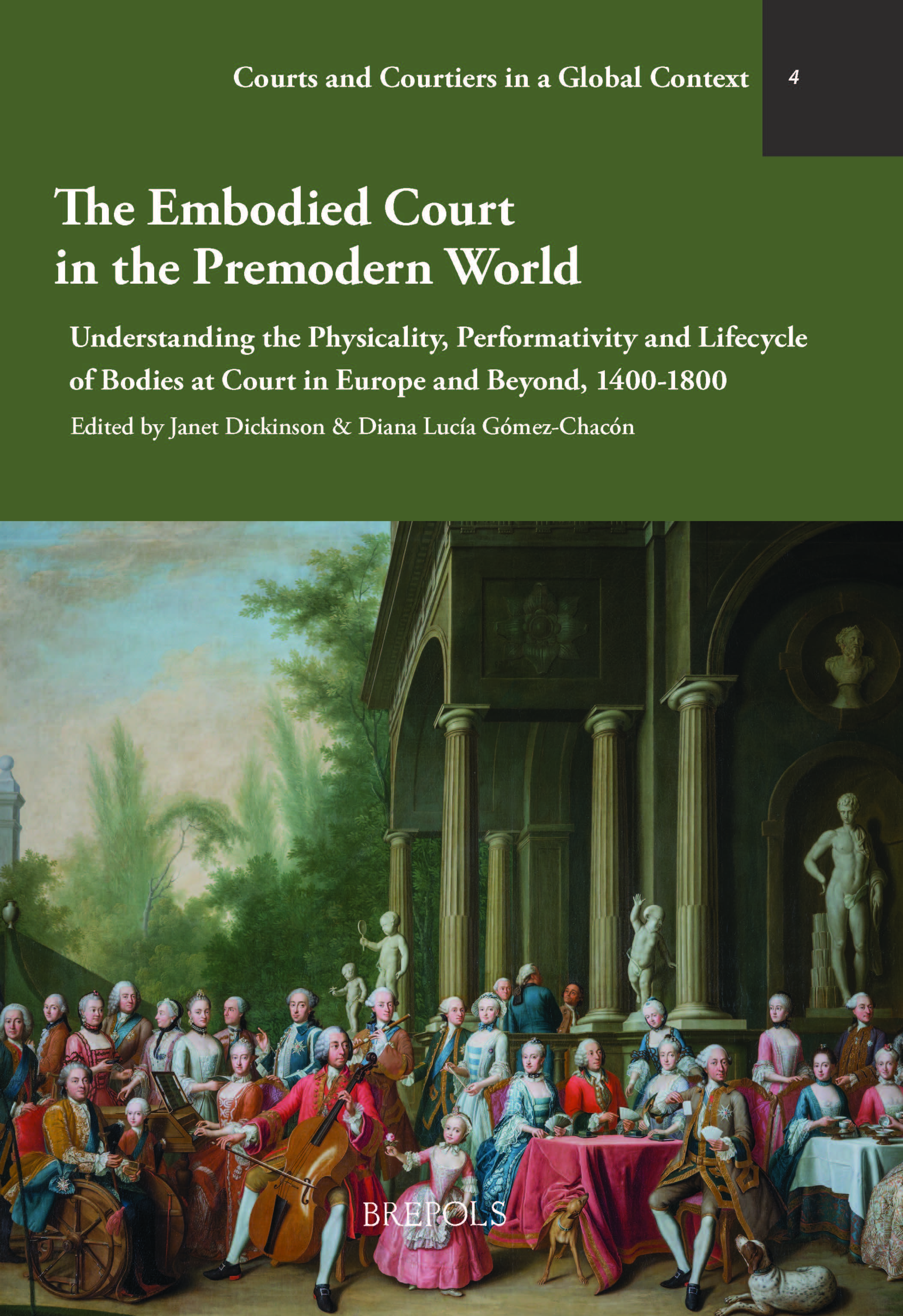 The Embodied Court in the Premodern World
Understanding the Physicality, Performativity and Lifecycle of Bodies at Court in Europe and Beyond, 1400-1800
Volume 4
 “Italien übertrifft alles, was man mir darüber gesagt hat”
Wilhelmine von Bayreuth und Friedrich II. im Briefdialog über die Italienreise der Markgräfin


 Der Rezipient ist im Werk
Differenzerfahrung und Adressatenbezug in Reisedarstellungen des 15.–18. Jahrhunderts

 Die Österreichischen Niederlande und die Debatte über den Reichskammergerichtsunterhalt (1719-1740)
Eine Studie zur Reichspolitik Kaiser Karls VI.
Volume 43
 Die Popularität des Französischen im Europa des 17. und 18. Jahrhunderts
Akten des 13. Kongresses des Frankoromanistikverbandes vom 21.–23. September 2022 an der Universität Wien


 Le Théâtre entre Paris et les provinces de France
Ancrages, circulations et transversalités (XVIIe-XVIIIe siècle)
Volume 739, 7
 Les Franque
Du chantier à l’agence, l’ascension d’une famille d’architectes au XVIIIe siècle
Volume 3

 Mit der Vergangenheit in die Zukunft
Die Ungarndeutschen und die Siedlungsmigration im 18. Jahrhundert
 Qu’est-ce qu’un texte littéraire ?
L’apport des écrits didactiques (Moyen Âge – XVIIIe siècle)
Volume 729, 71

 Theologische Anthropologie in G. E. Lessings Frühwerk
Literarische Bilder von Gemeinschaft und Nonkonformität, Glück und Sünde

 Animal Magnetism in Motion / Le magnetisme animal en mouvement
Reconfigurations and Circulations, 1776-1848 / Reconfigurations et circulations, 1776-1848



 On the steps of the throne
The King's family and its political and cultural role in the Spanish monarchy (16th-18th centuries)
Volume 1

 The Jews in English Baptist Eschatology
Conversion, Restoration, and National Identity, 1649-1815
Volume 84
 Übersetzungsprozesse im langen 18. Jahrhundert
Wissensräume zwischen Transkulturalität und nationalen Diskursen

 „The Hidden Jewel in Britain’s Military Crown“
Die britische Schießpulvermühle Waltham Abbey und ihre Handwerker 1787 bis 1816
 »Mit neuem Eifer an der Bildung junger Leute zu arbeiten«
Das Pädagogium Regium Halle und das Philanthropin Dessau im bildungsräumlichen Vergleich
Volume 69