
Digitale Diplomatik
Neue Technologien in der historischen Arbeit mit Urkunden
Contributions by Nicola Wurthmann Contributions by Giovanni Tartaglione Contributions by Margarete Springeth Contributions by Paul Spence Contributions by Raffaele Santoro Contributions by Maria Magdalena Rückert Contributions by Christian-Emil Ore Contributions by Michael Margolin Contributions by Andreas Kuczera Contributions by Rik Hoekstra Contributions by Andreas Gniffke Contributions by Karl Heinz Contributions by Christian Domenig Contributions by Ariana Ciula Contributions by Jan W. Burgers Contributions by Paul Bertrand Contributions by Theo Kölzer Contributions by Patrick Sahle Contributions by Jürgen Sarnowsky Contributions by Karsten Uhde Contributions by Juraj Sedivy Contributions by Sebastian Schmidt Contributions by Clemens Radl Contributions by Benjamin Burkard Contributions by Paolo Buonora Contributions by Gregor Horstkemper Contributions by Joachim Kemper Contributions by Georg Vogeler Contributions by Michael Gervers Contributions by Alessandra Sorbello Staub Contributions by Benoit-Michel Tock Edited by Georg Vogeler

Hardback (Out of print)
(July 2009)
ISBN: 9783412203498
6.38 x 9.33 inches
Price: $75.00
On back order
Die Diplomatik, die Wissenschaft von den mittelalterlichen und fruhneuzeitlichen Urkunden, ist eine Wissenschaft, die immer schon bereit war, neue Methoden anzuwenden. Der Band stellt den Stand der Forschung in der jungsten dieser Entwicklungen vor, der Anwendung von IT-Technologien. Aus deutscher, englischer, franzosischer und italienischer Perspektive widmen sich die Beitrager den Fragen und der Praxis des digitalen Edierens sowie der Rolle der Urkunden unter den neuen technischen Gegebenheiten. Zudem werden die Technologien, die fur die Arbeit mit den Urkunden zur Verfugung stehen und die neuen Forschungsmoglichkeiten, die sich aus dem geanderten Instrumentarium ergeben, vorgestellt. Der Band zeigt damit die Perspektiven auf, die sich der Traditionswissenschaft in der digitalen Welt eroffnen.
- Contributions by Nicola Wurthmann
- Contributions by Giovanni Tartaglione
- Contributions by Margarete Springeth
- Contributions by Paul Spence
- Contributions by Raffaele Santoro
- Contributions by Maria Magdalena Rückert
- Contributions by Christian-Emil Ore
- Contributions by Michael Margolin
- Contributions by Andreas Kuczera
- Contributions by Rik Hoekstra
- Contributions by Andreas Gniffke
- Contributions by Karl Heinz
- Contributions by Christian Domenig
- Contributions by Ariana Ciula
- Contributions by Jan W. Burgers
- Contributions by Paul Bertrand
- Contributions by Theo Kölzer
- Contributions by Patrick Sahle
- Contributions by Jürgen Sarnowsky
- Contributions by Karsten Uhde
- Contributions by Juraj Sedivý
- Contributions by Sebastian Schmidt
- Contributions by Clemens Radl
- Contributions by Benjamin Burkard
- Contributions by Paolo Buonora
- Contributions by Gregor Horstkemper
- Contributions by Joachim Kemper
- Contributions by Georg Vogeler
- Contributions by Michael Gervers
- Contributions by Alessandra Sorbello Staub
- Contributions by Benoit-Michel Tock
- Edited by Georg Vogeler
Other Titles in this Series


 Die lateinische Schriftkultur in den böhmischen Ländern bis zum 12. Jahrhundert
Handschriften, Fragmente und Skriptoria
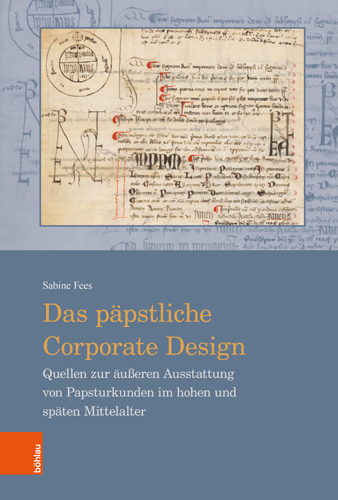 Das päpstliche Corporate Design
Quellen zur äußeren Ausstattung von Papsturkunden im hohen und späten Mittelalter
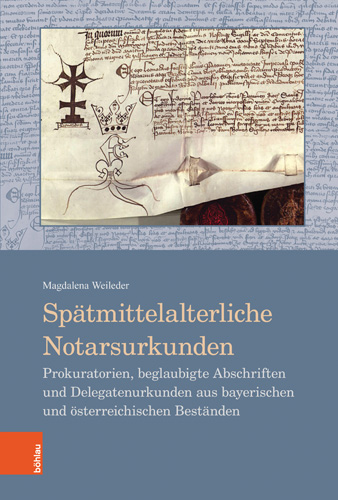 Spätmittelalterliche Notarsurkunden
Prokuratorien, beglaubigte Abschriften und Delegatenurkunden aus bayerischen und österreichischen Beständen

 Der päpstliche Briefstil im 13. Jahrhundert
Eine stilistische Analyse der Epistole et dictamina Clementis pape quarti

 Fiat finis et pax
Instrumentarien und Praktiken des Frieden-Schließens im östlichen Oberitalien (9.–13. Jahrhundert)
Similar Books
 «Solazoxa festa, stradolze e stracomplia»
Festschrift für Raymund Wilhelm zum 65. Geburtstag mit Beiträgen zu Diskurstraditionen und mittelalterlicher Philologie
Volume 249
 A Collaborative Tapestry in Honour of Shirley Ann Brown / Une fresque brodée en l’honneur de Shirley Ann Brown
The Bayeux Tapestry Seen by her Colleagues and Friends / La Tapisserie de Bayeux vue par ses collègues et amis


 As Messianism Turns to Heresy
The Regenstein Chair Lectures On Lurianic Kabbalah and Shabbatai Tzevi at Hebrew Union College - Cincinnati
 Behind the Scenes of Medieval Roofs
An Overview of the Roofing Systems of Italian Churches
Volume 90

 Beyond Sovereign Courts
Agents and Practices in Early Modern Spanish and Habsburg Diplomacy
Volume 3

 Cahiers de recherches médiévales et humanistes – Journal of Medieval and Humanistic Studies
Volume 51









 Food Security under Armed Conflict
Global Knowledge Landscape and Public Attention to Social, Economic, and Humanitarian Dimensions


 Innovation and Medieval Communities
The Circulation of Ideas and Practices in and out of the Town (1200-1500)
Volume 63
 Innovationes Lovanienses: Arts, Law and Theology at the University of Louvain (1425–1797)
Studium Lovaniense: Learning across Borders, 2
Volume 18
 John Dunstaple Reading Boethius
John Dunstaple’s Annotations to Boethius’s “De institutione musica” in the Manuscript Oxford, Corpus Christi College Library, MS 118


 Medieval Debates on Foreknowledge: Future Contingents, Prophecy, and Divination
Acts of the XXVII Annual Colloquium of the SIEPM, Trento 12-15 September 2023
Volume 31

 Medieval Yeghegis, Armenia
History, Archaeology, Society. Local Multiplicities and Global Connections of a Rural Centre on the Silk Road(s)
