
Die Sextussprüche und ihre Verwandten
Edited by Wilfried Eisele Edited by Yury Arzhanov Edited by Michael Durst Edited by Thomas Pitour

Hardback (Published)
(June 2015)
ISBN: 9783161536571
6.02 x 9.09 inches
Price: $171.00
In stock
~ENG~In antiquity and the Middle Ages, collections of sayings were a popular form of everyday literature. The sayings attributed to the philosopher Sextus present a remarkable example of a revised Christian collection of Imperial Era sayings. They possess Pythagorean precursors and continued to have an effect in Christian monasticism via Evagrius of Pontus. This volume traces these lines of development.
English summary: In antiquity and the Middle Ages, collections of sayings were a popular form of everyday literature. As texts, they did not claim any high literary standard. That does not mean, however, that their content was always easy to understand. They often deal with densely written insights and admonitions which presuppose far more than they say. That opens up a wide field of interpretation and re-reading, which took place in the open form of the collection, above all through the proliferation, reduction or the regrouping of the material. The sayings attributed to the philosopher Sextus present a remarkable example of a revised Christian collection of Imperial Era sayings. They possess Pythagorean precursors and continued to have an effect in Christian monasticism via Evagrius of Pontus. This volume traces these lines of development. German description: In Antike und Mittelalter waren Sammlungen von Spruchen (Gnomen/Sentenzen) eine beliebte Form der Gebrauchsliteratur. Als Texte erhoben sie keinen hohen literarischen Anspruch. Das heisst aber nicht, dass ihr Inhalt immer leicht zu verstehen ware. Oft handelt es sich um sprachlich verdichtete Einsichten und Ermahnungen, die weit mehr voraussetzen als sie sagen. Das offnet ein weites Feld der Interpretation und Relecture, die in der offenen Form der Sammlung vor allem durch Vermehrung, Verminderung oder Umgruppierung des Spruchmaterials stattfindet. Die dem Philosophen Sextus zugeschriebenen Spruche stellen ein bemerkenswertes Beispiel fur eine christlich uberarbeitete Spruchsammlung der Kaiserzeit dar. Sie haben pythagoreische Vorlaufer und wirken uber Evagrius Ponticus im christlichen Monchtum fort. Der Band zeichnet diese Entwicklungslinien nach.
- Edited by Wilfried Eisele
- Edited by Yury Arzhanov
- Edited by Michael Durst
- Edited by Thomas Pitour
Other Titles in this Series






 Burger-Ethos, politisches Engagement und die Bewahrung des Status Quo
Plutarch, Politische Ratschlage
Volume 35


 SAPERE-Paket, Bande XXII-XXVI
Band XXII: Was ist wahre Freiheit? - Band XXIII: Cosmic Order and Divine Power - Band XXIV: On Prophecy, Dreams and Human Imagination - Band XXV: Pyrrhonian Skepticism in Diogenes Laertius - Band XXVI: Die Sextusspruche und ihre Verwandten


 SAPERE-Paket, Bande XVII-XXI
Band XVII: Polis - Freundschaft - Jenseitsstrafen. Band XVIII: Fur Religionsfreiheit, Recht und Toleranz. Band XIX: Armut - Arbeit - Menschenwurde. Band XX: Uber den Tod. Band XXI: Agyptische Erzahlungen oder Uber die Vorsehung


Similar Books


 Drunk the Potion, No Whit Charmed
The Doctrine of Pure and Perfect Souls from Iamblichus to Damascius
 Éthique, politique, religions
Superstition (XVIIe - XXIe siècles). Sémantique, histoires et cultures


 La Lettre clandestine
La littérature philosophique clandestine, ses éditeurs et ses éditions
Volume 34
 Libertinage et philosophie à l’époque classique (XVIe-XVIIIe siècle)
Athéisme, Modernité et Sécularisation / Atheism, Modernity and Secularization
Volume 23


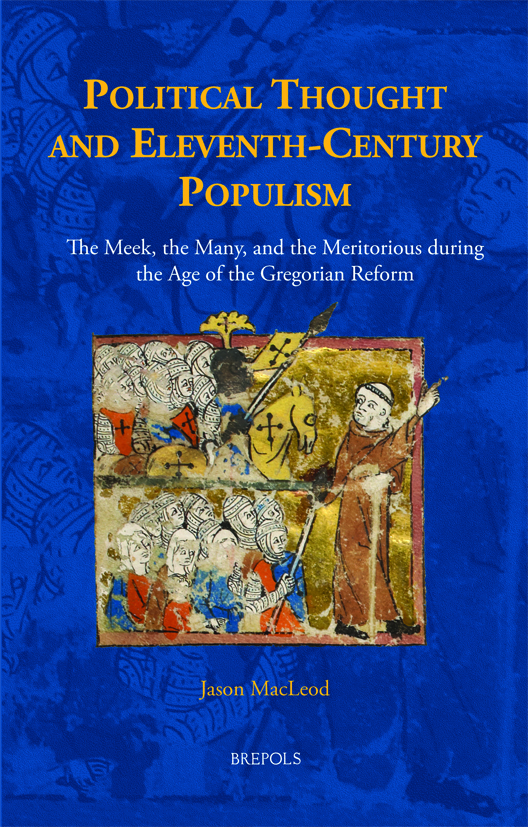 Political Thought and Eleventh-Century Populism
The Meek, the Many, and the Meritorious during the Age of the Gregorian Reform
Volume 38


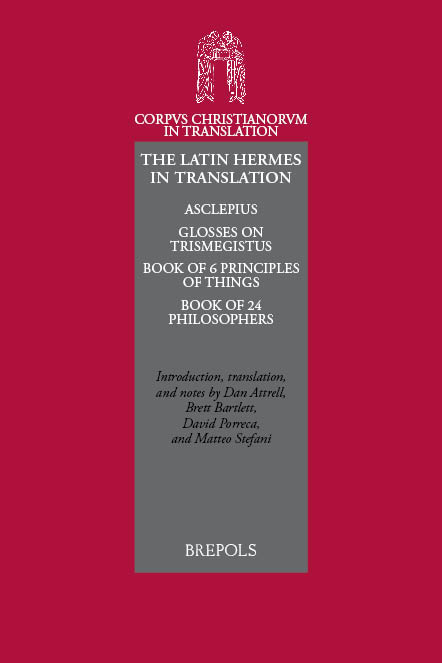 The Latin Hermes in Translation
Asclepius, Glosses on Trismegistus, Book of Six Principles of Things, Book of 24 Philosophers
Volume 50



 ‘Emergente Evolution’?
Fallstudien zur philosophischen Rekonstruktion und schopfungstheologischen Rezeption eines naturalistischen Paradigmas
Volume 40
 Al-Ğābirīs Genese und Kritik der Arabischen Vernunft
On Genesis and Critique of Arab Reason by Muḥammed ʿĀbid al-Ğābirī


 Geschichte der Ästhetik und Kunsttheorie
Band 1: Von der Antike bis zum 19. Jahrhundert. 2. aktualisierte Auflage

