
Die Kammergräber von Tarent
Untersuchungen zur Grabarchitektur und Ausstattung vom 4. bis zum 1. Jahrhundert v. Chr.
By (author) Birte Ruhardt

Hardback (Published)
(August 2019)
ISBN: 9783954902057
8.31 x 11.69 inches
Price: $297.00
In stock
The Hellenistic chamber tombs of Taranto represent by far the largest group of known Hellenistic burial chambers in the ancient Mediterranean. In the sixth volume of the Italiká series, the chamber tombs constructed between the 4th and 1st century BC in the necropolis of Taranto are compiled and documented in detail for the first time. The systematic analysis of this form of burial reveals how the complex processes in the South Italian and Mediterranean regions have influenced grave architecture, their interior décor, and the burial cult of the Tarantine society during this period.<br/>
English summary: Taranto is still one of the most important cities in Southern Italy. Already at the end of the 8th century BC the city was founded as the only Spartan colony and soon became the leading trading center of Magna Graecia (Greater Greece). Between the last third of the 4th and the 1st century BC, a social class benefited from the political and economic situation, expressing its prosperity in the construction of architecturally elaborate chamber tombs, rich with grave goods. The present book compiles the Tarantine chamber tombs for the first time in a comprehensive catalog, which includes plans of the burial chambers and the necropolis, a description of each burial context, and photographic documentation of the finds. With more than 150 chamber tombs discovered so far, the archaeological record presented here forms the largest group of South Italian chamber tombs ever systematically evaluated. Taranto boasts the largest concentration of chamber tombs discovered in any necropolis in Southern Italy to date, which can be taken as an indication of Taranto’s enormous wealth during this time period. At the same time, the grave buildings are an example of the incipient monumentalization of grave architecture in many parts of Southern Italy since the last third of the 4th century BC. An in-depth analysis of the chamber tombs’ architecture, its decor and grave goods, as well as the topographical organization of the necropolis forms the foundation of this study. Through a comparison of the tombs with other contemporary South Italian burial chambers, a typical appearance of the Tarantine chamber tombs emerges. These tombs show how the Tarantine upper class responded to cultural influences, armed conflicts, and conquests, and how they changed or preserved the ideological and identity-creating elements of self-expression in the grave. The intervention of Rome in Southern Italy and the eastern Mediterranean also contributed to significant structural changes in the tombs. New elements and peculiarities in the grave architecture can be interpreted as reflections of contemporary events and social change. It should be emphasized, however, that the structure of a necropolis is not a simple reflection of real social conditions, but rather a representation of the ideal image that a society designs for itself. German description: Bis heute zahlt Tarent zu den bedeutendsten Stadten Suditaliens. Bereits Ende des 8. Jahrhunderts v. Chr. als einzige Tochterstadt Spartas gegrundet, entwickelte sich die Stadt schon bald zum fuhrenden Handelsplatz der Magna Graecia (Grossgriechenland). Zwischen dem letzten Drittel des 4. und dem 1. Jahrhundert v. Chr. profitierte eine gesellschaftliche Schicht von der politischen und wirtschaftlichen Situation und druckte dies im Grabwesen durch die Errichtung architektonisch aufwendiger Kammergraber mit reichen Grabbeigaben aus. In der vorliegenden Publikation werden die Tarentiner Kammergraber erstmals in einem umfassenden Katalog mit Planen zu den einzelnen Grabkammern und der Nekropole, einer Beschreibung jedes Grabkontextes sowie einer fotografischen Dokumentation der Funde zusammengestellt. Mit uber 150 bisher aufgedeckten Kammergrabern bilden die hier vorgelegten Befunde die bisher grosste systematisch ausgewertete Gruppe von unteritalischen Grabkammern. In keiner anderen unteritalischen Nekropole konnte bisher eine derartige Konzentration von Kammergrabern ausgemacht werden, was als Indiz fur einen enormen Wohlstand Tarents in dieser Zeit gewertet werden kann. Gleichzeitig sind die Grabgebaude ein Beispiel fur die seit dem letzten Drittel des 4. Jahrhunderts v. Chr. einsetzende Monumentalisierung der Grabarchitektur in weiten Teilen Unteritaliens.Auf dieser Befundbasis baut eine eingehende Analyse der Grabarchitektur, der Ausstattung und der Beigaben, aber auch der topografischen Organisation der Nekropole auf. Im Vergleich mit zeitgenossischen unteritalischen Grabkammern wird eine fur Tarent typische Erscheinungsform der Grabanlagen herausgearbeitet. An ihnen kann abgelesen werden, wie die Tarentiner Oberschicht auf die kulturellen Einflusse, kriegerischen Auseinandersetzungen und Eroberungen reagierte und die ideologischen und identitatsstiftenden Elemente zur Selbstdarstellung im Grab veranderte oder weiterfuhrte. Vor allem mit dem Eingreifen Roms in Unteritalien und dem ostlichen Mittelmeerraum kommt es zu deutlichen strukturellen Veranderungen in den Grabanlagen. Veranderungen, neu aufkommende Elemente und Besonderheiten in der Grabarchitektur konnen dabei als Reflexe des zeitgenossischen Geschehens und der gesellschaftlichen Veranderung angesehen werden. Dabei ist jedoch hervorzuheben, dass die Struktur einer Nekropole kein einfacher Spiegel der realen gesellschaftlichen Verhaltnisse ist, sondern vielmehr dem Idealbild, das eine Gesellschaft von sich entwirft, entspricht.
Birte Ruhardt (1985) studied classical archeology, archeology of the Roman provinces, and art history in Cologne and Rome. As a Cotutela di Tesi process, she earned her doctorate in 2015 at the University of Cologne and at the Università di Roma “La Sapienza” with a work on the chamber tombs of Taranto. She was awarded the Premio Attilio Stazio of the Fondazione Taranto e la Magna Grecia in 2012. As a scholarship holder of the a.r.t.e.s. Graduate School for the Humanities Cologne and the German Academic Exchange Service she spent long periods of research at the Museo Nazionale Archeologico di Taranto and Queen’s University in Kingston (Canada). Since 2015, she has been working for the Gerda Henkel Foundation. In 2017, she became the foundation’s Executive Board Affairs Manager. Her research interests continue to be in the field of Italic archeology and funeral archeology, in particular sepulchral culture in Southern Italy.<br/>
- By (author) Birte Ruhardt
Other Titles in this Series
 Etruskische Heiligtümer des 8.–5. Jhs. v. Chr. als Wirtschaftsräume und Konsumptionsorte von Keramik
 Gesellschaft und Wirtschaft im archaischen Süditalien
Ein Modell zu Identität und Hexis, ausgehend von Ripacandida und weiteren binnenländischen Gemeinschaften
 Bestattungsrituale in Unteritalien vom 5. bis 4. Jh. v. Chr.
Überlegungen zur sogenannten Samnitisierung Kampaniens
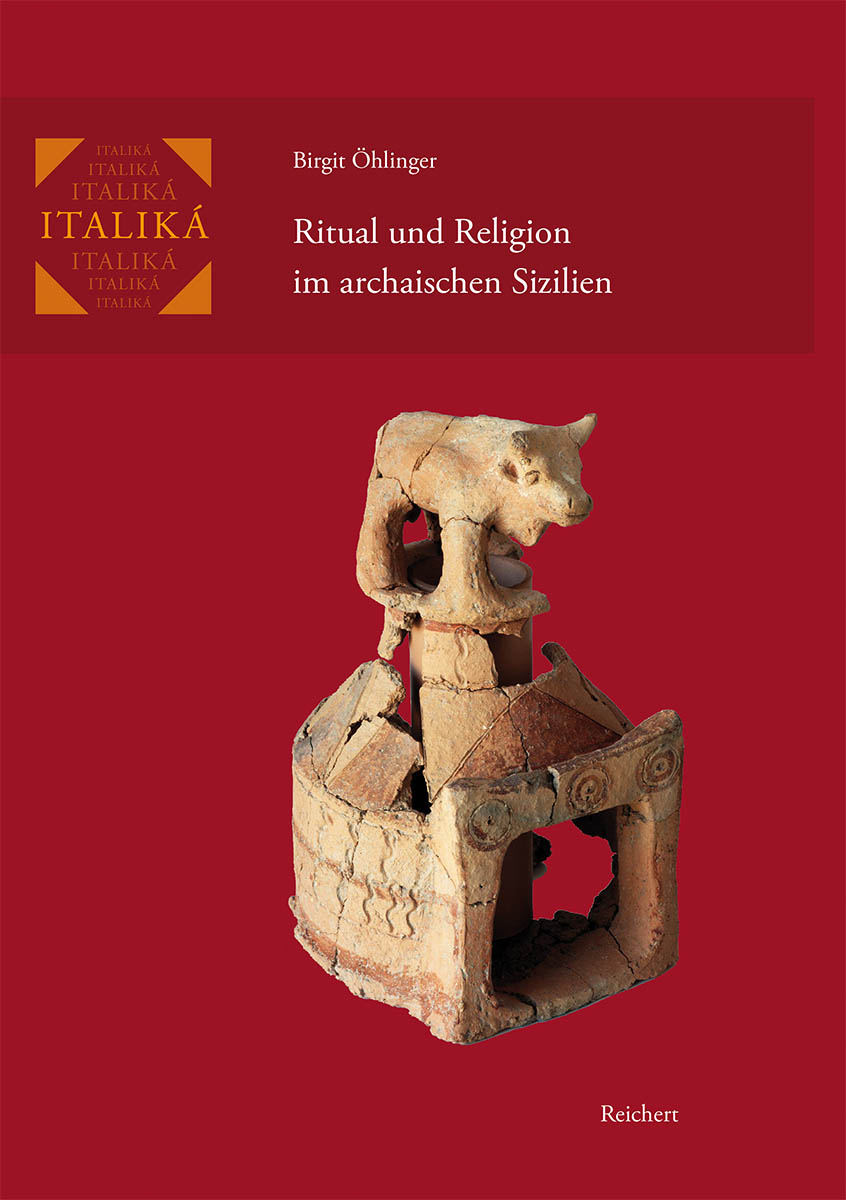 Ritual und Religion im archaischen Sizilien
Formations- und Transformationsprozesse binnenländischer Kultorte im Kontext kultureller Kontakte
 Bestattungssitten zwischen Tradition und Modifikation
Kulturelle Austauschprozesse in den griechischen Kolonien in Unteritalien und Sizilien vom 8. bis zum 5. Jahrhundert v. Chr.

Similar Books


 Caesar’s Visions and Impact on the Roman Empire
Revisiting the Archaeological and Historical Record of the 40s BC
Volume 2


 Construction Processes in Historical Western Societies (5th c. BC – 10th c. AD)
Case Studies on Techniques, Models, and Costs
 Contesting Labeled Identities
The Sociology of Gentilics in Biblical and Northwest Semitic Literature

 Drunk the Potion, No Whit Charmed
The Doctrine of Pure and Perfect Souls from Iamblichus to Damascius

 Epigraphic “Shades” from Hellenistic Thrace
Contextualizing Inscriptions in Greek from Thracian Tombs

 Epiphanies of the Divine in the Septuagint and the New Testament
Fifth International Symposium of the Corpus Judaeo-Hellenisticum Novi Testamenti (CJHNT), 14-17 May 2015, Nottingham


 Etruscan and Roman Hellenistic Anatomical ex votos
Reassessing Popular Religious Expressions in Central Italy
Volume 8



 Gold, Silver and Glass: Power Networks, Cultural Identities, Technology Transfers and Agency across the Old World (7th Century BC – 1st Century AD)
Proceedings of a Conference Held at the British Museum, 16–18 June 2023


 Invisible Labour in Antiquity
Visualizing Obscure Work in the Ancient Mediterannean and West Asia
Volume 1

 Language and Power in the Roman Empire and Early India
Hierarchy, Ambiguity, and the Art of Reading the Signs in Cosmopolitan Cultures
 Late Antique villae in the Balkans (3rd–7th c. AD): Current Research Questions and Perspectives
HAEMUS Companion to the Late Antique Balkans 1
Volume 4





 Nurturing the Elite
Representations of Drinking, Eating, and Religious Vessels in Palmyrene Funerary Iconography
Volume 13


 Portraying the Individual in the Roman East
Local–Imperial Entanglements in Sculpture, Mosaics, and Paintings (First–Fourth Centuries AD)
Volume 18
