Die doppelte Katastrophe
Klima und Kultur in der europäischen Hungerkrise 1770–1772
By (author) Dominik Collet Series edited by Christof U. Mauch Series edited by Helmuth Trischler

Hardback (Published)
(November 2018)
ISBN: 9783525355923
6.34 x 9.25 inches
Price: $82.00
In stock
Zusammenhang von Klima und Kultur anhand der schweren europäischen Hungersnot im 18. Jahrhundert
English summary: At the end of the 18th century Europe suffered one of the worst subsistence crises of the Little Ice Age. The disastrous fatality of this ‘double’ catastrophe was a result of both climate and culture. The effects of earth and famine were felt throughout Europe and claimed hundreds of thousands of lives. The crisis initiated mass migration, discrimination and bouts of antisemitism but also political reform, early humanitarianism and new fields of science. It linked the revolts of the Steelboys in Ireland with the absolutist coup in Sweden and the bourgeois reform movements in Saxony. Dominik Collet draws on these crises to trace, how climate anomalies have been ‘socialised’ in the past and to highlight the surprising plurality of societal responses. His book calls for a socionatural approach to writing history. It narrates an entangled history of environment and society that pursues the links between short-term events and long-term, socio-ecological structures. Due to these interconnections the crisis of the 1770s reveals the deeper, underlying conflicts of the affected societies in the fields of economy, ecology and governance. They reveal the inherent vulnerability of Europe’s ‘grain societies’ and sketch the actions of governments, subjects and ‘experts’. In this complex environment catastrophes constitute both social and natural disasters. The study challenges social and climatic determinism and illustrates that more dynamic connections of climate and culture are both necessary and feasible. It calls for a fresh perspective that – instead of separating nature and culture – treats nature as history. German description: Am Ende des 18. Jahrhunderts durchlebte Europa, im Zuge einer extremen Klimaanomalie der Kleinen Eiszeit eine der schwersten Hungerkrisen seiner Geschichte. Das fatale Zusammenspiel von Klima und Kultur machte sie zur ‘doppelten’ Katastrophe. Ihre Auswirkungen erfassten den gesamten Kontinent und kosteten hunderttausende Menschen das Leben. Die Krise beforderte neben Ausgrenzung, Auswanderung und Antisemitismus aber auch politische Reformen, Humanitarismus und neue Wissenschaften. Das Buch zeigt am Beispiel dieses Ereignisses, wie fruhere Gesellschaften Witterungsextreme bewaltigten und wie vielfaltig Klimaimpulse ‘sozialisiert’ werden konnten. Dominik Collet pladiert fur einen integrativen, sozionaturalen Zugang zur Geschichte. Es erzahlt eine Verflechtungsgeschichte von Mensch und Umwelt, in der kurzfristige Ereignisse und langfristige, soziookologische Strukturen eng miteinander verkoppelt sind. Daher offenbart der Blick auf die Hungersnot schlaglichtartig grundlegende okonomische und okologische Problemlagen der Gesellschaften des 18. Jahrhunderts. In diesem Umfeld erweisen sich vermeintliche Naturkatastrophen immer auch als Kulturkatastrophen. Die Studie stellt deterministische Zugange in Frage und zeigt, dass eine dynamische Perspektive auf das Zusammenwirken von Klima und Kultur ebenso notwendig wie praktikabel ist. Sie regt dazu an, die Natur nicht langer als Gegenteil, sondern als Teil der Geschichte zu begreifen.
Dr. Dominik Collet ist Professor für Umweltgeschichte an der Universität Oslo.
- By (author) Dominik Collet
- Series edited by Christof U. Mauch
- Series edited by Helmuth Trischler
Other Titles in this Series


 Beschädigte Vegetation und sterbender Wald
Zur Entstehung eines Umweltproblems in Deutschland 1893–1970
 Zivilgesellschaft und Protest
Eine Geschichte der Naturschutz- und Umweltbewegung in Bayern 1945–1980


 Euer Dorf soll schöner werden
Ländlicher Wandel, staatliche Planung und Demokratisierung in der Bundesrepublik Deutschland
 Soft Seats and Blisters
Zur Geschichte von Parkways, Panoramastraßen, Trails und Wanderwegen in der Hochmoderne

 Die Gouvernementalisierung der Natur
Deutung und handelnde Bewältigung von Naturkatastrophen im Kurfürstentum Bayern des 18. Jahrhunderts





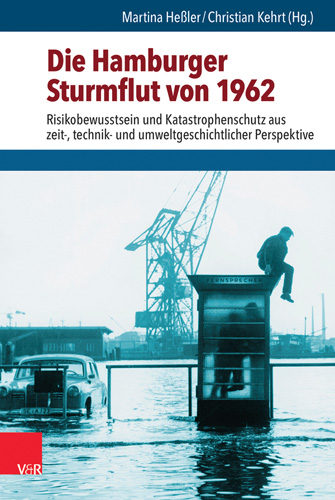 Die Hamburger Sturmflut von 1962
Risikobewusstsein und Katastrophenschutz aus zeit-, technik- und umweltgeschichtlicher Perspektive

Similar Books





 Between Bones and Beliefs
Human-Bird Relations in Central and Northern Europe in the First Millennium AD
Volume 4


 Christina of Sweden in Context
A Celebration of Seventeenth-Century Queenship 400 Years in the Making


 Diagnostic Techniques in Public Health
Analytical and Chemometric Approaches in Disease Detection and Management


 Engaged Languages and Literatures / Langues et Littératures engagées
Critical Views / Regards Critiques













 Medicinal Chemistry of Plant-Derived Natural Products
A Chemical Exploration of Plants as a Source of Modern Drugs