
Die Beinsattel des 13. bis 17. Jahrhunderts
Reitzeuge als Sinnbilder ritterlich-hofischer Ideale
by Maria Schroder

Hardback (Published)
(October 2024)
ISBN: 9783871572678
9.84 x 12.09 inches
Price: $114.00
On back order
English summary: The work focuses on a group of 37 splendid saddles and saddle-bows that can be found distributed throughout various European and North American museums. Usually exhibited alongside armour made from leather and metal, the saddles are remarkable for their light, shiny surfaces of elaborately carved and engraved bone and antler. These appliques make the saddles appear fragile, especially since their decoration would be concealed by a rider. Thus, despite the outer form, their functionality for riding must be called into question. Therefore, there was a need for fundamental research in which all objects were studied in detail and analysed in relation to contemporary textual and pictorial sources in order to determine, among other things, the original meaning and function of the bone-saddles. The work undertakes this task with the aim of placing the works in the context of their time and expanding our knowledge of Central European court culture. This approach has uncovered that the saddles were a means of representation that embodied the ideals of chivalry and courtly life. They were associated with specific means of representation that were established by the courtly nobility and later adopted by the emerging bourgeoisie. These findings lend a new relevance to the study of riding equipment, a field which has remained largely unnoticed by research, although the horse was of unparalleled importance within the society of the time. The chosen methodological approach, which combines art-historical, historical and literary techniques and research, means that the work is also of value to the study of ivories, early material culture, material-semantic object studies and the literary study of the courtly epic. The latter took on a key role within the work as a textual source, not least in analysing the connection and conditionality between literary descriptions of bone-saddles and their real counterparts. German description: Spatmittelalterliche und fruhneuzeitliche Sattel mit kunstvollen Schnitzereien und Gravuren in Knochen, Geweih und Elfenbein finden sich weltweit in zahlreichen musealen Sammlungen. Die Sattel wurden in der Regel zusammen mit Waffen und Rustzeugen aus Leder und Metall ausgestellt. Angesichts ihres Dekors scheinen sie viel zu empfindlich, um tatsachlich als Reitsitze gebraucht worden zu sein. Maria Schroder ermittelt auf Grundlage umfassender Objektstudien und zeitgenossischer Text- und Bildquellen die ursprungliche Bedeutung und Funktion der Beinsattel. Sie erweisen sich als Reprasentationsmedien der aristokratischen und spater auch der burgerlichen Elite. Die hofische Epik mit ihren literarischen Beschreibungen von Beinsatteln nimmt als Textquelle eine Schlusselrolle ein.
- By (author) Maria Schroder
Other Titles in this Series

 Der Jungere Titurel der Bayerischen Staatsbibliothek, Cgm 8470
Studien zu Materialitat, Inhalt und Gebrauch einer illuminierten Epenhandschrift des Spatmittelalters
Volume 14
 Die erneuernde Kraft der Tradition
Spatmittelalterliche Schatz- und Ausstattungsobjekte des Halberstadter Doms
 Mitteldeutsche Flugelretabel vom Reglermeister, von Linhart Koenbergk und ihren Zeitgenossen
Entstehung, Vorbilder, Botschaften
Similar Books
 A Collaborative Tapestry in Honour of Shirley Ann Brown / Une fresque brodée en l’honneur de Shirley Ann Brown
The Bayeux Tapestry Seen by her Colleagues and Friends / La Tapisserie de Bayeux vue par ses collègues et amis



 Balthasar Caymox of Nuremberg
Early Modern German Print Publishers: Popular Prints of the Seventeenth Century
 Behind the Scenes of Medieval Roofs
An Overview of the Roofing Systems of Italian Churches
Volume 90
 Beyond Sovereign Courts
Agents and Practices in Early Modern Spanish and Habsburg Diplomacy
Volume 3


 Circulation, Use, Impact
The Consumption of Architectural Books in the Early Modern Eastern Adriatic
Volume 1


 Councils, Conflicts, Correspondence
Urban Diplomacy in Reval (Tallinn) and Lübeck (c. 1470–1570)
Volume 67




 Innovation and Medieval Communities
The Circulation of Ideas and Practices in and out of the Town (1200-1500)
Volume 63
 Innovationes Lovanienses: Arts, Law and Theology at the University of Louvain (1425–1797)
Studium Lovaniense: Learning across Borders, 2
Volume 18
 John Dunstaple Reading Boethius
John Dunstaple’s Annotations to Boethius’s “De institutione musica” in the Manuscript Oxford, Corpus Christi College Library, MS 118
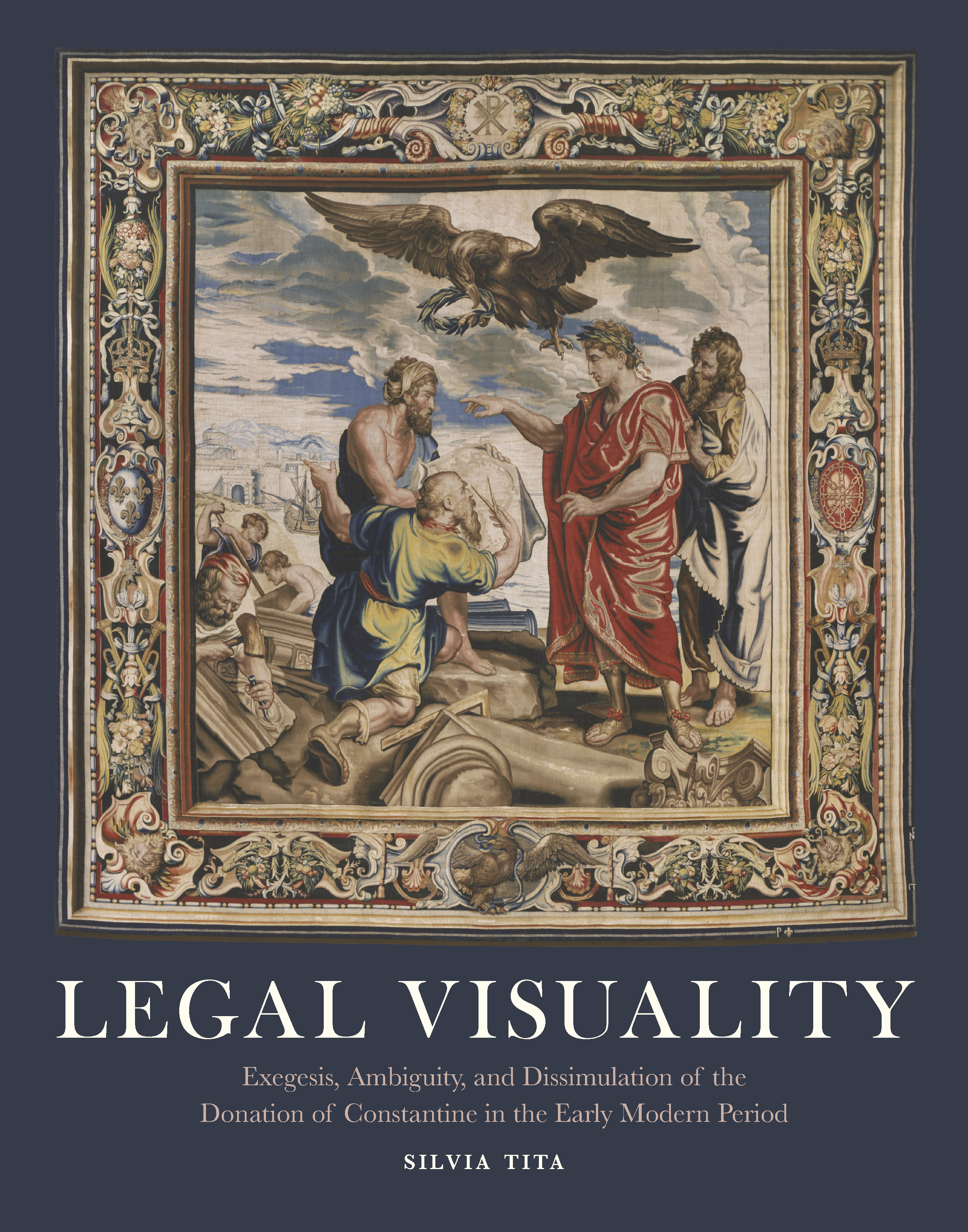 Legal Visuality
Exegesis, Ambiguity, and Dissimulation of the Donation of Constantine in the Early Modern Period
 Linguistic and Cultural Dynamics in a Frontier Society
New Perspectives on Northeastern Bavaria and Western Bohemia in the Early Middle Ages
Volume 9
 Medieval Debates on Foreknowledge: Future Contingents, Prophecy, and Divination
Acts of the XXVII Annual Colloquium of the SIEPM, Trento 12-15 September 2023
Volume 31
 Medieval Yeghegis, Armenia
History, Archaeology, Society. Local Multiplicities and Global Connections of a Rural Centre on the Silk Road(s)