
Decoration of Hellenistic and Roman Buildings in Cyprus
edited by Henryk Meyza

Paperback (Published)
(June 2022)
ISBN: 9783447115889
Price: $99.00
On back order
Decoration of Hellenistic and Roman Buildings in Cyprus consists of 22 chapters and communications relevant to architectural decor, mosaics, wall painting and sculpture both in Cyprus and neighbouring, culturally related areas. It provides an overview of melting influences of Greek, Roman, Egyptian (including Alexandrian) and oriental origin. Research on aspects of decoration in Nea Paphos is the principal theme. Archaeological excavations of Australian, Cypriot, French, Italian and Polish teams as well as salvage works and haphazard finds on the site uncovered decorated objects demanding study. Comparisons are made to Kourion and Soli in Cyprus, Alexandria ad Aegyptum, Delos, Dura Europos and Ptolemais in Cyrenaica. Thesis of a structural koine uniting Cyprus and African coast, particularly Cyrenaica is advocated. Both areas were ruled by Ptolemies and Roman conquest did not obliterate Hellenistic common background. Most of the contributions are based on updated and modified presentations read during a conference held in Warsaw on 10-11 March 2017.
Decoration of Hellenistic and Roman Buildings in Cyprus consists of 22 chapters and communications relevant to architectural decor, mosaics, wall painting and sculpture both in Cyprus and neighbouring, culturally related areas. It provides an overview of melting influences of Greek, Roman, Egyptian (including Alexandrian) and oriental origin. Research on aspects of decoration in Nea Paphos is the principal theme. Archaeological excavations of Australian, Cypriot, French, Italian and Polish teams as well as salvage works and haphazard finds on the site uncovered decorated objects demanding study. Comparisons are made to Kourion and Soli in Cyprus, Alexandria ad Aegyptum, Delos, Dura Europos and Ptolemais in Cyrenaica. Thesis of a structural koine uniting Cyprus and African coast, particularly Cyrenaica is advocated. Both areas were ruled by Ptolemies and Roman conquest did not obliterate Hellenistic common background. Most of the contributions are based on updated and modified presentations read during a conference held in Warsaw on 10-11 March 2017.
- Edited by Henryk Meyza
Other Titles in this Series

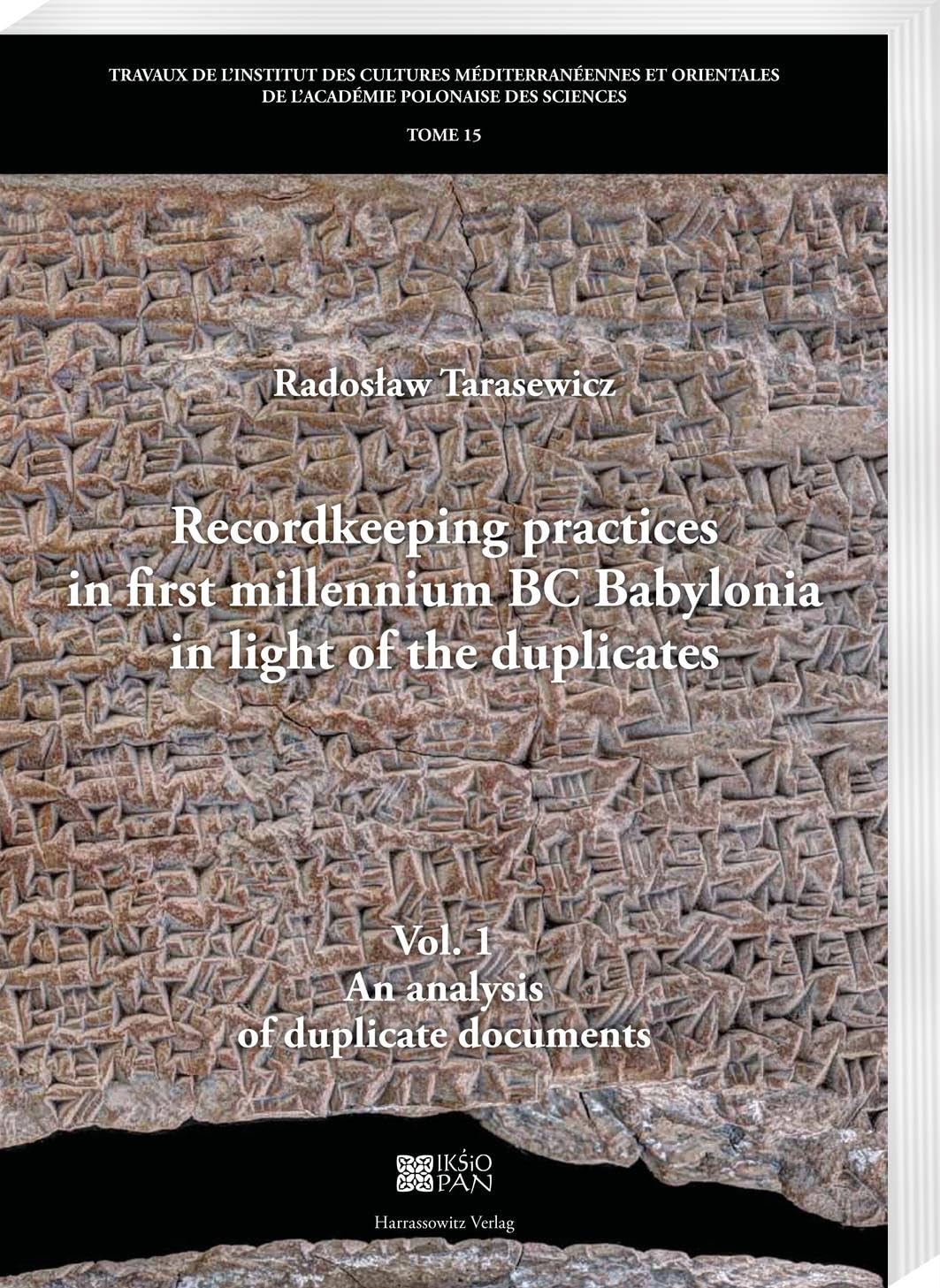 Recordkeeping practices in first millennium BC Babylonia in light of the duplicates.
Vol. 1. An analysis of duplicate documents
Volume 15

 The iconography of the pharaoh’s face in the Eighteenth Dynasty relief – metric analysis
Catalogue
Volume 9
 Greeks, Latins and Muslims in Lusignan Cyprus
The Depiction of Interdenominational Relations in the Chronicle of Leontios Makhairas
Volume 12


Similar Books


 Behind the Scenes of Medieval Roofs
An Overview of the Roofing Systems of Italian Churches
Volume 90
 Caesar’s Visions and Impact on the Roman Empire
Revisiting the Archaeological and Historical Record of the 40s BC
Volume 2


 Circulation, Use, Impact
The Consumption of Architectural Books in the Early Modern Eastern Adriatic
Volume 1

 Construction Processes in Historical Western Societies (5th c. BC – 10th c. AD)
Case Studies on Techniques, Models, and Costs
 Contesting Labeled Identities
The Sociology of Gentilics in Biblical and Northwest Semitic Literature



 Drunk the Potion, No Whit Charmed
The Doctrine of Pure and Perfect Souls from Iamblichus to Damascius

 Epigraphic “Shades” from Hellenistic Thrace
Contextualizing Inscriptions in Greek from Thracian Tombs

 Epiphanies of the Divine in the Septuagint and the New Testament
Fifth International Symposium of the Corpus Judaeo-Hellenisticum Novi Testamenti (CJHNT), 14-17 May 2015, Nottingham


 Etruscan and Roman Hellenistic Anatomical ex votos
Reassessing Popular Religious Expressions in Central Italy
Volume 8


 Gold, Silver and Glass: Power Networks, Cultural Identities, Technology Transfers and Agency across the Old World (7th Century BC – 1st Century AD)
Proceedings of a Conference Held at the British Museum, 16–18 June 2023



 Invisible Labour in Antiquity
Visualizing Obscure Work in the Ancient Mediterannean and West Asia
Volume 1

 Language and Power in the Roman Empire and Early India
Hierarchy, Ambiguity, and the Art of Reading the Signs in Cosmopolitan Cultures
 Late Antique villae in the Balkans (3rd–7th c. AD): Current Research Questions and Perspectives
HAEMUS Companion to the Late Antique Balkans 1
Volume 4


