Das arabisch-islamische Unterrichtswesen der klassischen Periode
Thematik und inhaltliche Strukturierung von Diktatkollegs des 9. – 12. Jahrhunderts n. Chr.
By (author) Tillmann Schreinemacher

Hardback (Forthcoming)
(November 2026)
ISBN: 9783162003591
6.1 x 9.13 inches
Price: $105.00
Tillmann Schreinemacher examines the fields of knowledge taught in dictation sessions of the classical Islamic period, the associated programmatic orientation of the respective scholar, and the interaction between the scholar and those participating in the instruction.
Tillmann Schreinemacher examines works of the dictation genre (imlā, pl. amālī) that originated in the Islamic world between the 9th and 12th centuries AD and can be traced back to the teaching activities of certain scholars. Based on a detailed analysis of the books’ content, the fields of knowledge taught in the dictation sessions (maǧlis, pl. maǧālis) are identified. By structuring the content, coherences and dividing lines in the programmatic approach of the respective scholar become visible. This approach makes it possible to distinguish between sections that are related in terms of content, unless they are referred to as sessions in the work itself. The focus is also on interactions between scholars and participants in the dictation sessions that are found in the text, and the effect of these interactions on the course of teaching. The author provides insight into specific teaching methods in pre-modern Islam by examining books that were written down during dictation lessons or already existed as teaching materials. These books have not yet been categorized in terms of content or classified in the context of one of the most widespread teaching methods of the early and classical Islamic era, the dictation lecture.
1. Einleitung
1.1. Bildung und Lehre im frühen Islam. Ein Überblick
1.2. Methodische Schritte
2. Das Maǧālis-Werk des Ṯaʿlab
2.1. Leben, Lehrer, Schüler und Werke Ṯaʿlabs
2.2. Handschriften
2.3. Allgemeine Angaben zu den Maǧālis
2.4. Tabelle
2.5. Auffälligkeiten
2.6. Ibn Miqsam und die Überlieferung der Maǧālis
2.7. Fazit
3. Das Amālī-Werk des Abū ʿAlī al-Qālī
3.1. Kurze Biographie des Abū ʿAlī al-Qālī
3.2. Lehrer und Schüler al-Qālīs
3.3. Werke
3.4. Wirkung
3.5. Al-Qālīs Amālī-Werk
3.6. Analyse
3.7. Fazit
4. Das Amālī-Werk al-Marzūqīs
4.1. Zum Charakter al-Marzūqīs
4.2. Lehrer, Schüler und Werke
4.3. Die der Edition zugrundeliegenden Handschriften
4.4. Das Amālī-Werk
4.5. Auszug eines Abschnitts
4.6. Fazit
5. Das Amālī-Werk Šarīf al-Murtaḍās
5.1. Leben und Wirken al-Murtaḍās
5.2. Werke
5.3. Das Amālī-Werk
5.4. Fazit
6. Das Amālī-Werk Ibn aš-Šaǧarīs
6.1. Leben
6.2. Lehrer und Schüler
6.3. Werke
6.4. Das Amālī-Werk
6.5. Besonderes
6.6. Tabellen
6.6.1. Tabelle 1
6.6.2. Tabelle 2
6.7. Die 58. Sitzung
6.8. Fazit: Gedanken zu Mündlichkeit, Schriftlichkeit und der Autorschaft der Amālī
7. Das Amālī-Werk as-Suhaylīs
7.1. Leben und Wirken as-Suhaylīs
7.2. Das Amālī-Werk
7.3. Fazit
8. Reine Hadithwerke
8.1. Das Amālī-Werk aṣ-Ṣanʿānīs
8.2. Das Amālī-Werk des Aḥmad b. ʿĪsā
8.3. Das Amālī-Werk al-Maḥāmilīs
8.4. Das Amālī-Werk des Šayḫ aṣ-Ṣadūq
8.5. Das Amālī-Werk des Ibn Samʿūn
8.6. Das Amālī-Werk al-Ǧurǧānīs
8.7. Das Amālī-Werk des Muʾayyad bi-llāh
8.8. Das Amālī-Werk aṭ-Ṭūsīs
8.9. Die Amālī-Werke al-Ḥusayn al-Ǧurǧānīs
9. Weitere Amālī-Werke
9.1. Das Amālī-Werk al-Yazīdīs
9.2. Das Amālī-Werk az-Zaǧǧāǧīs
9.3. Das Amālī-Werk des Ibn Durayd
10. Schluss
- By (author) Tillmann Schreinemacher
Other Titles in this Series


 Die Mose-Exodus-Tradition in den Korintherbriefen
Schriftrezeption und -verarbeitung 'zwischen den Welten'
Volume 20

 Hermeneutik(en) der Weisheit von der hebräischen Bibel bis in die islamische Zeit
Religionshistorische Beiträge zum Wandel von Weisheit und ihr Potenzial für praktisch-theologische Diskurse der Gegenwart


 Lehrreiche Literatur
Die didaktische Gestaltung von Plutarchs Quaestiones Graecae und Romanae und Gellius' Noctes Atticae

 Das Paradies ist ein Horsaal fur die Seelen
Institutionen religioser Bildung in historischer Perspektive
Volume 1
 Fruhchristliche Stoarezeption
Zur Rezeption einer philosophischen Schule in den apologetischen und antiharetischen Schriften des 2. und fruhen 3. Jahrhunderts
Volume 21


 Libraries, Handbooks, Encyclopedias
Ancient and Early Medieval Repositories of Knowledge and Their Religious Aspects
Volume 22

 Christianisierung des Habitus
Die Predigten des Caesarius von Arles als religiose Bildungsprozesse
Volume 23


 Islamic Ethics as Educational Discourse
Thought and Impact of the Classical Muslim Thinker Miskawayh (d. 1030)
Volume 14

 Briefliches Zitieren bei Paulus und Cicero
Eine vergleichende Untersuchung zu den Korintherbriefen
Volume 15

Similar Books
 Cities through Time
Glimpses into Urbanity and Community in Mediaeval to Modern West Asia and Egypt
Volume 1
 Cuneiform Artefacts from Archaeological Contexts: New Research on Ancient Iraq
Proceedings of a Conference Held at the Bavarian Academy of Sciences and Humanities, July 4–5, 2024
Volume 2
 Global Gulf
Geo-Economic, Geo-Political, and Geo-Technological Transformation in Saudi Arabia, the United Arab Emirates, and Qatar
 Ismail Hakki Bursevi’s translation of and commentary on Fusus al-Hikam By Muhyiddin Ibn ‘Arabi
Volumes 1-4
 Monastic Manuscripts from the Eastern Mediterranean (Sinai, Jerusalem, Antioch)
Production, Use, and Contexts

 Qatar’s Societal Security
Towards the Inclusive National Concept of ‘Baladna’ Identity, Migration and External Threats Since 2017
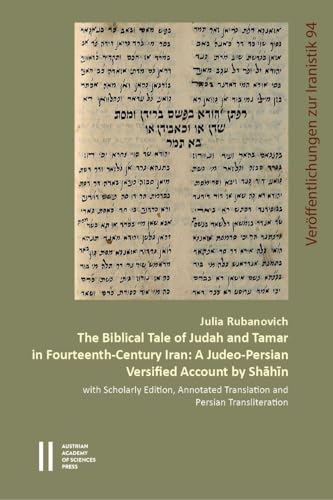 The Biblical Tale of Judah and Tamar in Fourteenth-Century Iran
A Judeo-Persian Versified Account by Shāhīn with Scholarly Edition, Annotated Translation and Persian Transliteration
Volume 94, 951
 The Discourse of Rites
Shaping and Reshaping the (Counter-)Priestly Rituals Conducted Outside the Tabernacle



 »Ein elend-schönes Land«
Gattung und Gedächtnis in Lea Goldbergs hebräischer Literatur. Aus dem Hebräischen von Rainer Wenzel
 Meine arabischen Freunde
Geschichten aus dem Maghreb für Aufklärung - gegen Islamismus und Unfreiheit

 Networking through Biography
Constructing Intellectual Junctions in Antiquity, the Renaissance and the Arabo-Islamic World
Volume 19


 Beiträge zur Islamischen Kunst und Archäologie
The Arts and Archaeology of Funerary Cultures in Islam
Volume 10.0
 Boğazköy Tablets in the Museum of Anatolian Civilisations (Bo 95–Bo 3993)
Anadolu Medeniyetleri Müzesinde Bulunan Boğazköy Tabletleri (Bo 95–Bo 3993)
Volume 3


 Discerning Religious Truth
A Didactic Exposition of the Logic and Epistemology of the Islamic Sciences
Volume 1


 Explorations in Islamic Archaeology
Material Culture, Settlements, and Landscapes from the Mediterranean to Western Asia
Volume 7


 Life on the Farm in Late Medieval Jerusalem
The Village of Beit Mazmil, its Occupants and their Industry over Five Centuries

 Occasionalism Revisited
New Essays from the Islamic and Western Philosophical Traditions (2nd ed.)
Volume 2
 Oil Lamps in the Holy Land during the Early and Later Islamic Periods (7th–16th/17th CE)
The Collection of the Israel Antiquities Authority

 Proceedings of the Seminar for Arabian Studies Volume 54 2025
Papers from the fifty-seventh meeting of the Seminar for Arabian Studies held at the Institut national d’histoire de l’art, Paris, 27–29 June 2024

 Recordkeeping practices in first millennium BC Babylonia in light of the duplicates.
Vol. 1. An analysis of duplicate documents
Volume 15