
Conflict Landscapes: An Archaeology of the International Brigades in the Spanish Civil War
By (author) Salvatore Garfi

Paperback (Published)
(June 2019)
ISBN: 9781789691344
8.07 x 11.42 inches
Price: $56.00
In stock
This volume is an archaeological exploration of the conflict landscapes encountered by volunteers of the International Brigades in the Spanish Civil War (1936-39). This research draws, not only on the techniques of landscape archaeology, but also on the writings of international volunteers in Spain – in particular, George Orwell.
This book is an archaeological exploration of a conflict landscape encountered by the volunteers of the International Brigades in the Spanish Civil War of 1936-39. A great deal is known about the Brigades in terms of inter-world war geopolitics, their history and make-up, but less is known about the materiality of the landscapes in which they lived, fought, and died. The Spanish Civil War was a relatively static conflict. As in the First World War, it consisted of entrenched Republican government lines facing similarly entrenched Nationalist (rebel) lines, and these ran north to south across Spain. Fighting was intermittent, so the front line soldiers had to settle in, and make what was an attritional war-scape, a place to live in and survive. This research examines one such war-scape as a place of ‘settlement’, where soldiers lived their daily lives as well as confronting the rigours of war – and these were the volunteers of the International Brigades, both foreign and Spanish, who occupied a section of lines southeast of Zaragoza in Aragon in 1937 and 1938. This research draws, not only on the techniques of landscape archaeology, but also on the writings of international volunteers in Spain – in particular, George Orwell – and it incorporates historical photography as a uniquely analytical, archaeological resource.
- By (author) Salvatore Garfi
'Salvatore Garfi's book is one of the most compelling accounts by far of a bloody 20th-century conflict. It provides the reader with an all-important historic context to the war, and records the archaeology associated with the trench positions of the International Brigades and Republican forces, where both civilians and combatants bore the brunt of the evils of civil war.' – George Nash (2020): Current World Archaeology #99
— George Nash
'This is an expert, informative, and often intriguing investigation of a historically recent battle-zone landscape by an archaeologist whose innovatory approach deploys photographs, maps, and historical (and literary) background context to make a powerful contribution to modern conflict archaeology.' – Nicholas Saunders (2020): Military History Matters, Issue 116
— Nicholas Saunders
'Garfi’s volume is novel and challenges the traditional presentation of war as a grand narrative, exploring instead the harsh and visceral experience of a war lived on the battlefield.' – Claire Nesbitt (2020): Antiquity Vol. 94
— Claire Nesbitt
'... this volume is an essential contribution to archaeology studies of the Spanish Civil War... Garfi’s application of nonintrusive archaeological survey techniques is praiseworthy, and the multiplicity of the sources used, beyond the fieldwork, makes this volume pertinent for anyone interested in the history of the Spanish conflict of 1936–1939.' – Luis Antonio Ruiz Casero (2020): Historical Archaeology, Volume 54
— Luis Antonio Ruiz Casero
'In conclusion, Garfi's monograph is a remarkable work detailing a war zone that has been neglected by scholars until now. Although it represents a valid case study on Spain, it also perfectly fits into the wider discipline of combat and landscape archaeology. The variety of sources used by Garfi (including survey data, literary sources, and archival records), supported by rigorous methodology, are points of strength in this book, which makes a valuable contribution to the field of European archaeology. – Antonino Crisa (2022): Landscape Journal Volume 40 #1
—
Similar Books


 Balthasar Caymox of Nuremberg
Early Modern German Print Publishers: Popular Prints of the Seventeenth Century
 Beyond Sovereign Courts
Agents and Practices in Early Modern Spanish and Habsburg Diplomacy
Volume 3
 Caesar’s Visions and Impact on the Roman Empire
Revisiting the Archaeological and Historical Record of the 40s BC
Volume 2


 Circulation, Use, Impact
The Consumption of Architectural Books in the Early Modern Eastern Adriatic
Volume 1

 Councils, Conflicts, Correspondence
Urban Diplomacy in Reval (Tallinn) and Lübeck (c. 1470–1570)
Volume 67


 Etruscan and Roman Hellenistic Anatomical ex votos
Reassessing Popular Religious Expressions in Central Italy
Volume 8




 Innovationes Lovanienses: Arts, Law and Theology at the University of Louvain (1425–1797)
Studium Lovaniense: Learning across Borders, 2
Volume 18
 Invisible Labour in Antiquity
Visualizing Obscure Work in the Ancient Mediterannean and West Asia
Volume 1
 Late Antique villae in the Balkans (3rd–7th c. AD): Current Research Questions and Perspectives
HAEMUS Companion to the Late Antique Balkans 1
Volume 4
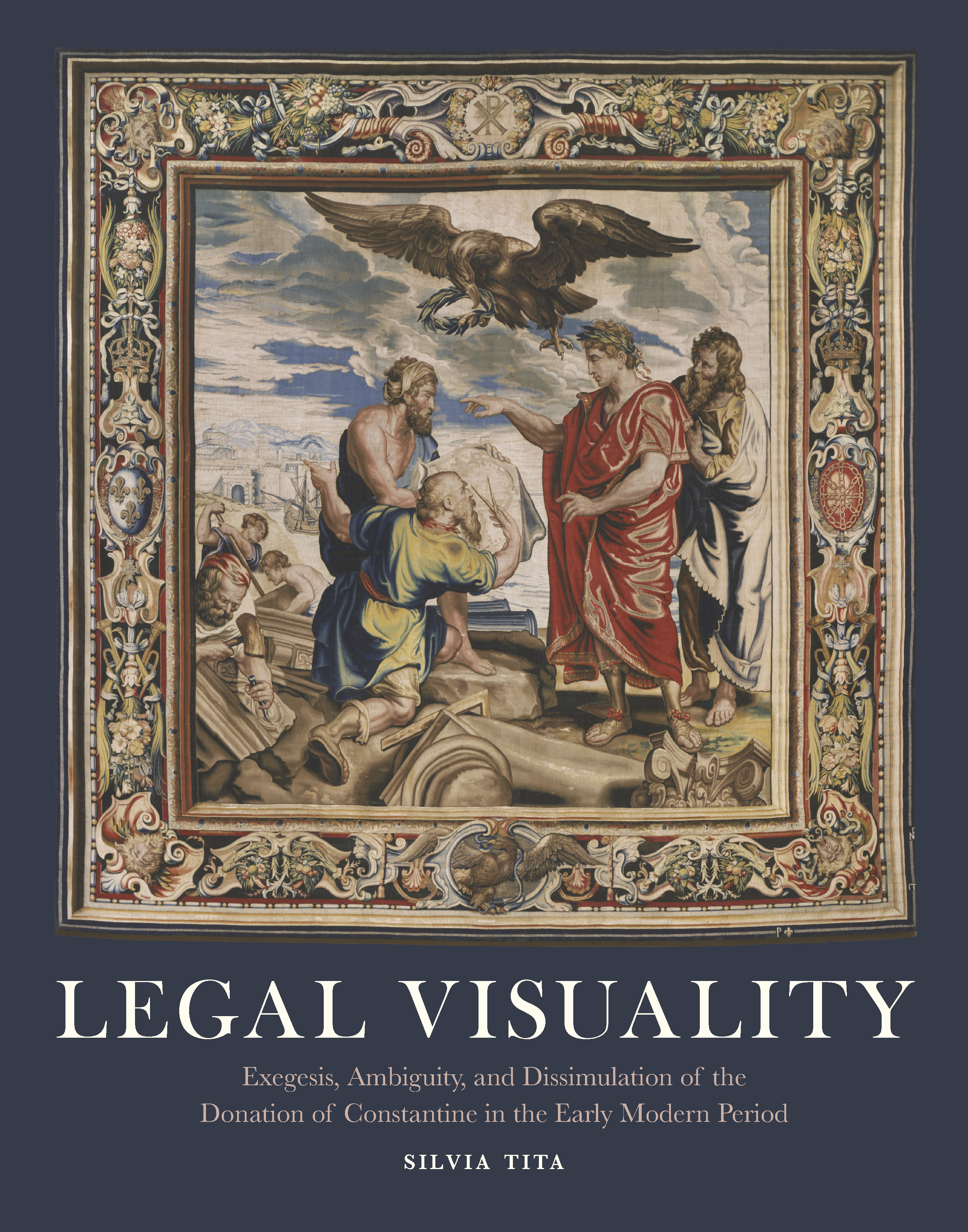 Legal Visuality
Exegesis, Ambiguity, and Dissimulation of the Donation of Constantine in the Early Modern Period


 Naples as Laboratory / Laboratorium Neapel
Style Options, Artistic Rivalry and Self Fashioning in Neapolitan Baroque Painting / Plurale Stilbildung, Kunstlerkonkurrenz und Self Fashioning in der neapolitanischen Barockmalerei

 Portraying the Individual in the Roman East
Local–Imperial Entanglements in Sculpture, Mosaics, and Paintings (First–Fourth Centuries AD)
Volume 18
 Power and Women in Southeast and Central Europe in Late Medieval and Early Modern Period (1300-1600)
Volume 10


 Small Worlds and Relational Agencies: Local Societies in Early Medieval Iberia
Pequeños mundos y Agencias relacionales: Sociedades locales altomedievales en la Península Ibérica
 Staging the Spectacle of Majesty
Ceremonial, Courtly Space, and Collecting under the Spanish Habsburgs
Volume 9
 Students, Scholars and Their Books at the University of Louvain (1425-1797)
Studium Lovaniense: Learning across Borders, 1
Volume 17


