
Compressed Meanings
The Donor's Model in Medieval Art to around 1300: Origin, Spread and Significance of an Architectural Image in the Realm of Tension between Tradition and Likeness
By (author) Emanuel S Klinkenberg

In the Christian art of western Europe images survive from as early as the sixth century that show figures of founders or donors bearing a model of the building they caused to be constructed, renovated or embellished. Previous studies have tended to turn on the question of how accurately these models represent the buildings they were intended to portray. But the donors’ model cannot be explained exclusively by comparison with its built equivalent. The sculptors, goldsmiths, minters, mosaicists, painters, weavers and sealmakers who created these little buildings were not always aiming to produce a straightforward likeness of the edifice in question but rather to represent its significance. The donor’s model could underline the function or symbolic importance of a building or be an expression of support for a particular ruler. It could document real or fictive family ties, validate a patron’s position or enhance his prestige. It could operate as a policy statement by lords temporal and spiritual, be deployed as a weapon in ecclesiastical rivalries, or serve as a visual charter to underpin the lawfulness and legality of gifted privileges, properties and possessions. Compressed Meanings approaches the donor’s model primarily as part of an iconographic tradition whose origins can shed light on the message the model-bearers and their models were intended to convey. Emanuel Klinkenberg studied history of art at Leiden University (Netherlands), where he received his Ph.D cum laude in 2006. His research interests cover medieval European art and its relationship with architecture and theology.
In the Christian art of western Europe images survive from as early as the sixth century that show figures of founders or donors bearing a model of the building they caused to be constructed, renovated or embellished. Previous studies have tended to turn on the question of how accurately these models represent the buildings they were intended to portray. But the donors’ model cannot be explained exclusively by comparison with its built equivalent. The sculptors, goldsmiths, minters, mosaicists, painters, weavers and sealmakers who created these little buildings were not always aiming to produce a straightforward likeness of the edifice in question but rather to represent its significance. The donor’s model could underline the function or symbolic importance of a building or be an expression of support for a particular ruler. It could document real or fictive family ties, validate a patron’s position or enhance his prestige. It could operate as a policy statement by lords temporal and spiritual, be deployed as a weapon in ecclesiastical rivalries, or serve as a visual charter to underpin the lawfulness and legality of gifted privileges, properties and possessions. Compressed Meanings approaches the donor’s model primarily as part of an iconographic tradition whose origins can shed light on the message the model-bearers and their models were intended to convey. Emanuel Klinkenberg studied history of art at Leiden University (Netherlands), where he received his Ph.D cum laude in 2006. His research interests cover medieval European art and its relationship with architecture and theology.
- By (author) Emanuel S Klinkenberg
Other Titles in this Series

 Architecture and Visual Culture in the Late Antique and Medieval Mediterranean
Studies in Honor of Robert G. Ousterhout
Volume 14

 Building the Sacred in a Crusader Kingdom
Gothic Church Architecture in Lusignan Cyprus, c. 1209 - c. 1373
Volume 11

 Flamboyant Architecture and Medieval Technicality
The Rise of Artistic Consciousness at the End of Middle Ages (c. 1400-1530)
Volume 12
 Les charpentes du XIe au XIXe siecle. Grand Ouest de la France
Typologie et evolution, analyse de la documentation de la Mediatheque de l'architecture et du patrimoine
Volume 5
 Architecture of Disjuncture
Mediterranean Trade and Cathedral Building in a New Diocese (11th-13th Centuries)
Volume 13
 The Parish and Pilgrimage Church of St Elizabeth in Kosice
Town, Court, and Architecture in Late Medieval Hungary
Volume 6


 Roof Frames from the 11th to the 19th Century
Typology and development in Northern France and in Belgium
Volume 3

Similar Books
 A Collaborative Tapestry in Honour of Shirley Ann Brown / Une fresque brodée en l’honneur de Shirley Ann Brown
The Bayeux Tapestry Seen by her Colleagues and Friends / La Tapisserie de Bayeux vue par ses collègues et amis

 Behind the Scenes of Medieval Roofs
An Overview of the Roofing Systems of Italian Churches
Volume 90


 Circulation, Use, Impact
The Consumption of Architectural Books in the Early Modern Eastern Adriatic
Volume 1





 Innovation and Medieval Communities
The Circulation of Ideas and Practices in and out of the Town (1200-1500)
Volume 63
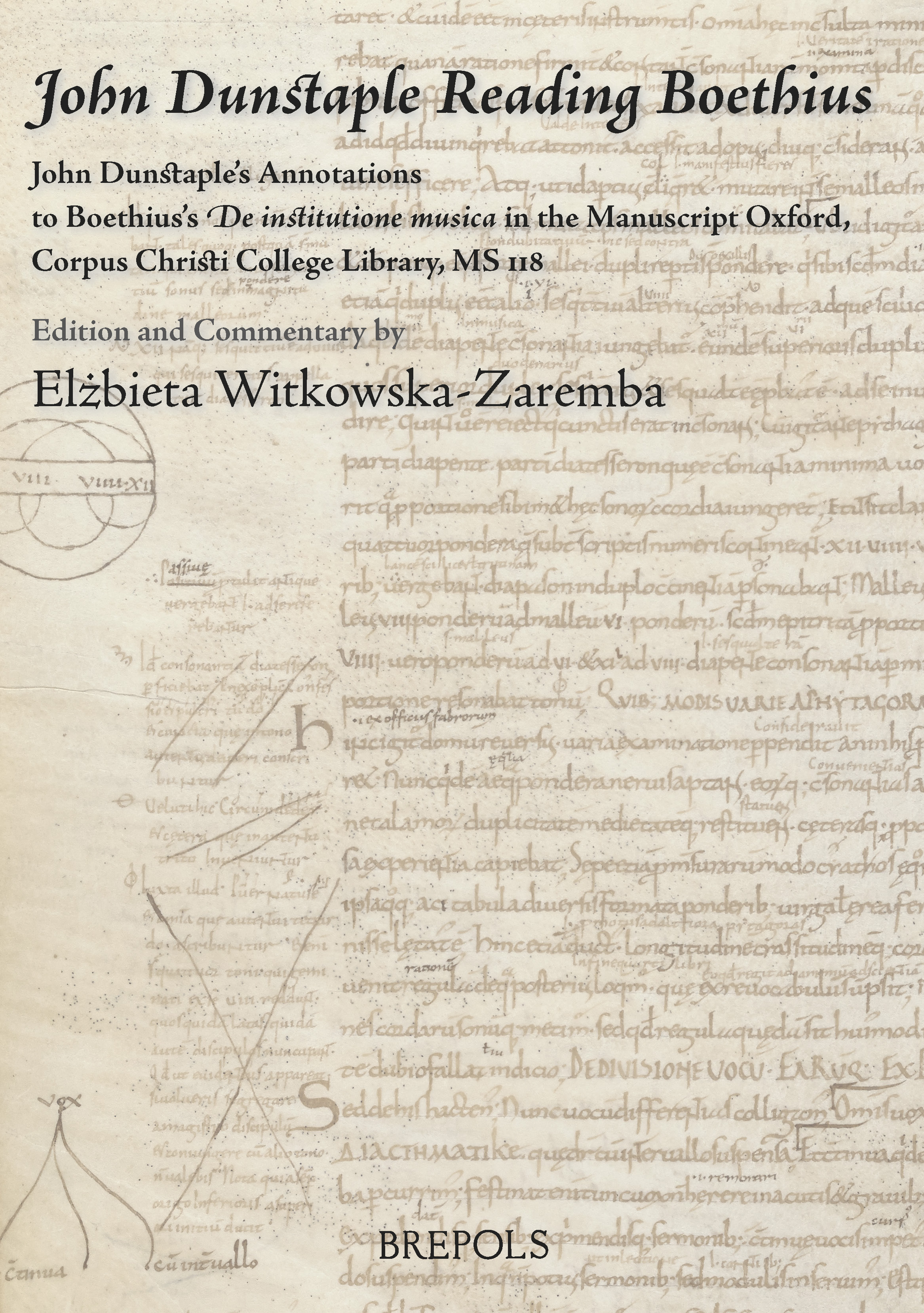 John Dunstaple Reading Boethius
John Dunstaple’s Annotations to Boethius’s “De institutione musica” in the Manuscript Oxford, Corpus Christi College Library, MS 118
 Late Antique villae in the Balkans (3rd–7th c. AD): Current Research Questions and Perspectives
HAEMUS Companion to the Late Antique Balkans 1
Volume 4
 Linguistic and Cultural Dynamics in a Frontier Society
New Perspectives on Northeastern Bavaria and Western Bohemia in the Early Middle Ages
Volume 9

 Medieval Debates on Foreknowledge: Future Contingents, Prophecy, and Divination
Acts of the XXVII Annual Colloquium of the SIEPM, Trento 12-15 September 2023
Volume 31
 Medieval Yeghegis, Armenia
History, Archaeology, Society. Local Multiplicities and Global Connections of a Rural Centre on the Silk Road(s)


 Power and Women in Southeast and Central Europe in Late Medieval and Early Modern Period (1300-1600)
Volume 10



 The Anglo-Norman Bible’s Books of Kings, a Critical Edition
(BL Royal 1 C III, fols 234r-274v)
Volume 37