
City of Culture 2600 BC: Early Mesopotamian History and Archaeology at Abu Salabikh
By (author) John Nicholas Postgate

Paperback (Published)
(March 2024)
ISBN: 9781803276694
7.99 x 10.91 inches
Price: $49.00
In stock
This book presents the city beneath the surface of Abu Salabikh, southern Iraq. The archaeology and the textual data combine to reveal its architecture, agricultural and industrial enterprises, and social structure. Integrated with our wider knowledge of south Mesopotamia at this time it creates a vivid image of city life in 2600 BC.
City of culture, 2600 BC presents the city which lies beneath the surface of the archaeological site of Abu Salabikh in south Iraq, first investigated in the 1960s and excavated in the 1970s and 1980s. It starts from the facts on the ground, and shows how the material remains can resurrect the city, illuminated by its library of literary and lexical texts, and documents from institutional administration. The archaeology and the textual data reinforce each other and together convey a picture of the city and its architecture, agricultural and industrial enterprises, and social structure. These are all integrated with our wider knowledge of south Mesopotamia at this time, and with the world view given us by the rich body of Sumerian literature – myths, epics and religious texts, but also homespun secular philosophy – to create a vivid image of city life in 2600 BC. This is an account of one city and what it tells us. Cities were the defining components of early Mesopotamia, acting as the base for all economic, social, political and cultural activity. With their shared languages and traditions they belonged to a single cultural order, and as with other similar groupings of individual urban centres – whether in Greece, Italy or China – the rivalry and emulation generates a vibrant but varied and innovative world. The book concludes therefore with a more general account of “The Land” (kalam) in the pre-imperial Early Dynastic era, and with an assessment of the nature of the early Mesopotamian urban scene.
Introduction
Chapter 1. The site and the environment
Chapter 2. The mounds and the city layout
Chapter 3. Buildings and builders
Chapter 4. Burials and memorials
Chapter 5. The temple and the tablets
Chapter 6. The temple estates
Chapter 7. Textiles, clay and stone
Chapter 8. Ornamental stones and metals
Chapter 9. The ensi and his city
Chapter 10. Kingships and patron deities
Chapter 11. Cities and states: recognition and rivalry
Chapter 12. Abu Salabikh in context
Appendix 1. Ereš and Nisaba
Appendix 2 ki.en-gi
Appendix 3. Records of land allocations
Appendix 4. The profession PA.USAN
Bibliographical matters
Bibliography
Nicholas Postgate taught Akkadian at SOAS in London from 1967-71 and then moved to the British School of Archaeology in Baghdad until 1980 when he returned to teach Mesopotamian history and archaeology at Cambridge, and later Sumerian and Akkadian language and literature, retiring in 2013. His main archaeological project in Iraq was Abu Salabikh, though he also worked at Tell Madhhur and under Diana Kirkbride at Umm Dabaghiyah. After Iraq became out of bounds in 1990 he directed the Bronze and Iron Age excavation at Kilise Tepe in Rough Cilicia from 1994 to 1998 and again in 2007-2012. Alongside his books, Early Mesopotamia: society and economy at the dawn of history (1992) and Bronze Age bureaucracy: writing and the practice of government in Assyria (2013), he has edited Middle and Neo-Assyrian archives, co-edited the Concise Dictionary of Akkadian, and written articles on various historical topics, and recently on Sumerian grammar.
- By (author) John Nicholas Postgate
Similar Books






 Boğazköy Tablets in the Museum of Anatolian Civilizations (Bo 9032–Bo 9097)
Anadolu Medeniyetleri Müzesinde Bulunan Boğazköy Tabletleri (Bo 9032–Bo 9097)
Volume 4
 Connecting the Dots: Counting, Writing, and the Beginnings of Civilization
The Secret Lives of Clay Tokens: A Memoir

 Curating the Prehistoric Past
Studies on West Asian Archaeology and Beyond in Honour of Yoshihiro Nishiaki

 Exploring Gender Dynamics across the Ancient Near East
Collected Essays of Gender and Methodology in the Ancient Near East (GeMANE) 4 and 5
Volume 7


 Ḫattušaš utnē išḫameški
Hittite and Other Ancient Near Eastern Studies Presented to Piotr Taracha on the Occasion of His 65th Birthday




 Kultur – Kontakt – Kultur
Beiträge anlässlich der 66. Rencontre Assyriologique Internationale in Frankfurt/Main und Mainz, 25.–29. Juli 2022
Volume 35
 Money of Mercenaries in the Cimmerian Bosporus
From the Mithridatic Wars to the Roman-Bosporan War of AD 45-49
Volume 45

 New Research on Old Collections in Southwest Asian Archaeology
Proceedings of the Workshop Held at the British Museum, London, 31 July – 2 August, 2023
 Old Aramaic Inscriptions and their Contexts
An Epigraphic, Archaeological, and Historical Synthesis
Volume 63

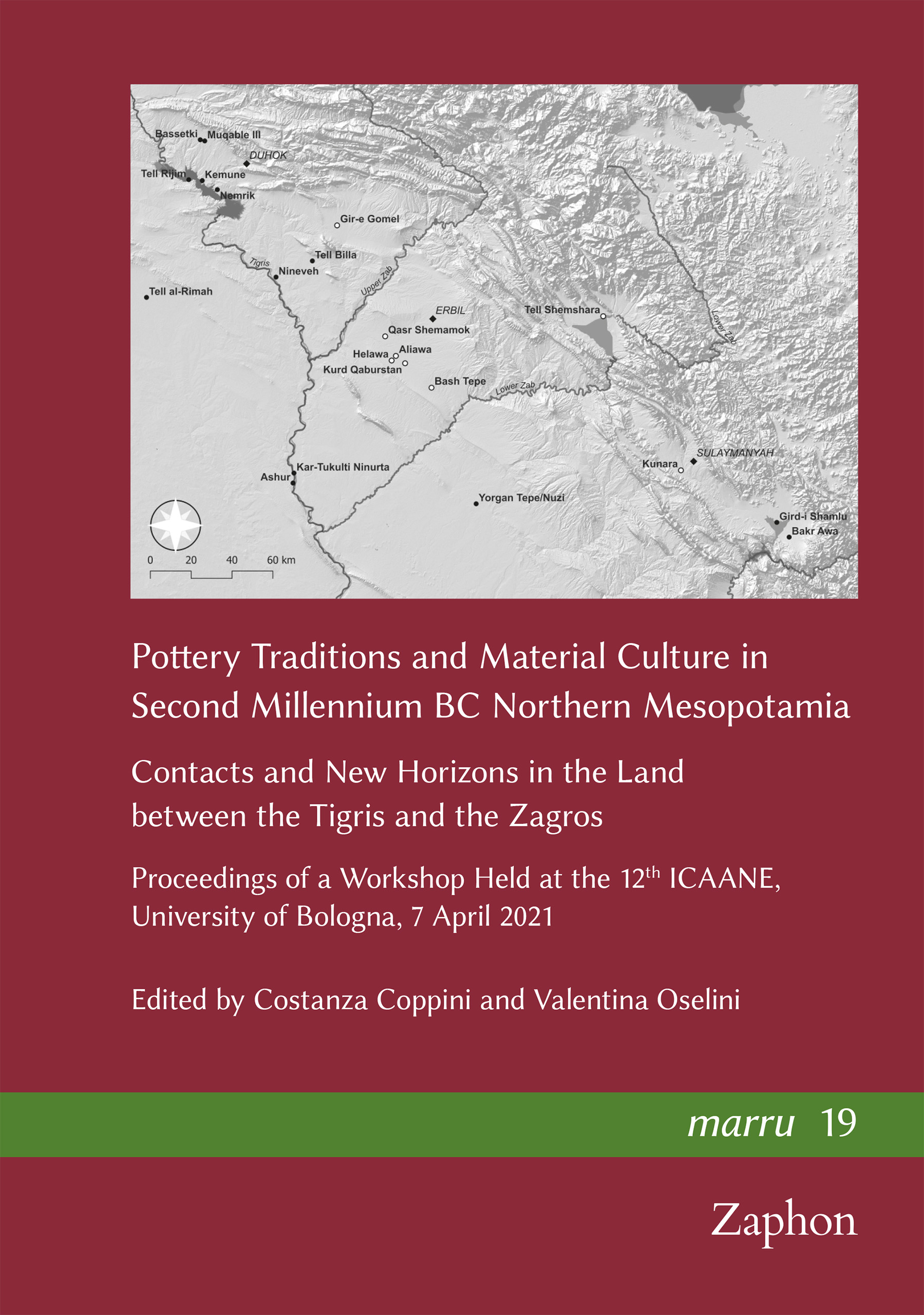 Pottery Traditions and Material Culture in Second Millennium BC Northern Mesopotamia
Contacts and New Horizons in the Land between the Tigris and the Zagros. Proceedings of a Workshop Held at the 12th ICAANE, University of Bologna, 7 April 2021
Volume 19
 Punning in Odd or Elegant Constructions in Jeremiah
The Convergence of Linguistics, Rhetoric, and Textuality in the Hebrew Text of Jeremiah

 Sertorius, the Exiles of the Sullan Regime and the Provinces of the Empire
Legitimacy, Morality and Imperial Discourse in the 70s BCE
 Shame in the Worlds of the Hebrew Bible and Akkadian Texts
A Linguistic Study and Its Implications
Volume 33

 Telling Contexts
Archaeological and Textual Studies in Honor of Elizabeth Bloch-Smith and Mark S. Smith
 The Body
Lived, Cultured, Adorned: Essays on Dress and the Body in the Bible and Ancient Near East in Honor of Nili S. Fox
 The Discourse of Rites
Shaping and Reshaping the (Counter-)Priestly Rituals Conducted Outside the Tabernacle
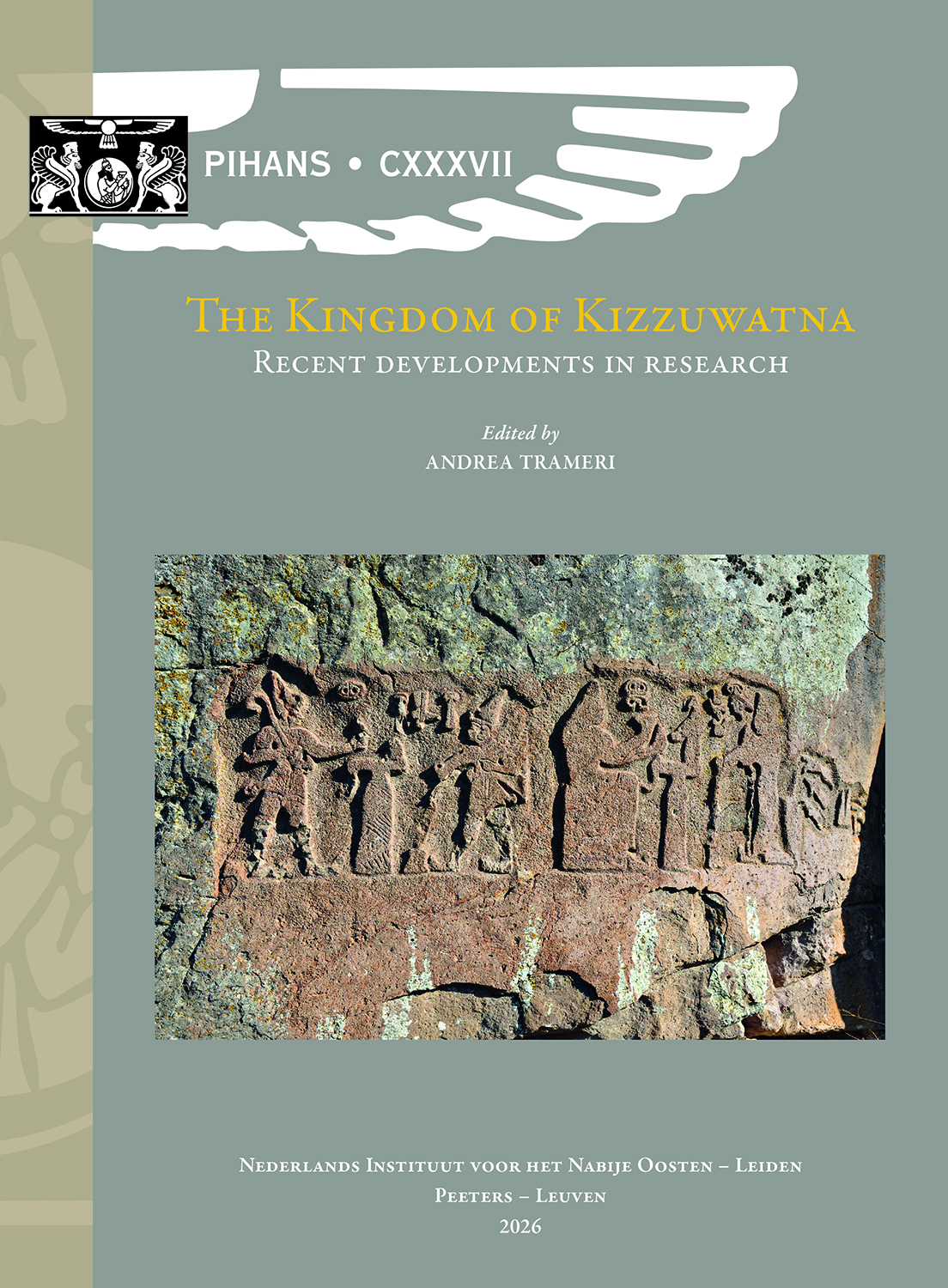 The Kingdom of Kizzuwatna: Recent Developments in Research
Proceedings of the Third NINO Postdoctoral Research Fellow Annual Conference, Leiden, 23rd-25th March 2023
Volume 137
