
Bronze Age Tell Communities in Context: An Exploration into Culture, Society, and the Study of European Prehistory. Part 2
Practice – The Social, Space, and Materiality
By (author) Tobias L. Kienlin

Paperback (Published)
(December 2020)
ISBN: 9781789697506
8.27 x 11.69 inches
Price: $64.00
On back order
This is the second part of a study on Bronze Age tells and on our approaches towards an understanding of this fascinating way of life, drawing on the material remains of long-term architectural stability and references back to ancestral place.
Practice – The Social, Space, and Materiality forms the second part of Bronze Age Tell Communities in Context: An exploration into culture, society, and the study of European prehistory. It studies Bronze Age tells and our approaches towards an understanding of this fascinating way of life, drawing on the material remains of long-term architectural stability and references back to ancestral place. While the first volume challenged Neo-Diffusionist models of the influence of Mediterranean palatial centres on the development of tell communities in the Carpathians and an attendant focus on social stratification, the second part sets out an alternative theoretical approach, which foregrounds architecture and the social use of space. Unlike the reductionist macro perspective of mainstream social modelling, inspired by aspects of practice theory outlined in this book, the account given seeks to allow for what is truly remarkable about these sites, and what we can infer from them about the way of life they once framed and enabled. The stability seen on tells, and their apparent lack of change on a macro scale, are specific features of the social field, in a given region and for a specific period of time. Both stability and change are contingent upon specific historical contexts, including traditional practices, their material setting and human intentionality. They are not an inherent, given property of this or that ‘type’ of society or social structure. For our tells, it is argued here, underneath the specific manifestation of sociality maintained, we clearly do see social practices and corresponding material arrangements being negotiated and adjusted. Echoing the argument laid out in the first part of this study, it is suggested that archaeology should take an interest in such processes on the micro scale, rather than succumb to the temptation of neat macro history and great narratives existing aloof from the material remains of past lives.
I. Introduction ; I.1. Once More on Tells: Where and When ...I.2. ... How and Why?II.1. Toward a Practice-oriented ApproachII.2. Theory of Practice and 'Time-Space' (Giddens)II.3. Theory of Practice and Social Space (Low)II.4. Habitus and Social Space (Bourdieu)II.5. 'Flat Ontologies': Social Life and Materiality (Schatzki)II.6. Architecture and Assemblages (Delitz, DeLanda)II.7. Implications and OutlookIII.1. Space and Time: The Borsod ExampleIII.2. Introduction to a Bronze Age LandscapeIII.3. The Tell or Tell-like Mound: Focus Shared or Community Divided?III.4. The Enclosure: Defence or Signal?III.5. The Outer Settlement: Commoners or Community? IV.1. The Tell Plenum of PracticesIV.2. Social Life UnfoldingV.1. Death and Burial on the Bronze Age Borsod PlainV.2. The Study of the European Bronze Age: A Personal NoteI.1. Once More on Tells: Where and When ...I.2. ... How and Why? II. The Social, Space and Materiality ;
II.1. Toward a Practice-oriented ApproachII.2. Theory of Practice and ‘Time-Space’ (Giddens)II.3. Theory of Practice and Social Space (Löw)II.4. Habitus and Social Space (Bourdieu)II.5. ‘Flat Ontologies’: Social Life and Materiality (Schatzki)II.6. Architecture and Assemblages (Delitz, DeLanda)II.7. Implications and Outlook III. Space and Time on Bronze Age Tells ;
III.1. Space and Time: The Borsod ExampleIII.2. Introduction to a Bronze Age LandscapeIII.3. The Tell or Tell-like Mound: Focus Shared or Community Divided?III.4. The Enclosure: Defence or Signal?III.5. The Outer Settlement: Commoners or Community? IV. Tell-Living ;
IV.1. The Tell Plenum of PracticesIV.2. Social Life Unfolding V. Epilogue ;
V.1. Death and Burial on the Bronze Age Borsod PlainV.2. The Study of the European Bronze Age: A Personal Note References
- By (author) Tobias L. Kienlin
‘It is an excellent, thought-provoking study and a data-driven expansion of part 1. The book was a much-needed supplement for the older publication, one which establishes a coherent understanding of one of the most challenging phenomena of European prehistory by demonstrating how constructing an alternative model of Bronze Age archaeology can be achieved. The only question remains, whether the readers should start preparing for volume three?’ – Robert Staniuk (2023): GNOMON 95, 2
—
Similar Books


 Caesar’s Visions and Impact on the Roman Empire
Revisiting the Archaeological and Historical Record of the 40s BC
Volume 2


 Etruscan and Roman Hellenistic Anatomical ex votos
Reassessing Popular Religious Expressions in Central Italy
Volume 8


 Invisible Labour in Antiquity
Visualizing Obscure Work in the Ancient Mediterannean and West Asia
Volume 1
 Late Antique villae in the Balkans (3rd–7th c. AD): Current Research Questions and Perspectives
HAEMUS Companion to the Late Antique Balkans 1
Volume 4
 Making and Meaning in the Bronze and Iron Ages
Chronology, Landscapes and Societies across Europe. Proceedings from the METALAGES2024 Colloquium (Florence, 23 October 2024)


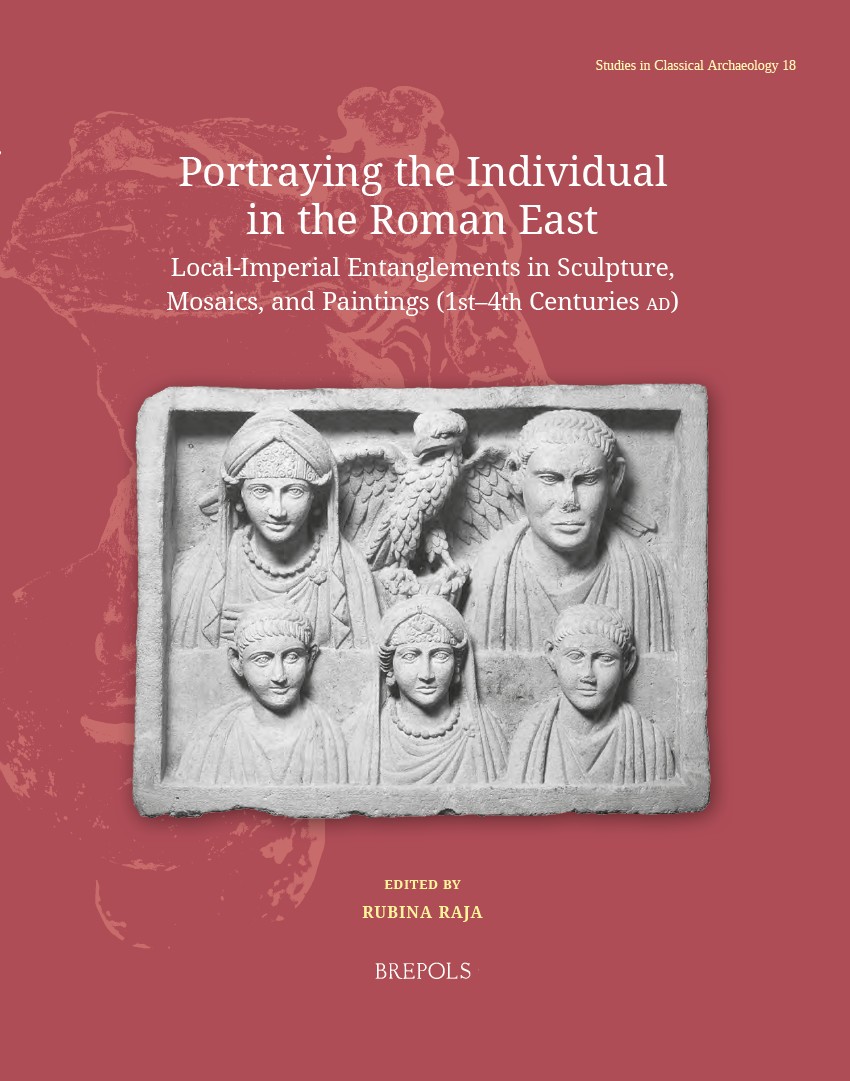 Portraying the Individual in the Roman East
Local–Imperial Entanglements in Sculpture, Mosaics, and Paintings (First–Fourth Centuries AD)
Volume 18


 Small Worlds and Relational Agencies: Local Societies in Early Medieval Iberia
Pequeños mundos y Agencias relacionales: Sociedades locales altomedievales en la Península Ibérica


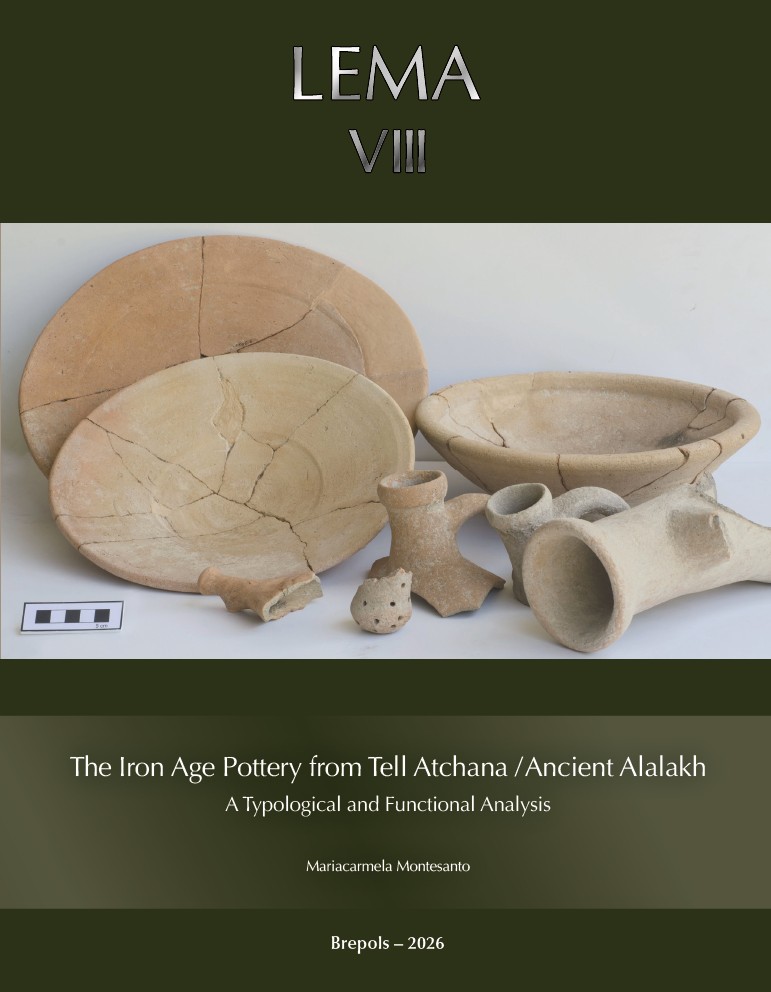 The Iron Age Pottery from Tell Atchana / Ancient Alalakh
A Typological and Functional Analysis
Volume 8

 Writing in the Church of the Nativity in Bethlehem
Inscription and Graffiti in a Multilingual and Multigraphic Perspective
Volume 45


 Atlante tematico di topografia antica 36-2026
Urbanistica e monumenti, porti, Roma. Ricerche sui monti Aurunci
Volume 36
 Cerámica común romana y ciclo haliéutico
Análisis de los contextos de las cetariae de Iulia Traducta

 Nuove scoperte e progressi nelle metodologie di rilievo e analisi dell’arte rupestre post-paleolitica in Italia
New discoveries and progress in the tracing and analysis methodologies of the post-Paleolithic rock art in Italy


 A Dramatic Event in Late Roman Florence
The Anomalous Burial Site Discovered beneath the Uffizi Gallery

 Alexander the Great and the Campaign of Gaugamela
New Research on Topography and Chronology. IAMNI 1 (Italian Archaeological Mission to Northern Iraq)
Volume 53