
Archaeology by the Fourth Nile Cataract: Survey and Excavations on the Left Bank of the River and on the Islands between Amri and Kirbekan, Volume IV
Finds, Part 2: The Pottery
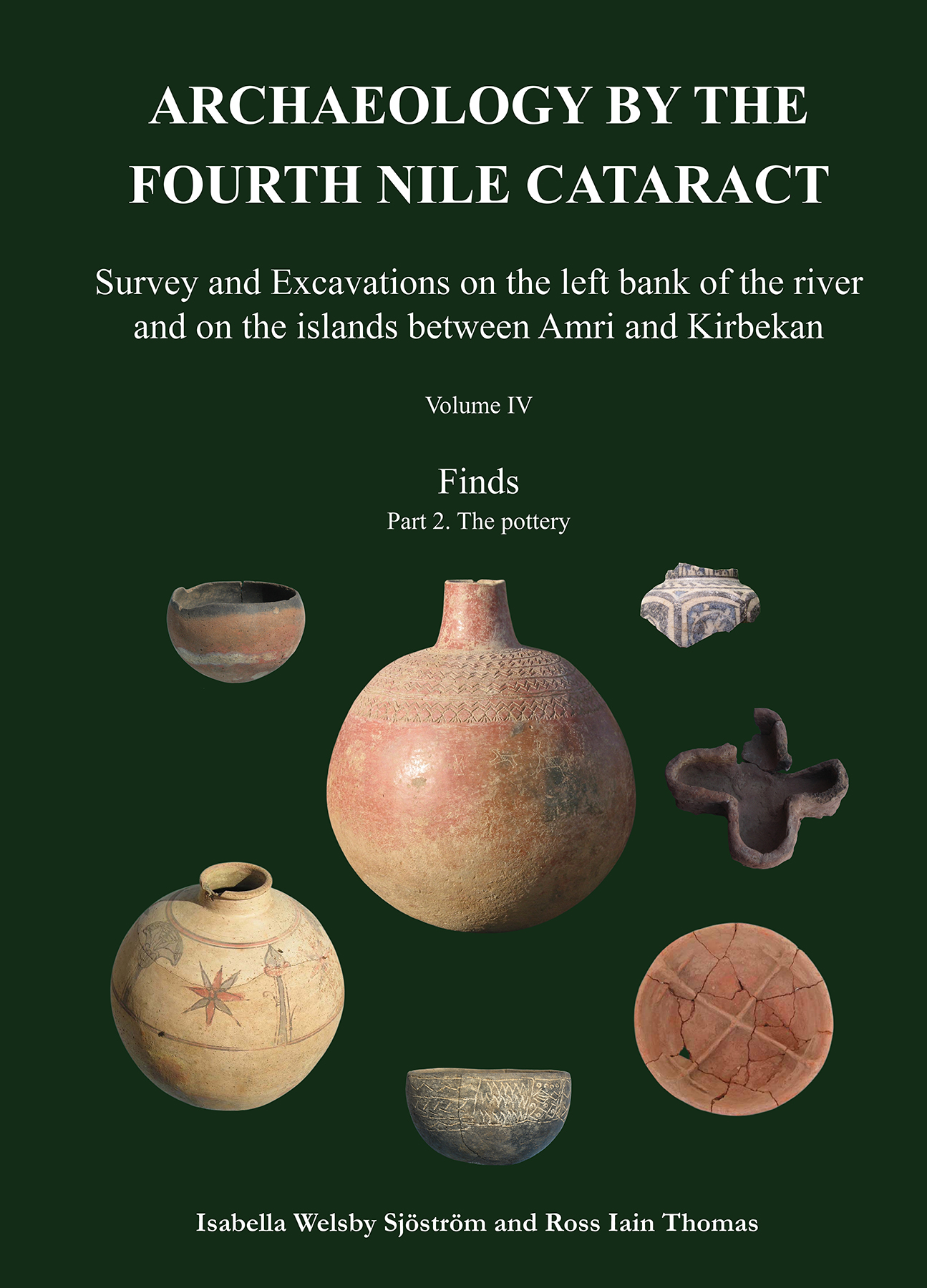
Hardback (Forthcoming)
(December 2026)
ISBN: 9781805834205
8.07 x 11.46 inches
Price: $112.00
A comprehensive typological study of pottery from the Fourth Nile Cataract region of Sudan, spanning the Mesolithic to the Post-Medieval period. Extensively illustrated, it examines ceramic forms, fabrics, manufacture and decoration, providing an important reference for the archaeology of Nubia and the Nile Valley.
This volume presents a comprehensive study of the pottery recovered during the Sudan Archaeological Research Society’s survey and excavations in the Fourth Nile Cataract region, between Amri and Kirbekan. Drawing on material from an extensive archaeological landscape encompassing approximately 2,800 sites, it documents ceramic traditions spanning the Mesolithic to the Post-Medieval period.
The pottery is presented as a detailed typological reference, organised by chronology, vessel form, manufacture and decoration. Early assemblages, from the Mesolithic and Neolithic through the Kerma, New Kingdom and Napatan periods, are followed by an extensive examination of Meroitic, Post-Meroitic, Christian and later ceramics. The study encompasses handmade and wheel-made vessels, including domestic wares, storage jars, amphorae, cooking pots and funerary pottery, alongside detailed analyses of fabrics, decorative techniques, potters’ marks and graffiti.
Supported by extensive illustrations, photographs, tables and indices, the volume provides a valuable resource for identifying and comparing pottery forms across Sudan and the wider Nile Valley. Discussion of selected settlement and funerary assemblages places the material within its archaeological context, contributing to the understanding of ceramic production, use and chronological development in the Fourth Cataract region.
Other Titles in this Series


 Archaeology by the Fourth Nile Cataract: Survey and Excavations on the left bank of the river and on the islands between Amri and Kirbekan, Volume I
Landscape, toponyms and oral history and the people, their settlements, architecture and land use before the Merowe Dam


Similar Books
 ‘For You I Study, For You I Work, For You I Live, For You I Am Ready To Even Give My Life’
Essays in Honour of Francis (Frank) J Moloney, SDB


 A Connecting Polemic in the Medieval Mediterranean
The Correspondence of Leo III and ʿUmar II
Volume 6





 Alabaster
An Interdisciplinary Study of the Sources and Uses of Calcite Alabaster in Antiquity
Volume 5










 Apocrypha, Magic, Liturgy
The Multiple Identities of Coptic Prayers in Late Antique and Early Islamic Egypt


