
Allianzpolitik in der Suezkrise 1956
By (author) Thomas Freiberger Series edited by Dittmar Dahlmann Series edited by Dominik Geppert Series edited by Christian Hacke Series edited by Klaus Hildebrand Series edited by Christian Hillgruber Series edited by Joachim Scholtyseck

Hardback (Published)
(November 2012)
ISBN: 9783847100317
6.42 x 9.65 inches
Price: $138.00
In stock
Die Auswirkungen der Suezkrise von 1956 auf die grossen Drei der NATO erstmalig quellengestutzt aufgearbeitet
In July 1956, the nationalization of the Suez Canal by Egypt’s president Nasser created one of the gravest crises for the Middle East and NATO during the 1950s. Even though the Suez Canal was outside of NATO territory, it was the lifeline of Western European oil supply. The ‘Big Three’ NATO powers, Great Britain and France on one hand, the USA on the other hand, remained divided over the question of war and peace in the Middle East. This study reconsiders the impact of the Suez Crisis and the Suez War on the solidarity within NATO. What understanding of alliance and alliance politics did the decision makers have? How did alliance consultation work in times of peace and in times of war? How much leeway does the leading power of an alliance have to restrain a member who is willing to go to war? How great was the danger of a nuclear war at the height of the Suez Crisis? All these questions will be answered in order to shed light on an issue that remains controversial until today.
- By (author) Thomas Freiberger
- Series edited by Dittmar Dahlmann
- Series edited by Dominik Geppert
- Series edited by Christian Hacke
- Series edited by Klaus Hildebrand
- Series edited by Christian Hillgruber
- Series edited by Joachim Scholtyseck
Similar Books



 Cities through Time
Glimpses into Urbanity and Community in Mediaeval to Modern West Asia and Egypt
Volume 1
 Cuneiform Artefacts from Archaeological Contexts: New Research on Ancient Iraq
Proceedings of a Conference Held at the Bavarian Academy of Sciences and Humanities, July 4–5, 2024
Volume 2


 European Drama and Performance Studies
Dramatisations politiques. Théâtre, politique et idéologie au XIXe siècle (1806-1914)
Volume 27

 Global Gulf
Geo-Economic, Geo-Political, and Geo-Technological Transformation in Saudi Arabia, the United Arab Emirates, and Qatar
 Ismail Hakki Bursevi’s translation of and commentary on Fusus al-Hikam By Muhyiddin Ibn ‘Arabi
Volumes 1-4


 Modernization, Crises, Cultural Revolutions
Yugoslavia’s 1960s and 1970s through the amateur film lens
 Monastic Manuscripts from the Eastern Mediterranean (Sinai, Jerusalem, Antioch)
Production, Use, and Contexts


 Qatar’s Societal Security
Towards the Inclusive National Concept of ‘Baladna’ Identity, Migration and External Threats Since 2017

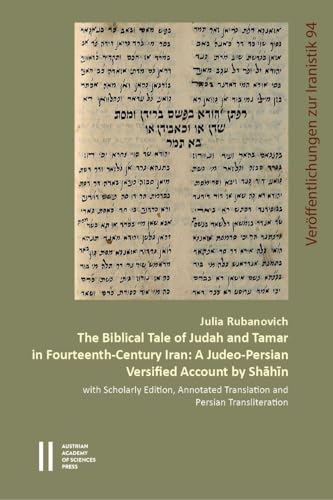 The Biblical Tale of Judah and Tamar in Fourteenth-Century Iran
A Judeo-Persian Versified Account by Shāhīn with Scholarly Edition, Annotated Translation and Persian Transliteration
Volume 94, 951
 The Discourse of Rites
Shaping and Reshaping the (Counter-)Priestly Rituals Conducted Outside the Tabernacle

 Visual Memory and Oblivion
Monuments and Conflicts in Urban Spaces in Central and Eastern Europe from the Nineteenth Century to the Present Day




 “Tod durch Erschießen”
Generaloberst Nikolaus von Falkenhorst. Wehrmachtsbefehlshaber in Norwegen 1940–1945. Erinnerungen – Verhörprotokolle – Urteilssprüche
Volume 63
 “Zum Siege unserer menschenfreundlichen Prinzipien”
Ungarische Freimaurernetzwerke im „Orient“ 1886-1920
 »Ein elend-schönes Land«
Gattung und Gedächtnis in Lea Goldbergs hebräischer Literatur. Aus dem Hebräischen von Rainer Wenzel


 Das Generalgouvernement Belgien im Ersten Weltkrieg 1914-17–1918
Die Erinnerungen des Generalobersten Ludwig Freiherrn von Falkenhausen
Volume 64
 Das Werden einer Universität
Die Protokolle des Akademischen Senats der Hamburgischen Universität 1919–1921