
An Irish Civil War Dugout: Tormore Cave, County Sligo
Archaeology, History, Memory
By (author) Marion Dowd By (author) Robert Mulraney By (author) James Bonsall

Hardback (Published)
(September 2024)
ISBN: 9781803277691
7.99 x 10.87 inches
Price: $55.00
In stock
Combining archaeology, local and military histories, community recollections, and landscape studies, this groundbreaking study, the first excavation of a Civil War site in Ireland, facilitates a wider discussion of the role of dugouts in guerrilla warfare and offers a unique view on the Irish revolutionary period at a regional and national scale.
A brutal Civil War erupted across Ireland in June 1922. The IRA, in opposition to the development of a pro-Treaty government, returned to the familiar guerrilla tactics of the War of Independence. Hundreds of dugouts constructed in rural settings were key to the IRA campaign. These secret places offered safe shelter to men on the run, while also allowing for supplies and arms to be stored and prisoners held. Tormore Cave, high in the mountains of County Sligo, in the northwest of Ireland, was one such dugout. Over 30 Republican men sought refuge there for six weeks in September and October 1922. Like most dugouts, Tormore Cave was never mentioned in historical accounts or documentary sources, but its significance was remembered locally. Archaeological excavations conducted on the centenary of its occupation revealed the extensive modifications that had transformed this natural limestone cave into a habitable military dugout, a crucial refuge for combatants whose comrades had been executed or arrested by Government forces. The historical artefacts and environmental material recovered during the excavations, combined with detailed archaeological surveys and analyses, provide a fascinating insight into the conditions endured by those billeted there. The lives of the men and women directly associated with the cave dugout are explored, including an in-depth study of IRA General Officer Commanding Billy Pilkington – a key figure during the Irish revolutionary period who has, until now, been largely overlooked. An Irish Civil War Dugout: Tormore Cave, County Sligo adopts a multidisciplinary approach, the first of its kind in an Irish context, combining archaeology, local and military histories, family memories, community recollections, and landscape studies. This groundbreaking study – the first archaeological excavation of a Civil War site in Ireland, facilitates a wider discussion of the role of dugouts in guerrilla warfare. By focussing in detail on one site at a local level, this book provides a unique and valuable contribution to the Irish revolutionary period on a regional and national scale.
Foreword – Michael MacDonagh
List of contributors
Acknowledgements
Glossary
Abbreviations
Note on terminology
Timeline of principal events
Introduction
Chapter 1: A Civil War dugout: archaeology, history, memory
Chapter 2: Landscape setting of Tormore Cave
History
Chapter 3: Sligo in 1921-1923 and the historical context of the ‘Glencar hideout’
Chapter 4: Dugouts: an essential component of guerrilla warfare
Archaeology
Chapter 5: Civil War modifications, built structures and features in Tormore Cave
Chapter 6: Things left behind: artefacts found in Tormore Cave
Chapter 7: Day to day life in the Tormore Cave dugout
People & Memory
Chapter 8: General Officer Commanding Billy Pilkington
Chapter 9: The men on the hills: the IRA billeted in Tormore Cave
Chapter 10: Support infrastructure: civilian women, Cumann na mBan and Protestant families
Chapter 11: Aftermath and legacies
Looking Forward
Chapter 12: Towards an archaeology of the Irish Civil War
References and sources
Appendices
Appendix 1: Archaeological context register
Appendix 2: Archaeological finds register
Appendix 3: Archaeological ecofact register
Appendix 4: Photogrammetry, cave survey and laser scanning – Robert Mulraney, James Bonsall and Liamóg Roche
Appendix 5: Geomorphological and geological setting, and mortar analysis – John G. Kelly
Appendix 6: Prehistoric lithics – Cian Hogan
Appendix 7: Pottery and glass – Clare McCutcheon
Appendix 8: Mammal bones – Fiona Beglane
Appendix 9: Fish and bird bones – Sheila Hamilton-Dyer
Appendix 10: Radiocarbon dates – T. Rowan McLaughlin
Appendix 11: Conservation of metal artefacts – Susannah Kelly
Appendix 12: Forensic analyses – John P. Cassella
Appendix 13: Weather conditions in September 1922 – James Bonsall
Appendix 14: Project outputs and public outreach
- By (author) Marion Dowd
- By (author) Robert Mulraney
- By (author) James Bonsall
"'This is an important book with broad appeal, and will prove particularly valuable to all those interested in the archaeology of 20th century irregular conflict.' - Damian Shiels (2025): Current Archaeology 419"
—
'This is an important book with broad appeal, and will prove particularly valuable to all those interested in the archaeology of 20th century irregular conflict.' – Damian Shiels (2025): Current Archaeology 419
—
Similar Books




 Colour Concept “Secoli bui” a colori
Codici cromatici e architetture dipinte nell’età tardoantica e medievale

 Crossing Disciplines in the Study of Archaeology and Prehistoric Art: Insights from the Sahara and Mediterranean Africa
Proceedings of the XX UISPP World Congress (5–9 September 2023, Timișoara, Romania) Volume / Session 18
 Crossing Sacred Landscapes
Contacts and Continuities in the Desert Cults and Beliefs of Ancient Northern Arabia and the Arid Southern Levant
 Cuneiform Artefacts from Archaeological Contexts: New Research on Ancient Iraq
Proceedings of a Conference Held at the Bavarian Academy of Sciences and Humanities, July 4–5, 2024
Volume 2


 European Drama and Performance Studies
Dramatisations politiques. Théâtre, politique et idéologie au XIXe siècle (1806-1914)
Volume 27

 Exploring Prehistoric Pottery in Japan
A Study of Organic Inclusions, Adhering Materials, and Impressions of Woven Items
 From Coast to Coast
Current Archaeological Research on Cultural Exchange along and across the Baltic Sea
Volume 19


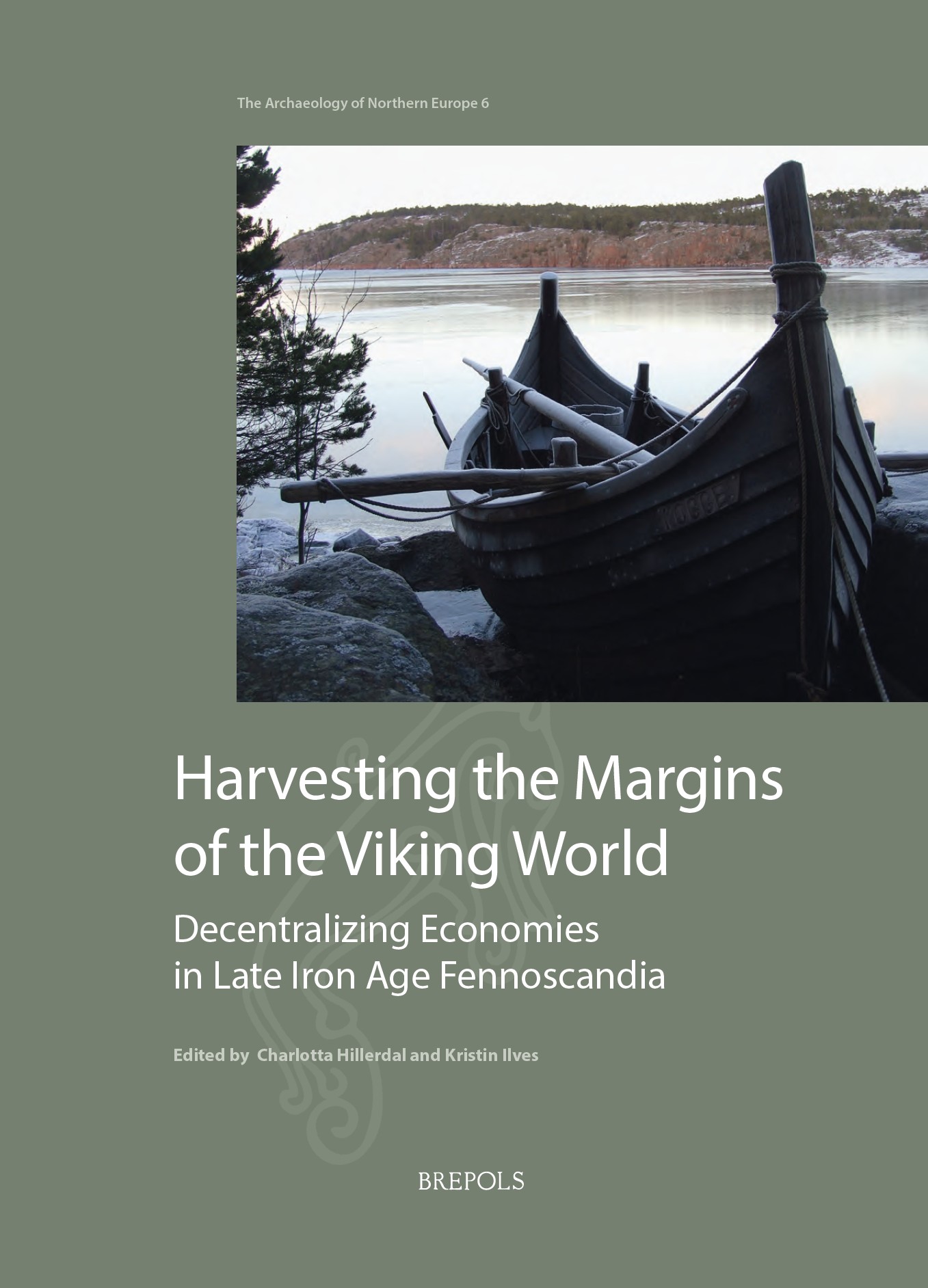 Harvesting the Margins of the Viking World
Decentralizing Economies in Late Iron Age Fennoscandia
Volume 6


 Linguistic and Cultural Dynamics in a Frontier Society
New Perspectives on Northeastern Bavaria and Western Bohemia in the Early Middle Ages
Volume 9

