
Bronze Casting in Jerash
The Workshop in an Urban Context

Hardback (Forthcoming)
(February 2027)
ISBN: 9782503625553
Price: $75.00
Excavations carried out beneath the Temple of Zeus at the site of Roman Gerasa have revealed a striking testimony to bronze statuary production in the ancient city. First identified by Jacques Seigne’s French mission and later confirmed by the University of Eichstätt Ingolstadt (2021–2023), this temporary workshop once served the ambitious casting of the monumental bronze Zeus for the new mid-second-century temple. This volume for the first time offers an overview of the site, and explores how its sequence of rooms, together with casting pits, firing installations, and mould fragments, offers an exceptional glimpse into the organization and techniques of large-scale bronze production on the sacred terrace. The authors also trace the scholarly collaboration that enabled renewed study of this workshop, linking Seigne’s discoveries with Gerhard Zimmer’s expertise in ancient bronze-casting technologies. Viewed within the city’s vibrant craft economy, the workshop illustrates how external specialists worked alongside local artisans, relied on regional suppliers, and contributed to knowledge transfer in a flourishing urban centre. Long known for its colonnades, Gerasa emerges here as a city equally shaped by skilled labour and sophisticated metallurgical practice.
Excavations carried out beneath the Temple of Zeus at the site of Roman Gerasa have revealed a striking testimony to bronze statuary production in the ancient city. First identified by Jacques Seigne’s French mission and later confirmed by the University of Eichstätt Ingolstadt (2021–2023), this temporary workshop once served the ambitious casting of the monumental bronze Zeus for the new mid-second-century temple. This volume for the first time offers an overview of the site, and explores how its sequence of rooms, together with casting pits, firing installations, and mould fragments, offers an exceptional glimpse into the organization and techniques of large-scale bronze production on the sacred terrace. The authors also trace the scholarly collaboration that enabled renewed study of this workshop, linking Seigne’s discoveries with Gerhard Zimmer’s expertise in ancient bronze-casting technologies. Viewed within the city’s vibrant craft economy, the workshop illustrates how external specialists worked alongside local artisans, relied on regional suppliers, and contributed to knowledge transfer in a flourishing urban centre. Long known for its colonnades, Gerasa emerges here as a city equally shaped by skilled labour and sophisticated metallurgical practice.
Other Titles in this Series
 Environmental Studies, Remote Sensing, and Modelling
Final Publications from the Danish-German Jerash Northwest Quarter Project I
Volume 6
 Metal Finds and Coins
Final Publications from the Danish-German Jerash Northwest Quarter Project II
Volume 7
 Glass, Lamps, and Jerash Bowls
Final Publications from the Danish-German Jerash Northwest Quarter Project III
Volume 8
 Middle Islamic Jerash (9th century – 15th century)
Archaeology and History of an Ayyubid-Mamluk settlement
Volume 3
 Miscellaneous Objects
Final Publications from the Danish-German Jerash Northwest Quarter Project VI
Volume 12

 Ceramic Finds in Context (Roman to Early Islamic Times)
Final Publications from the Danish-German Jerash Northwest Quarter Project VII
Volume 13


 Architectural Elements, Wall Paintings, and Mosaics
Final Publications from the Danish-German Jerash Northwest Quarter Project IV
Volume 9


Similar Books





 Connecting the Dots: Counting, Writing, and the Beginnings of Civilization
The Secret Lives of Clay Tokens: A Memoir

 Curating the Prehistoric Past
Studies on West Asian Archaeology and Beyond in Honour of Yoshihiro Nishiaki

 Exploring Gender Dynamics across the Ancient Near East
Collected Essays of Gender and Methodology in the Ancient Near East (GeMANE) 4 and 5
Volume 7


 Ḫattušaš utnē išḫameški
Hittite and Other Ancient Near Eastern Studies Presented to Piotr Taracha on the Occasion of His 65th Birthday




 Kultur – Kontakt – Kultur
Beiträge anlässlich der 66. Rencontre Assyriologique Internationale in Frankfurt/Main und Mainz, 25.–29. Juli 2022
Volume 35
 Money of Mercenaries in the Cimmerian Bosporus
From the Mithridatic Wars to the Roman-Bosporan War of AD 45-49
Volume 45

 New Research on Old Collections in Southwest Asian Archaeology
Proceedings of the Workshop Held at the British Museum, London, 31 July – 2 August, 2023
 Old Aramaic Inscriptions and their Contexts
An Epigraphic, Archaeological, and Historical Synthesis
Volume 63

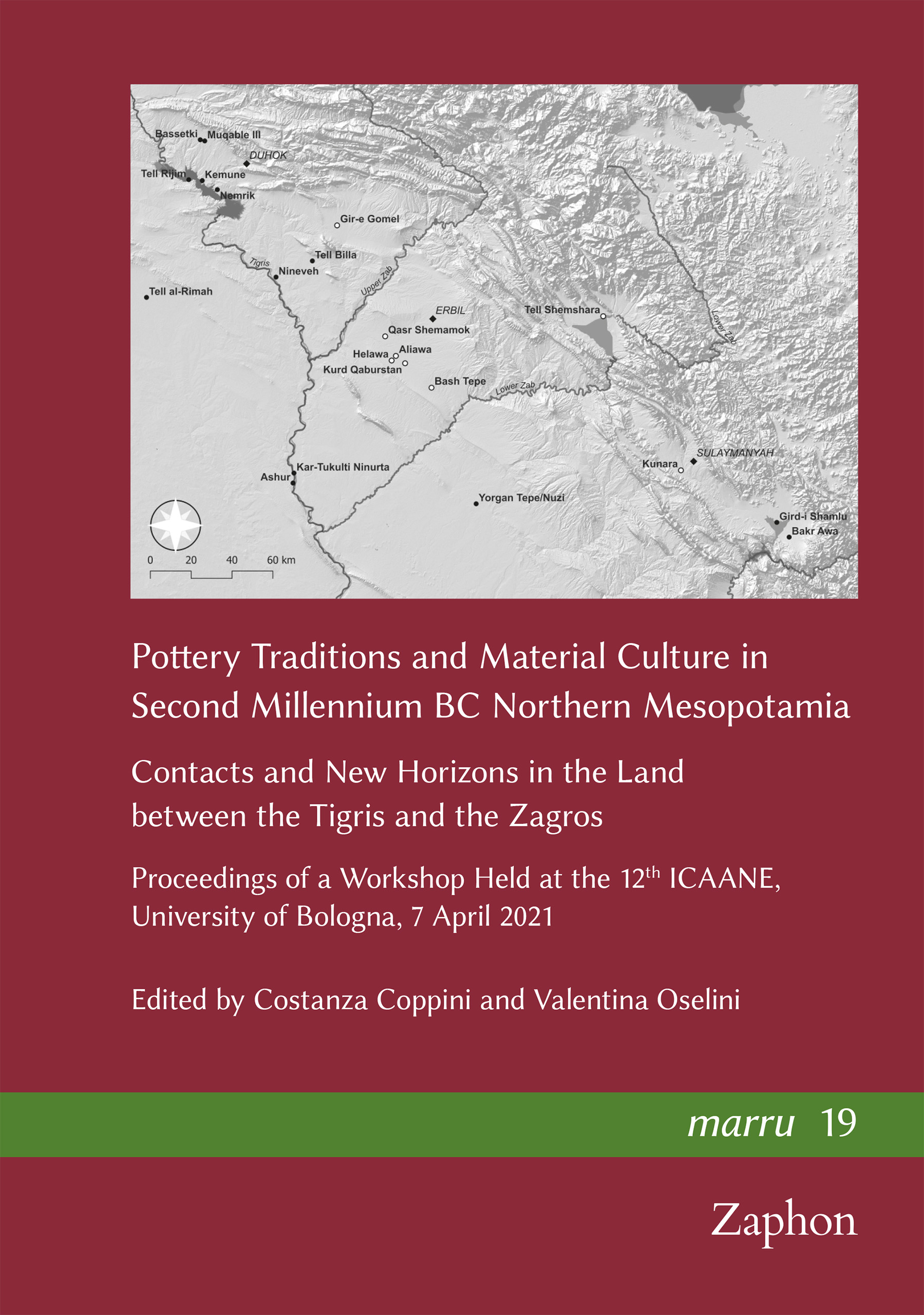 Pottery Traditions and Material Culture in Second Millennium BC Northern Mesopotamia
Contacts and New Horizons in the Land between the Tigris and the Zagros. Proceedings of a Workshop Held at the 12th ICAANE, University of Bologna, 7 April 2021
Volume 19
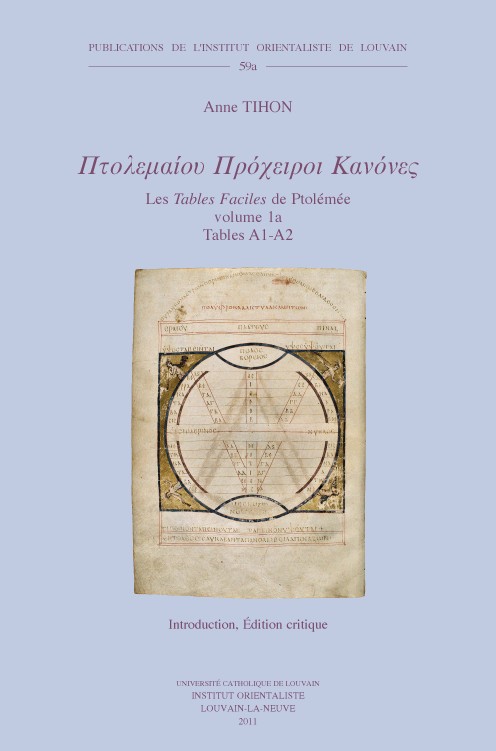
 Punning in Odd or Elegant Constructions in Jeremiah
The Convergence of Linguistics, Rhetoric, and Textuality in the Hebrew Text of Jeremiah

 Sertorius, the Exiles of the Sullan Regime and the Provinces of the Empire
Legitimacy, Morality and Imperial Discourse in the 70s BCE
 Shame in the Worlds of the Hebrew Bible and Akkadian Texts
A Linguistic Study and Its Implications
Volume 33

 Telling Contexts
Archaeological and Textual Studies in Honor of Elizabeth Bloch-Smith and Mark S. Smith
 The Body
Lived, Cultured, Adorned: Essays on Dress and the Body in the Bible and Ancient Near East in Honor of Nili S. Fox
 The Discourse of Rites
Shaping and Reshaping the (Counter-)Priestly Rituals Conducted Outside the Tabernacle
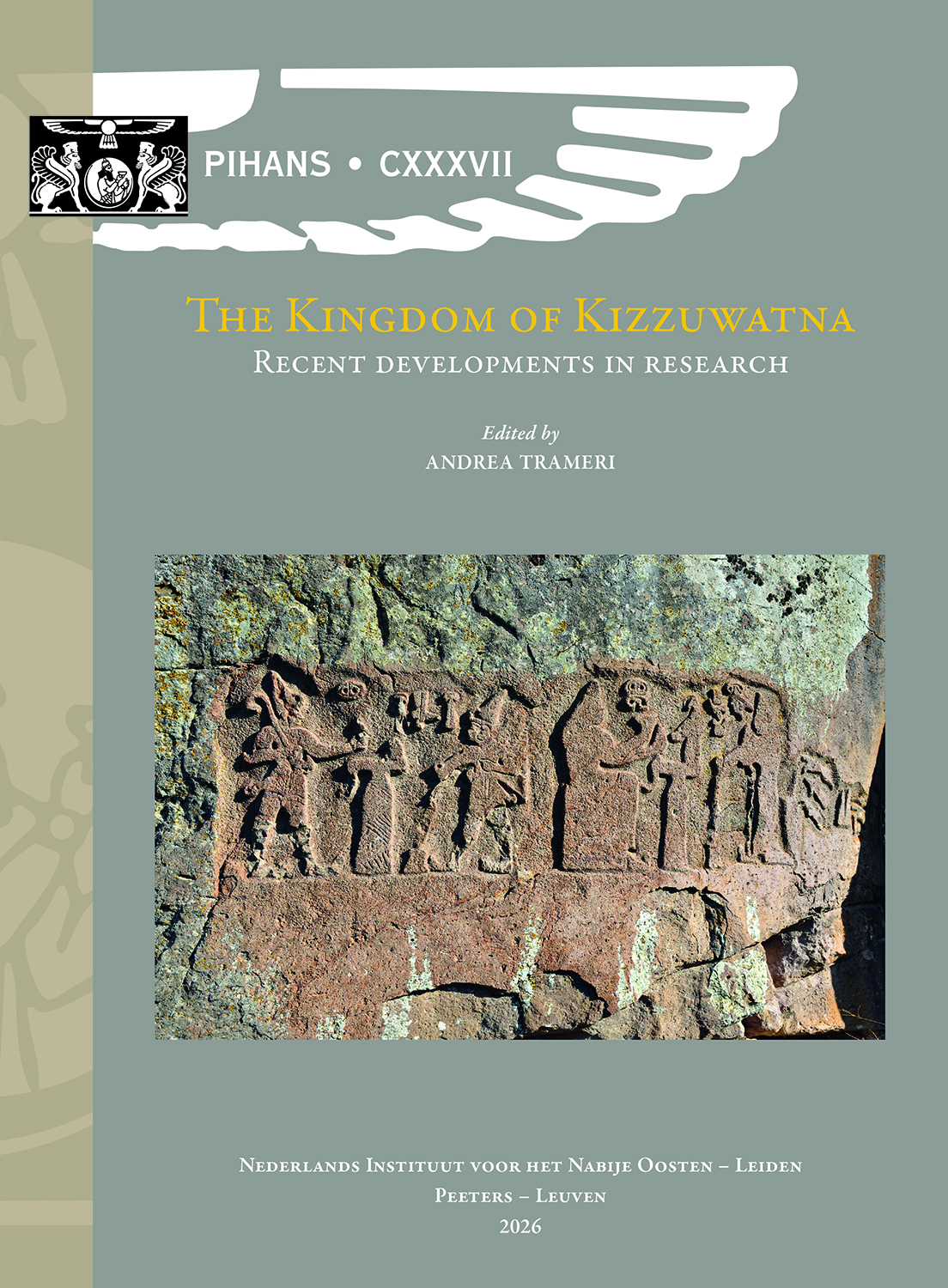 The Kingdom of Kizzuwatna: Recent Developments in Research
Proceedings of the Third NINO Postdoctoral Research Fellow Annual Conference, Leiden, 23rd-25th March 2023
Volume 137


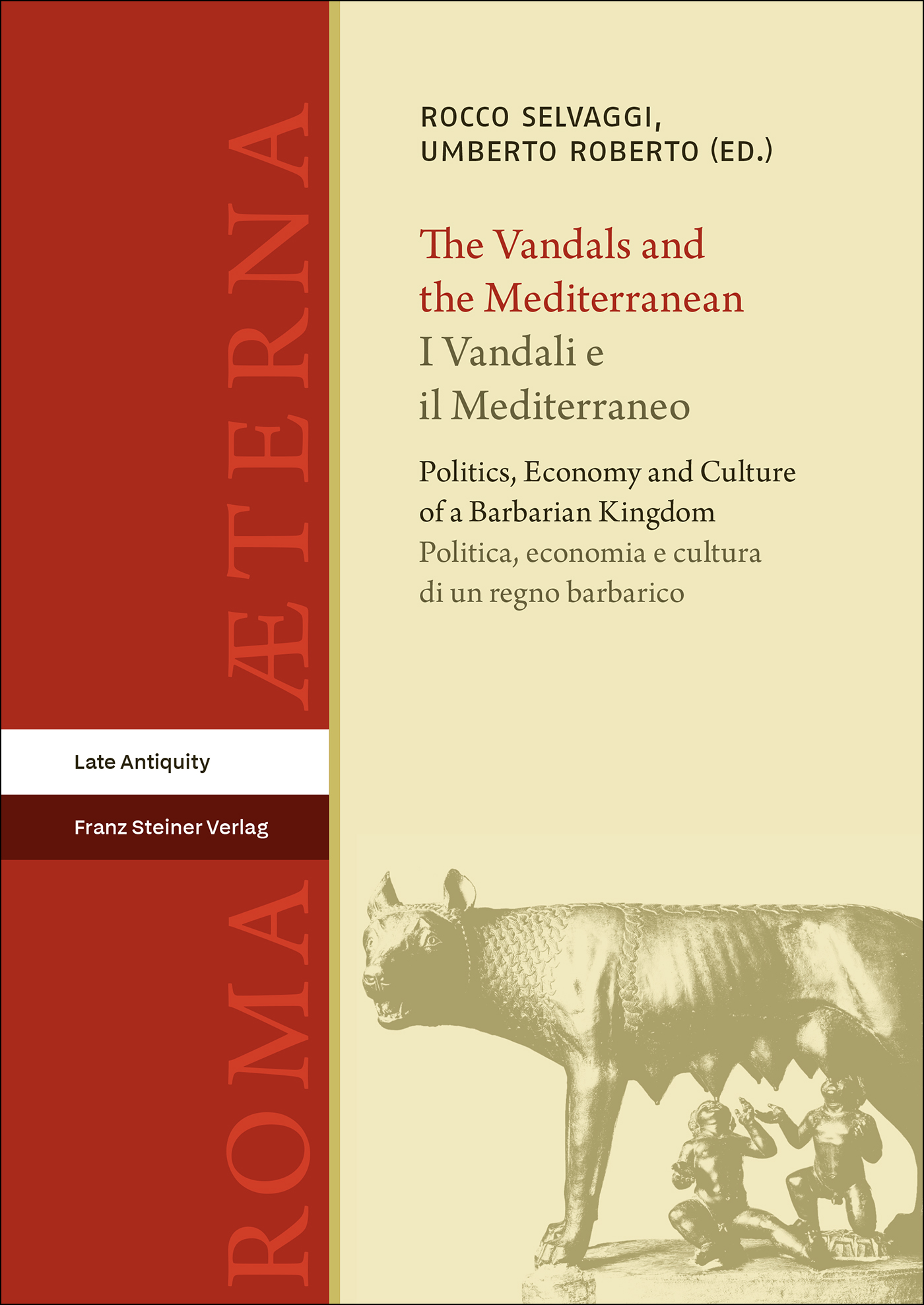 The Vandals and the Mediterranean / I Vandali e il Mediterraneo
Politics, Economy and Culture of a Barbarian Kingdom / Politica, economia e cultura di un regno barbarico