
Kommunikation über Herrschaft im schwedischen Reich
Die erste Regierungsphase Gustav Vasas im Spannungsfeld von Religion und Politik
By (author) Laura-Marie Mork
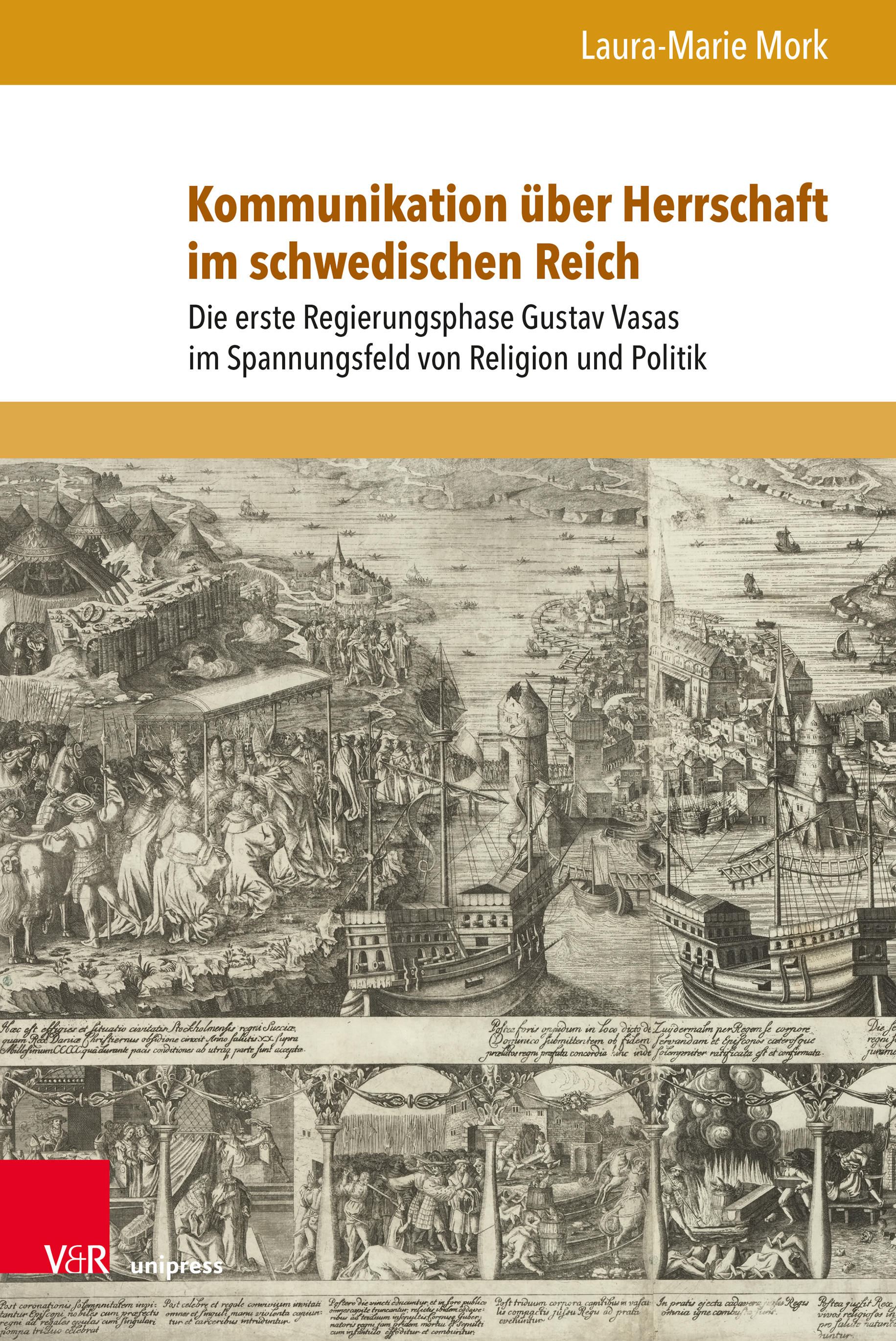
Wer darf wie (nicht) herrschen? Diskurse, Konflikte und Konsenssuche im Schweden Gustav Vasas
Mit der Wahl Gustav Vasas zum schwedischen König zerbrach die Kalmarer Union 1523 endgültig und Schweden erlangte seine Unabhängigkeit wieder. Dadurch entstand eine neue Herrschaft, deren Handlungsspielräume und Legitimität aber erst ausgehandelt werden mussten. In dieser Phase tiefgreifender politischer Umbrüche erreichten zugleich reformatorische Ideen das Reich und brachten so neue Ordnungsvorstellungen in den Diskurs ein. Laura-Marie Mork untersucht die Kommunikation über Herrschaft in diesem Transformationsprozess und konzentriert sich auf die erste Regierungsphase Gustav Vasas (1520/23–1540). Sie analysiert den Umgang mit dem doppelten Legitimationsdefizit von Reich und König, die zeitgenössischen Ordnungsvorstellungen sowie die Aushandlung von Herrschaftsansprüchen und Interessen zwischen den vier Ständen. Dabei hebt sie die enge Verzahnung von Religion und Politik hervor und bietet neue Perspektiven für die schwedische Reformation.
The election of Gustav Vasa as King of Sweden in 1523 marked the final dissolution of the Kalmar Union and the restoration of Swedish independence. This gave rise to new rule, whose scope of authority and legitimacy first had to be negotiated. During this period of profound political upheaval, the ideas of the Reformation reached Sweden and introduced new concepts of order into the discourse. Laura-Marie Mork examines communication about authority within this process of transformation, focusing on the first half of Gustav Vasa’s reign (1520/1523–1540). She analyzes how the double legitimacy deficit of both the kingdom and the king was adressed, as well as contemporary ideas of order and the negotiation of claims to autority and interests among the estates. In doing so, it highlights the close interconnection between religion and politics and offers new perspectives on the Swedish Reformation.
- By (author) Laura-Marie Mork
Other Titles in this Series

Similar Books
 ‘For You I Study, For You I Work, For You I Live, For You I Am Ready To Even Give My Life’
Essays in Honour of Francis (Frank) J Moloney, SDB





 Ars Prophetica
Theology in the Poetry of Twentieth-Century Hebrew Poets Avraham Halfi, Shin Shalom, Amir Gilboa, and T. Carmi
 As Messianism Turns to Heresy
The Regenstein Chair Lectures On Lurianic Kabbalah and Shabbatai Tzevi at Hebrew Union College - Cincinnati
 Balthasar Caymox of Nuremberg
Early Modern German Print Publishers: Popular Prints of the Seventeenth Century


 Beyond Sovereign Courts
Agents and Practices in Early Modern Spanish and Habsburg Diplomacy
Volume 3


 Circulation, Use, Impact
The Consumption of Architectural Books in the Early Modern Eastern Adriatic
Volume 1

 Councils, Conflicts, Correspondence
Urban Diplomacy in Reval (Tallinn) and Lübeck (c. 1470–1570)
Volume 67
 Creating the Woman in Antiquity
Proceedings of the 16th Melammu Workshop, Innsbruck, 2–3 June 2022
Volume 13


 Drunk the Potion, No Whit Charmed
The Doctrine of Pure and Perfect Souls from Iamblichus to Damascius






 Extracanonical Traditions and the Holy Land
Texts, Rituals, and Material Culture in Late Antique Palestine
 Fear, Fear of God, God-Fearers
Philological and Historical Perspectives on the World of Ancient Judaism and Christianity


