
Streetology
Politics of Popular Culture in a French Neighbourhood
By (author) Ulysse Rabaté

Hardback (Published)
(September 2026)
ISBN: 9781804132760
6.14 x 9.21 inches
Price: $115.00
In stock
Streetology overturns traditional studies on working-class neighbourhoods. Based on ethnographic research guided by the author’s experience as an activist, the book offers a new approach to street culture that highlights its political aspirations. It analyses phenomena such as riots, political participation and neighbourhood solidarity.
Streetology blows up a paradox: French working-class neighbourhoods are constantly dismissed as places ’empty’ of politics and social norms, yet they have become a focal point of political debate. From urban uprisings and pandemic-era solidarity to the global resonance of French rap and mobilizations against police violence, the neighbourhood exerts an undeniable political force—yet its internal logic remains widely misunderstood.
This book introduces “streetology,” an original analytical framework that treats political organizing and popular culture as two sides of the same coin. Drawing on first-hand ethnographic research in Corbeil-Essonnes, the author explores the grit and complexity of grassroots activism. These are considered alongside cultural artifacts of the “street”—from rap lyrics and series like The Wire and Top Boy to the films of Merawi Gerima—to show how they function as political manifestoes. By applying this lens, Rabaté reveals that popular culture is not just entertainment, but a vital tool for rethinking power in the modern West.
It will interest scholars of political science, urban sociology and cultural studies, and of contemporary France.
Introduction: Thinking about working-class neighbourhoods: a French path worth discussing
Chapter 1: Moments of denial
Chapter 2: What can the social sciences do?
Chapter 3: Illusion of the disappearance of politics
Chapter 4: A culture of working-class neighbourhoods?
Chapter 5: Images of Streetology
Chapter 6: New conventions underpinned by new world views
Chapter 7: From chronicle to politics
Conclusion: The worst as a driving force?
Ulysse Rabaté is a political science researcher at CRESPPA (University Paris 8) and teaches at the University of Rennes. His work focuses on the political practices of contemporary working classes, considered in relation to institutions, but also in terms of their cultural impact. He was elected in Corbeil-Essonnes and, during the 2010s, opposed what was known as the ‘Dassault system’, named after the billionaire who had set up a clientelist system of vote buying in this working-class town in the Paris region. This extraordinary experience now feeds into his research on corruption, modes of resistance and the ordinary relationship with politics.
- By (author) Ulysse Rabaté
Similar Books
 As Messianism Turns to Heresy
The Regenstein Chair Lectures On Lurianic Kabbalah and Shabbatai Tzevi at Hebrew Union College - Cincinnati

 Myths and Tales of the Inughuit
Erik Holtved's Polar Eskimo Texts Revised and Re-translated into Danish and English
Volume 475, 12


 The Exeter Companion to Fairies, Nereids, Trolls and other Social Supernatural Beings
European Traditions




 Between Bones and Beliefs
Human-Bird Relations in Central and Northern Europe in the First Millennium AD
Volume 4

 Beyond Sovereign Courts
Agents and Practices in Early Modern Spanish and Habsburg Diplomacy
Volume 3


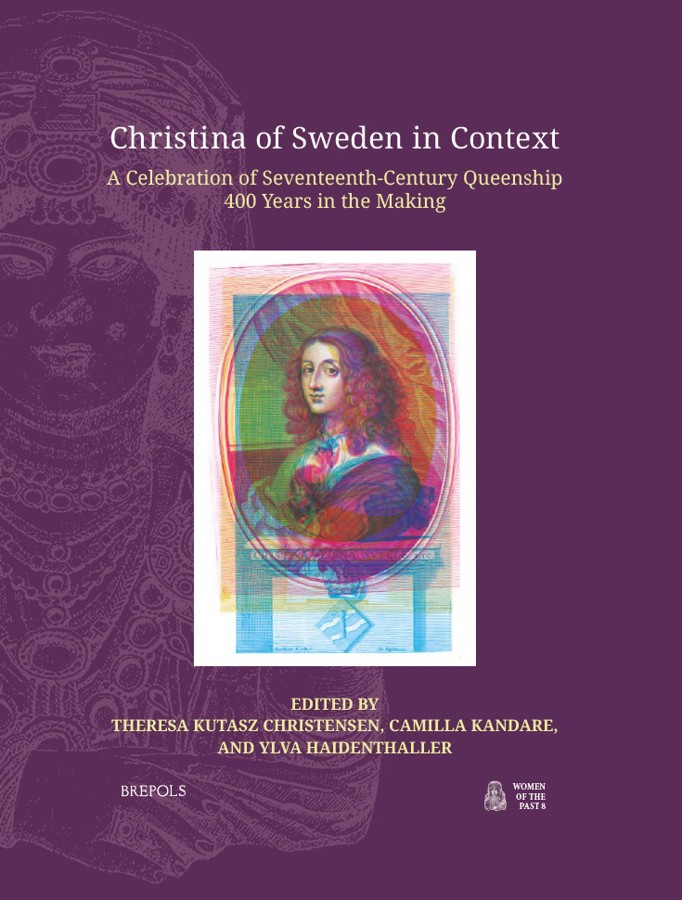 Christina of Sweden in Context
A Celebration of Seventeenth-Century Queenship 400 Years in the Making



 Engaged Languages and Literatures / Langues et Littératures engagées
Critical Views / Regards Critiques

 Food Security under Armed Conflict
Global Knowledge Landscape and Public Attention to Social, Economic, and Humanitarian Dimensions


 Innovationes Lovanienses: Arts, Law and Theology at the University of Louvain (1425–1797)
Studium Lovaniense: Learning across Borders, 2
Volume 18


