
Die Orts- und Gewässernamen der neuassyrischen Zeit
Teil 3: Babylonien, Urartu und die östlichen Gebiete
By (author) Ariel M. Bagg

Paperback (Published)
(May 2020)
ISBN: 9783954904303
6.69 x 9.45 inches
Price: $222.00
In stock
Historical geography is one of the most important disciplines which allow a reconstruction of the history of the Ancient Near East. There are principally the cuneiform sources which open the access to the numerously attested geographical names. The present volumes are the third and last part of the Neo-Assyrian toponyms for the series Répertoire Géographique des Textes Cunéiformes (RGTC 7). The first part was published by the author in 2007 and dealt with the Levant (RGTC 7/1). The Second part RGTC 7/2 (2017) covers Egypt, the Arabian peninsula, the Assyrian heartland, the Transtigridean region, the Northern Jezireh, the Habur-Basin, the Eastern Jezireh, and Northern Mesopotamia. RGTC 7/3 comprises approx. 1400 toponyms and further 500 fragmentary place names from the Eastern regions of the Assyrian empire, Urarṭu, and Babylonia. Furthermore, places of unknown location were also included. As in the first two volumes, RGTC 7/3 has detailed registers as well as two appendices with additions and corrections to RGTC 7/1 and RGTC 7/2.
The third and final part of the Neo-Assyrian toponyms in the series Repertoire Geographique des Textes Cuneiformes. RGTC 7/3 is a two-volume set which comprises approx. 1400 toponyms and further 500 fragmentary place names from Babylonia, Urartu, and the eastern regions of the Assyrian Empire, as well as corrections and additions to the previous parts RGTC 7/1 (2007) and 7/2 (2017). The corpus of Neo-Assyrian toponyms comprises thus more than 3500 items treated in three parts and five volumes.
- By (author) Ariel M. Bagg
„Die beiden hier anzuzeigenden, trotz jeweils mehreren Zentimetern Dicke fast liebevoll und untertreibend »Hefte« genannten Bände beschließen gleich in zweifacher Weise ein umfassendes Werk. Einerseits beenden sie nach rund 20-jähriger Arbeit die mühevolle, nun 5 voluminöse Bände umfassende Publikation der geographischen Namen der neuassyrischen Zeit, die allesamt von A.M. Bagg verfasst wurden. 2007 erschienen die Ortslagen der Levante (vgl. ZAW 120 [2008], 444), 2017 in zwei Bänden diejenigen Ägyptens, der arabischen Halbinsel, der Ǧazīra, Nordmesopotamiens, des Gebiets am mittleren Eufrat, Zentralassyriens und des Osttigrisgebiets (vgl. ZAW 130 [2018], 298 f.). Die beiden letzten Bände bieten nun die Ortslagen Babyloniens, Urartus und der östlich davon gelegenen Gebiete. Gerade für die alttestamentliche Forschung und die Beschäftigung mit Umwelttexten des 1. Jt.s v. Chr. sind diese Bände besonders wichtig. Gleichzeitig wird damit nach fast 50 Jahren die Arbeit am Répertoire Géographique des Textes Cunéiformes (RGTC) abgeschlossen (...)“<br/><br/>Von W. Zwickel<br/>In: Zeitschrift für die alttestamentliche Wissenschaf (ZAW) 2021, Heft 1, S. 98 f.
—
Other Titles in this Series
 Répertoire Géographique des Textes Cunéiformes
Die Orts- und Gewässernamen der mittelbabylonischen und mittelassyrischen Zeit


 Das christlich-koptische Ägypten in arabischer Zeit (Teil 1: A–C)
Eine Sammlung christlicher Stätten in Ägypten in arabischer Zeit, unter Ausschluß von Alexandria, Kairo, des Apa-Mena-Klosters, der Sketis und der Sinai-Region


 Das Epipaläolithikum des Vorderen Orients
1: Das Epipaläolithikum und der Übergang zum Neolithikum in der Levante und in Ägypten. 2: Das Epipaläolithikum und der Übergang zum Neolithikum zwischen Taurus und Hindukusch. Zur Ökologie des Epipaläolithikums
 Interdisziplinäre Iran-Forschung
Beiträge aus Kulturgeographie, Ethnologie, Soziologie und Neuerer Geschichte


 Horasan zur Timuridenzeit nach dem Tarih-e Hafez-e Abru (verf. 817–823 h.) des Nurallah ’Abdallah b. Lutfallah al-Hvafi genannt Hafez-e Abru
2. Übersetzung und Ortsnamenkommentar


 Die Vegetation des Marharlu-Beckens bei Siras (Iran)
Unter besonderer Berücksichtigung der Vegetation im Bereich der Süß- und Salzwasserquellen am Seeufer

 The Capital Area of Northern Oman, Teile I und II
I. Grundzüge der Reliefentwicklung / Basic Relief Development. II.: Basic Features of the younger Caenozoic relief development on the seaside of Central Oman and Natural and real vegetation of the Capital Area
 The Capital Area of Northern Oman, Teil II
Basic features of the younger Caenozoic relief development on the seaside of Central Oman and Natural and real vegetation of the Capital Area
 Untersuchungen zur historischen Topographie Nordmesopotamiens
nach keilschriftlichen Quellen des 1. Jahrtausends v. Chr.


Similar Books





 Connecting the Dots: Counting, Writing, and the Beginnings of Civilization
The Secret Lives of Clay Tokens: A Memoir


 Exploring Gender Dynamics across the Ancient Near East
Collected Essays of Gender and Methodology in the Ancient Near East (GeMANE) 4 and 5
Volume 7


 Ḫattušaš utnē išḫameški
Hittite and Other Ancient Near Eastern Studies Presented to Piotr Taracha on the Occasion of His 65th Birthday


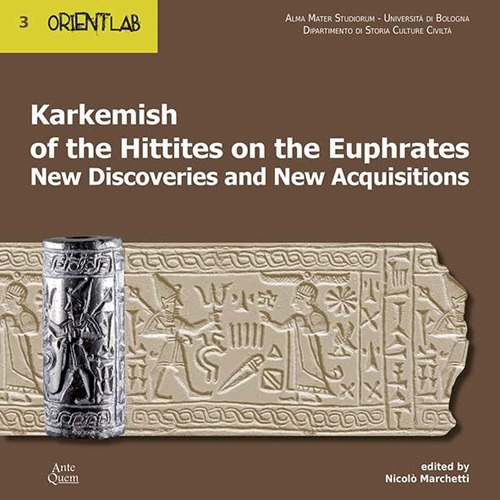


 New Research on Old Collections in Southwest Asian Archaeology
Proceedings of the Workshop Held at the British Museum, London, 31 July – 2 August, 2023
 Old Aramaic Inscriptions and their Contexts
An Epigraphic, Archaeological, and Historical Synthesis
Volume 63


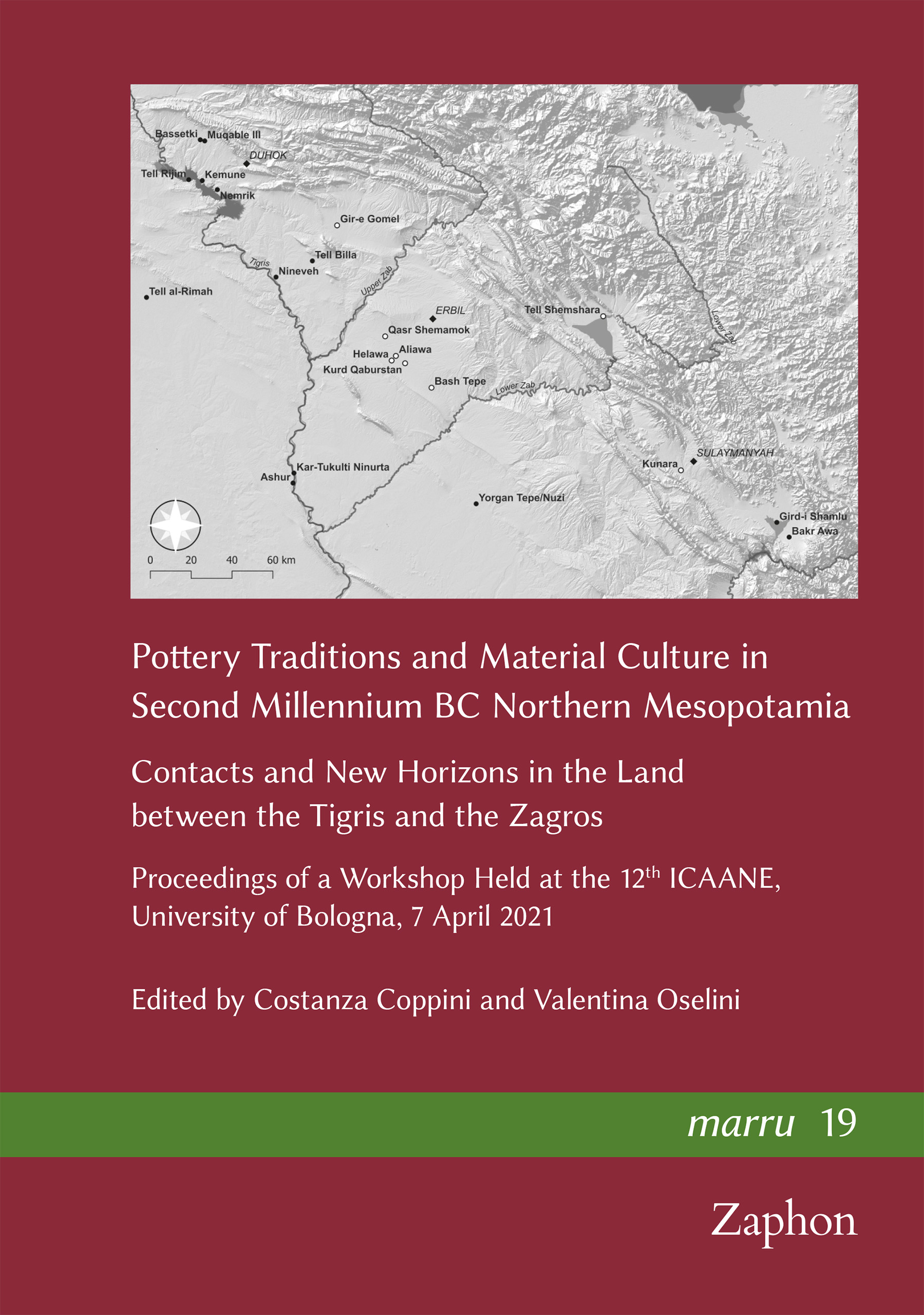 Pottery Traditions and Material Culture in Second Millennium BC Northern Mesopotamia
Contacts and New Horizons in the Land between the Tigris and the Zagros. Proceedings of a Workshop Held at the 12th ICAANE, University of Bologna, 7 April 2021
Volume 19
 Punning in Odd or Elegant Constructions in Jeremiah
The Convergence of Linguistics, Rhetoric, and Textuality in the Hebrew Text of Jeremiah
 Recycling and Regeneration of Spent Lithium-Ion Batteries
Technologies, Applications, and Sustainable Futures

 Shame in the Worlds of the Hebrew Bible and Akkadian Texts
A Linguistic Study and Its Implications
Volume 33
 Telling Contexts
Archaeological and Textual Studies in Honor of Elizabeth Bloch-Smith and Mark S. Smith

 The Body
Lived, Cultured, Adorned: Essays on Dress and the Body in the Bible and Ancient Near East in Honor of Nili S. Fox