
New Light on Canaanite-Phoenician Pottery
by Dalit Regev

This book follows a continuous line of development from Canaanite pottery to the Phoenician pottery corpus. Phoenician pottery typically is considered to have first emerged in the Iron Age, and most research is limited to the first half of the first millennium BCE. The current analysis, however, shows the Canaanite predecessors as well as the ongoing continuity of Phoenician forms and techniques during the Hellenistic and Roman periods. There are two areas of focus, both of which will be illustrated from materials drawn primarily from the Levant. The first is Phoenician container products, especially amphorae and bottles, although other coarse ware forms are included. The second is red-slip pottery, which was a constant feature of the Phoenician assemblage. These were mainly open vessels that did not contain other products and were valued for their ritual attributes.
This book follows a continuous line of development from Canaanite pottery to the Phoenician pottery corpus. Phoenician pottery typically is considered to have first emerged in the Iron Age, and most research is limited to the first half of the first millennium BCE. The current analysis, however, shows the Canaanite predecessors as well as the ongoing continuity of Phoenician forms and techniques during the Hellenistic and Roman periods. There are two areas of focus, both of which will be illustrated from materials drawn primarily from the Levant. The first is Phoenician container products, especially amphorae and bottles, although other coarse ware forms are included. The second is red-slip pottery, which was a constant feature of the Phoenician assemblage. These were mainly open vessels that did not contain other products and were valued for their ritual attributes.
- By (author) Dalit Regev
Other Titles in this Series



 About Edom and Idumea in the Persian Period
Recent Research and Approaches from Archaeology, Hebrew Bible Studies and Ancient Near Eastern Studies


Similar Books





 Boğazköy Tablets in the Museum of Anatolian Civilizations (Bo 9032–Bo 9097)
Anadolu Medeniyetleri Müzesinde Bulunan Boğazköy Tabletleri (Bo 9032–Bo 9097)
Volume 4
 Caesar’s Visions and Impact on the Roman Empire
Revisiting the Archaeological and Historical Record of the 40s BC
Volume 2

 Connecting the Dots: Counting, Writing, and the Beginnings of Civilization
The Secret Lives of Clay Tokens: A Memoir
 Construction Processes in Historical Western Societies (5th c. BC – 10th c. AD)
Case Studies on Techniques, Models, and Costs

 Curating the Prehistoric Past
Studies on West Asian Archaeology and Beyond in Honour of Yoshihiro Nishiaki


 Etruscan and Roman Hellenistic Anatomical ex votos
Reassessing Popular Religious Expressions in Central Italy
Volume 8

 Exploring Gender Dynamics across the Ancient Near East
Collected Essays of Gender and Methodology in the Ancient Near East (GeMANE) 4 and 5
Volume 7


 Ḫattušaš utnē išḫameški
Hittite and Other Ancient Near Eastern Studies Presented to Piotr Taracha on the Occasion of His 65th Birthday




 Invisible Labour in Antiquity
Visualizing Obscure Work in the Ancient Mediterannean and West Asia
Volume 1


 Kultur – Kontakt – Kultur
Beiträge anlässlich der 66. Rencontre Assyriologique Internationale in Frankfurt/Main und Mainz, 25.–29. Juli 2022
Volume 35
 Late Antique villae in the Balkans (3rd–7th c. AD): Current Research Questions and Perspectives
HAEMUS Companion to the Late Antique Balkans 1
Volume 4


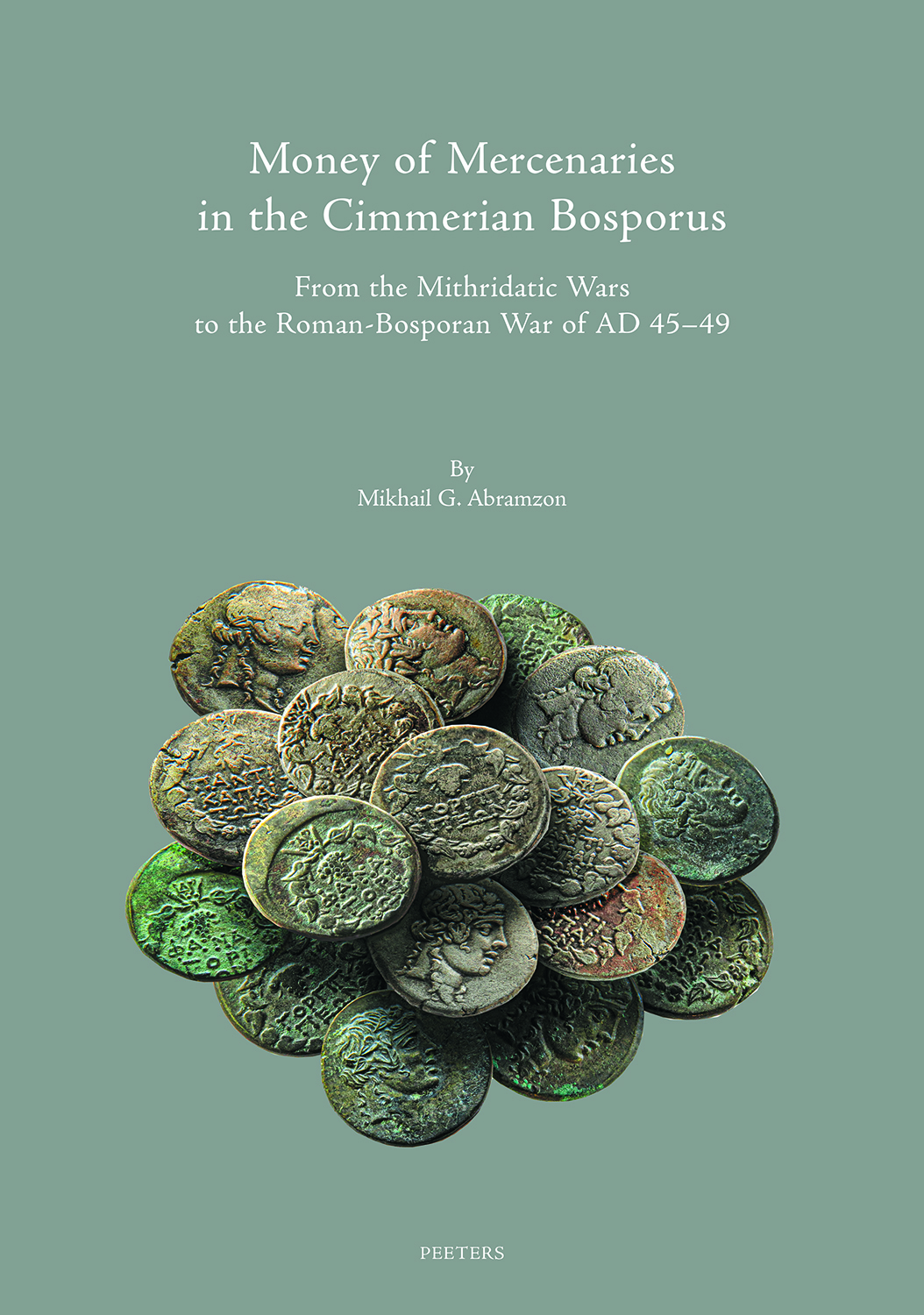 Money of Mercenaries in the Cimmerian Bosporus
From the Mithridatic Wars to the Roman-Bosporan War of AD 45-49
Volume 45


