
Art & Practice of 16th-Century German Fencing
A Guide to the Use of Joachim Meyer's Rappier
by Robert Rutherfoord

Paperback (Published)
(April 2019)
ISBN: 9781937439385
6.97 x 10 inches
Price: $43.95
In stock
Joachim Meyer (ca. 1537 – 1571) is without doubt one of the most influential fencing masters of the Renaissance. A prolific writer of fencing manuals, his monumental “A Thorough Description of the Free, Chivalric, and Noble Art of Fencing, Showing Various Customary Defenses, Affected and Put Forth with Many Handsome and Useful Drawings” was reprinted, adapted and outright plagiarized for over a century after his death. As a martial artist, he was both the last great master of the medieval Liechtenauer fencing tradition and a young innovator, who combined his native, German traditions with those of the Italian and Spanish fencing masters to create a wholly unique systems of fighting with a vast number of weapons. The centerpiece of his work, however, was the cut-and-thrust “sidesword” or “early rapier” which was rapidly eclipsing the knightly two-handed longsword in popularity. Meyer’s synthesis not only adapted his native art to this Mediterranean weapon, but in some cases, his innovations prefigured the developments of rapier fencing that Italian masters would promote in the next quarter century after his untimely death. In this first-of-its kind training guide, Robert Rutherfoord unpacks the complex and elegant art of Meyer’s rapier in word and image, including over 200 easy to follow “first person perspective” illustrations and 3D renderings to bring the art to life!
- By (author) Robert Rutherfoord
Similar Books


 Balthasar Caymox of Nuremberg
Early Modern German Print Publishers: Popular Prints of the Seventeenth Century
 Beyond Sovereign Courts
Agents and Practices in Early Modern Spanish and Habsburg Diplomacy
Volume 3

 Circulation, Use, Impact
The Consumption of Architectural Books in the Early Modern Eastern Adriatic
Volume 1

 Constitutional Conflict as Judicial Civil Disobedience and Conscientious Objection
Reconceptualising National Constitutional Court Rulings in the European Union Legal Space


 Councils, Conflicts, Correspondence
Urban Diplomacy in Reval (Tallinn) and Lübeck (c. 1470–1570)
Volume 67


 Formulary apportionment in international tax law
An allocation method for the age of globalization and digitalization
Volume 210


 Hofmann oder Vorkämpfer der „philosophes“?
Deutsche Voltaire-Bildnisse und -Imaginationen im Zeitalter der Aufklärung

 Innovationes Lovanienses: Arts, Law and Theology at the University of Louvain (1425–1797)
Studium Lovaniense: Learning across Borders, 2
Volume 18

 Legal Visuality
Exegesis, Ambiguity, and Dissimulation of the Donation of Constantine in the Early Modern Period
 Linguistic and Cultural Dynamics in a Frontier Society
New Perspectives on Northeastern Bavaria and Western Bohemia in the Early Middle Ages
Volume 9


 Naples as Laboratory / Laboratorium Neapel
Style Options, Artistic Rivalry and Self Fashioning in Neapolitan Baroque Painting / Plurale Stilbildung, Kunstlerkonkurrenz und Self Fashioning in der neapolitanischen Barockmalerei
 Power and Women in Southeast and Central Europe in Late Medieval and Early Modern Period (1300-1600)
Volume 10


 Staging the Spectacle of Majesty
Ceremonial, Courtly Space, and Collecting under the Spanish Habsburgs
Volume 9
 Students, Scholars and Their Books at the University of Louvain (1425-1797)
Studium Lovaniense: Learning across Borders, 1
Volume 17


 The Documentation of Historical Facts in Trial Judgments of the International Criminal Court
A Constitutional Theory of International Criminal Proceedings
Volume 66

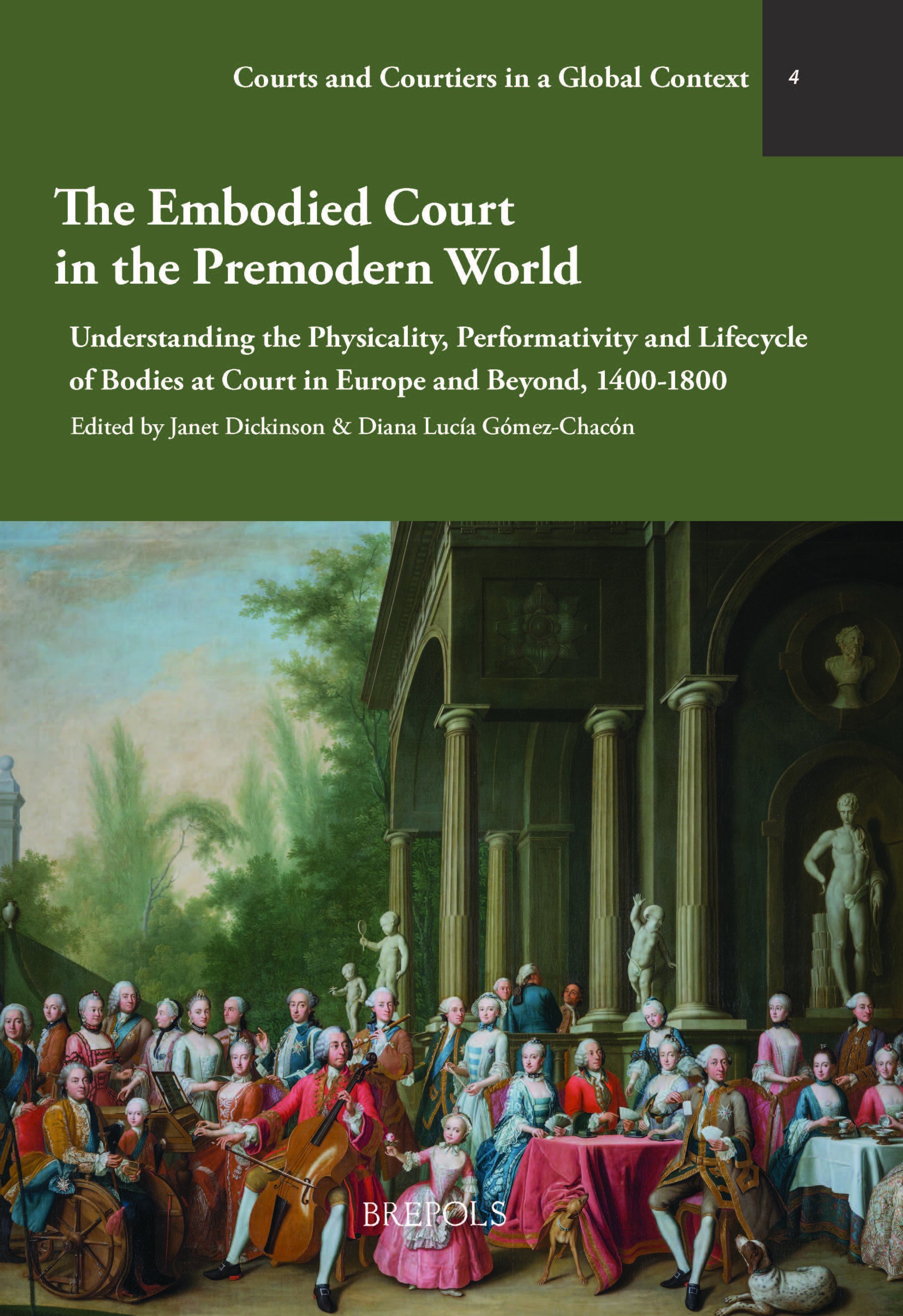 The Embodied Court in the Premodern World
Understanding the Physicality, Performativity and Lifecycle of Bodies at Court in Europe and Beyond, 1400-1800
Volume 4