
The Ethiopian Legend of Solomon and Sheba
by Sarah Norodom, Hanna Kim and Andres Reyes, with translations by Meseret Oldjira

The Queen of Sheba is one of the most famous women of antiquity, rivaled only by Cleopatra and Helen of Troy for wealth, power and beauty. She is best known for her legendary meeting with King Solomon, an encounter that has resonated through time, nowhere more powerfully than in Ethiopia. 95 colour, 1 b&w illustration.
The Queen of Sheba is on of the most famous women of antiquity, rivaled only by Cleopatra and Helen of Troy for wealth, power and beauty. She is best known for her legendary meeting with King Solomon, an encounter that has resonated through time, nowhere more powerfully than in Ethiopia, where she is a foundational figures within the Ethiopian Church. There, the legend is known not only through the text called the Kebra Nagast, but also through traditional paintings. One of the most impressive of these paintings is a goatskin example by the artist Janbaru Wandemmu, at Groton School, USA, given by Professor Asrat Woldeyes, personal physician to Haile Selassie. The painting, which shows the legend in 25 panels, is presented here alongside another 56-panel work. This book illustrates the scenes from both paintings, with translations of their accompanying texts and an introduction.
Sarah Norodom graduated from the University of Oxford with a BA in Classics and holds an MA in Arts & Education Management from Maastricht University. She currently works as Communications Manager for Ecole Jeannine Manuel, an international bilingual school in Paris. Meseret Oldjira is a doctoral candidate at Princeton University, where she is writing a dissertation on thirteenth- and fourteenth- century Ethiopian illuminated manuscripts. Andres Reyes teaches Greek and Latin at Groton School in Groton, Massachusetts and is a Research Associate of the Oriental Institute, Oxford University.
- By (author) Hanna Kim
- By (author) Sarah Norodom
- By (author) Andres T. Reyes
- Foreword by Temba Maqubela
- Translated by Meseret Oldjira
Similar Books





 Boğazköy Tablets in the Museum of Anatolian Civilizations (Bo 9032–Bo 9097)
Anadolu Medeniyetleri Müzesinde Bulunan Boğazköy Tabletleri (Bo 9032–Bo 9097)
Volume 4
 Connecting the Dots: Counting, Writing, and the Beginnings of Civilization
The Secret Lives of Clay Tokens: A Memoir

 Curating the Prehistoric Past
Studies on West Asian Archaeology and Beyond in Honour of Yoshihiro Nishiaki

 Exploring Gender Dynamics across the Ancient Near East
Collected Essays of Gender and Methodology in the Ancient Near East (GeMANE) 4 and 5
Volume 7


 Ḫattušaš utnē išḫameški
Hittite and Other Ancient Near Eastern Studies Presented to Piotr Taracha on the Occasion of His 65th Birthday




 Kultur – Kontakt – Kultur
Beiträge anlässlich der 66. Rencontre Assyriologique Internationale in Frankfurt/Main und Mainz, 25.–29. Juli 2022
Volume 35

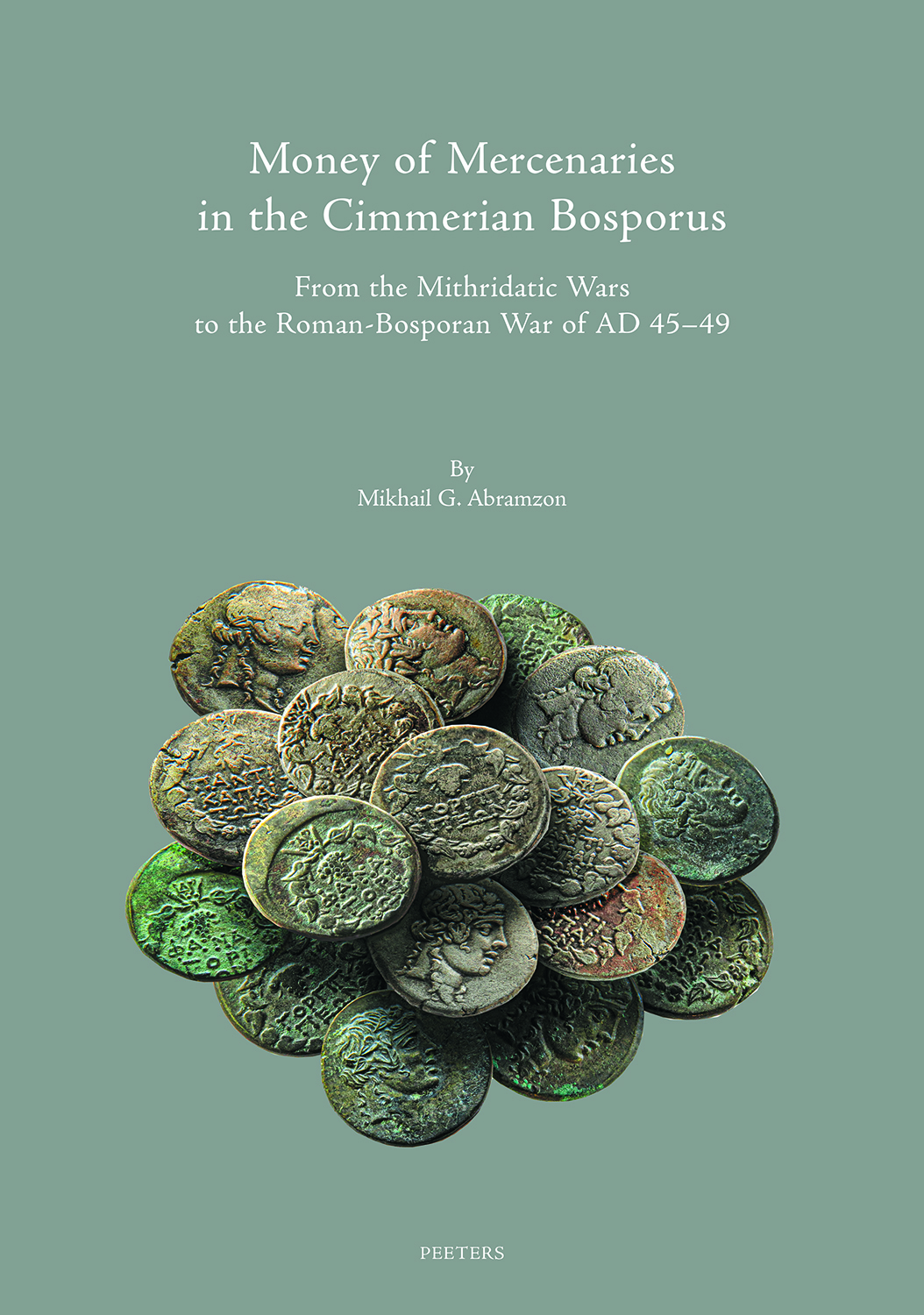 Money of Mercenaries in the Cimmerian Bosporus
From the Mithridatic Wars to the Roman-Bosporan War of AD 45-49
Volume 45
 Music and Colonialism in Fascist Italy
Identity, Propaganda, and Ethnographic Representation
Volume 13

 New Research on Old Collections in Southwest Asian Archaeology
Proceedings of the Workshop Held at the British Museum, London, 31 July – 2 August, 2023
 Old Aramaic Inscriptions and their Contexts
An Epigraphic, Archaeological, and Historical Synthesis
Volume 63

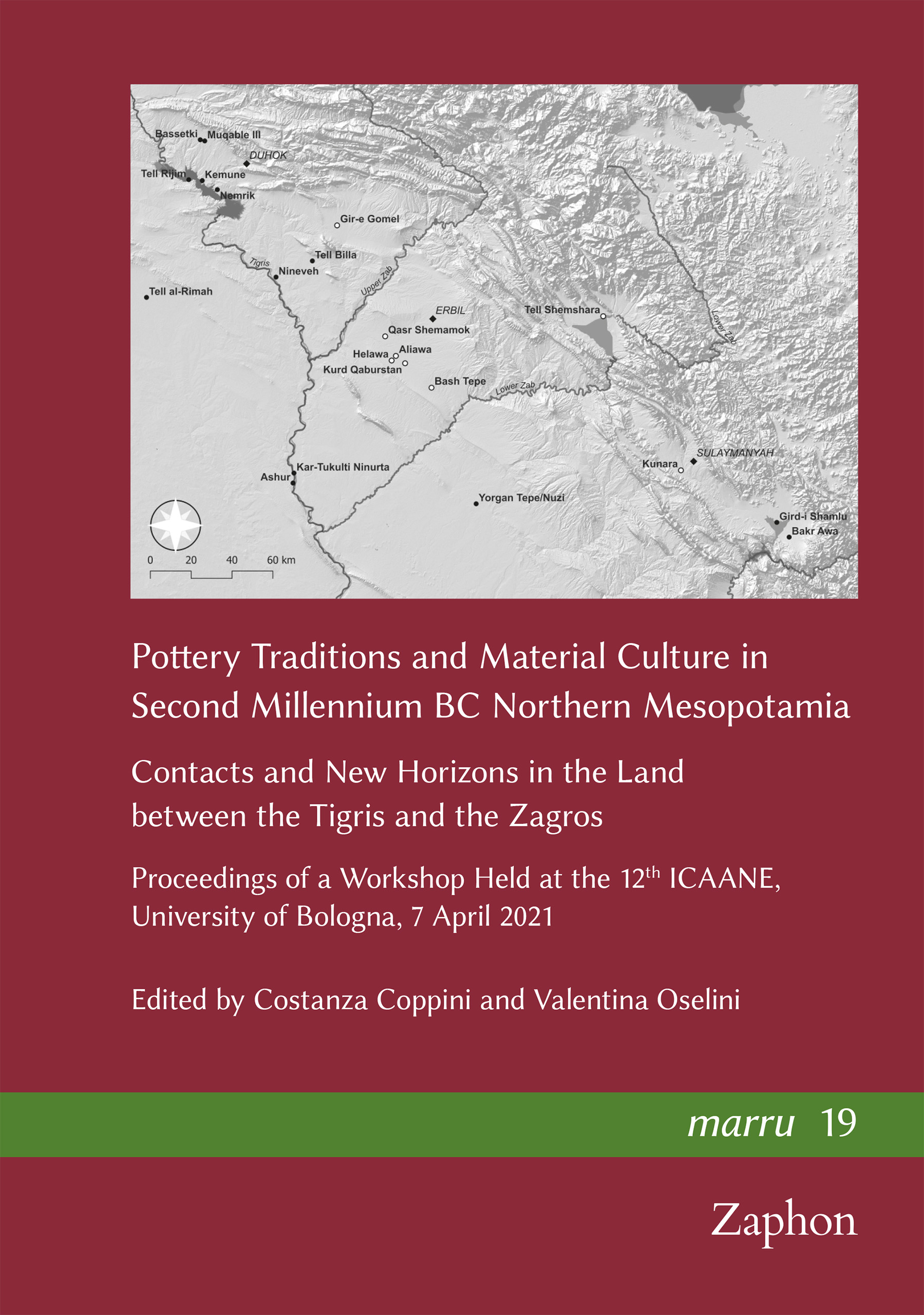 Pottery Traditions and Material Culture in Second Millennium BC Northern Mesopotamia
Contacts and New Horizons in the Land between the Tigris and the Zagros. Proceedings of a Workshop Held at the 12th ICAANE, University of Bologna, 7 April 2021
Volume 19
 Punning in Odd or Elegant Constructions in Jeremiah
The Convergence of Linguistics, Rhetoric, and Textuality in the Hebrew Text of Jeremiah

 Sertorius, the Exiles of the Sullan Regime and the Provinces of the Empire
Legitimacy, Morality and Imperial Discourse in the 70s BCE
 Shame in the Worlds of the Hebrew Bible and Akkadian Texts
A Linguistic Study and Its Implications
Volume 33


 Telling Contexts
Archaeological and Textual Studies in Honor of Elizabeth Bloch-Smith and Mark S. Smith