
Tools for Conviviality
by Ivan Illich

Tools for Conviviality was published only two years after Deschooling Society. In this work, Illich generalized the themes that he had previously applied to the field of education: the institutionalization of specialized knowledge, the dominant role of technocratic elites in industrial society, and the need to develop new instruments for the reconquest of practical knowledge by the average citizen. Illich proposed that we should ‘invert the present deep structure of tools’ in order to give people tools that guarantee their right to work with independent efficiency.’ Tools for Conviviality attracted worldwide attention. A resume of it was published by French social philosopher Andre Gorz in Les Temps Modernes, under the title ‘Freeing the Future’. The book’s vision of tools that would be developed and maintained by a community of users had significant influence of the first developers of the personal computer, notably Lee Felsentein. Illich wrote: ‘I choose the term ‘conviviality’ to designate the opposite of industrial productivity. I intend it to mean autonomous and creative intercourse among persons, and the intercourse of persons with their environment, and this in contrast with the conditioned response of persons to the demands made upon them by others, and by a man-made environment. I consider conviviality to be the individual freedom realized in personal interdependence and, as such, an intrinsic ethical value. I believe that, in any society, as conviviality is reduced below a certain level, no amount of industrial productivity can effectively satisfy the needs it creates among society’s members.’ The conviviality for which noted social philosopher Ivan Illich is arguing is one in which the individual’s personal energies are under direct personal control and in which the use of tools irresponsibly limited. A work of seminal importance, this book claims our attention for the urgency of its appeal, the stunning clarity of its logic and the overwhelming human note that it sounds.
- By (author) Ivan Illich
Similar Books


 As Messianism Turns to Heresy
The Regenstein Chair Lectures On Lurianic Kabbalah and Shabbatai Tzevi at Hebrew Union College - Cincinnati

 Beyond Sovereign Courts
Agents and Practices in Early Modern Spanish and Habsburg Diplomacy
Volume 3


 Drunk the Potion, No Whit Charmed
The Doctrine of Pure and Perfect Souls from Iamblichus to Damascius

 Éthique, politique, religions
Superstition (XVIIe - XXIe siècles). Sémantique, histoires et cultures


 Food Security under Armed Conflict
Global Knowledge Landscape and Public Attention to Social, Economic, and Humanitarian Dimensions


 Innovationes Lovanienses: Arts, Law and Theology at the University of Louvain (1425–1797)
Studium Lovaniense: Learning across Borders, 2
Volume 18
 La Lettre clandestine
La littérature philosophique clandestine, ses éditeurs et ses éditions
Volume 34

 Libertinage et philosophie à l’époque classique (XVIe-XVIIIe siècle)
Athéisme, Modernité et Sécularisation / Atheism, Modernity and Secularization
Volume 23


 Myths and Tales of the Inughuit
Erik Holtved's Polar Eskimo Texts Revised and Re-translated into Danish and English
Volume 475, 12


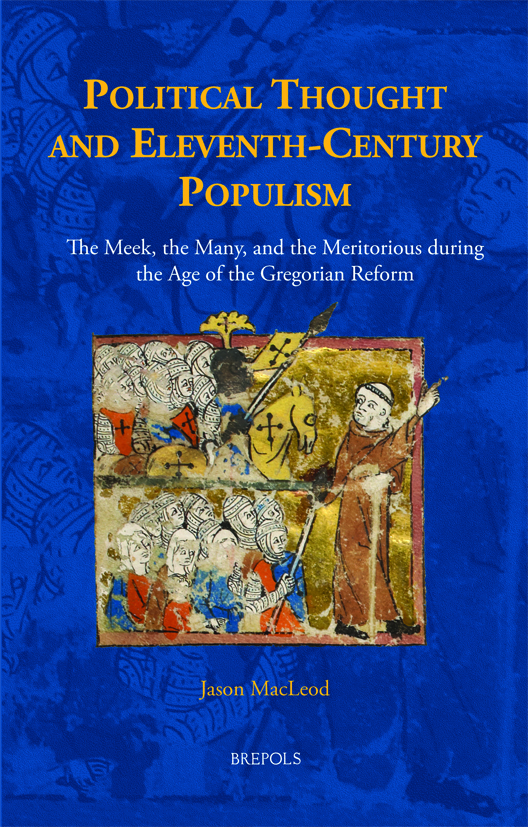 Political Thought and Eleventh-Century Populism
The Meek, the Many, and the Meritorious during the Age of the Gregorian Reform
Volume 38


