
The Anjou Bible
A Royal Manuscript Revealed. Second Revised Edition
Edited by L. Watteeuw
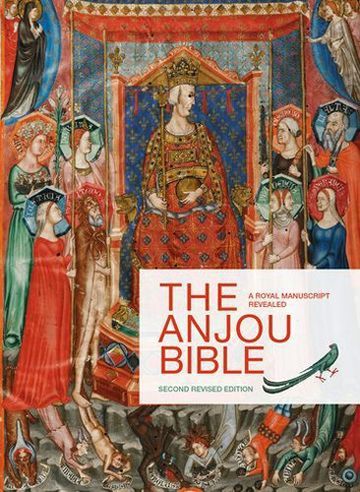
The second and revised edition of The Anjou Bible: A Royal Manuscript Revealed is the result of new research conducted over the last twelve years and showcases established and new findings regarding the famous Bible kept at the Maurits Sabbe Library of the University of Leuven. The first edition of this monograph was published in the context of the exhibition The Anjou Bible in Museum M in 2010. The second and revised edition of this book accompanies the prestigious publication of the facsimile of La Bibbia d’Angio by Treccani, Rome. The Anjou Bible is an imposing manuscript of almost 700 years old and, from a cultural, historical, and art-historical point of view, invaluable. The Anjou Bible is a visual witness statement to the genealogy of the Kings and Queens of Naples and Sicily, belonging to the powerful House of Anjou. During the first half of the fourteenth century, large parts of Southern and Central Europe were controlled by this dynasty. After the premature death of her father Charles in 1328, Joanna of Anjou became heir to the prosperous kingdom of Naples, at this junction ruled by her grandfather Robert of Anjou. Around 1340, the scribe Iannutius de Matrice and the illuminator Cristophoro Orimina wrote and illuminated the large and prestigious Bible. The Anjou Bible is of inestimable importance to the study of both socio-cultural life in medieval Southern Italy and the history of Italian art. As early as 1402 the manuscript was described in the inventory of Jean, duc de Berry (1340-1416), brother of King Charles V of France, and known for his love of art and books. At the beginning of the sixteenth century the manuscript found its way to the Atrecht College in Leuven via Nicolaus Ruterius (1442-1509), the Bishop of Arras. At the beginning of the nineteenth century the manuscript became part of the collection of the Major Seminary in Mechelen. Since 1970 it has been preserved in the Theology Faculty’s Maurits Sabbe Library at the KU Leuven.
The second and revised edition of The Anjou Bible: A Royal Manuscript Revealed is the result of new research conducted over the last twelve years and showcases established and new findings regarding the famous Bible kept at the Maurits Sabbe Library of the University of Leuven. The first edition of this monograph was published in the context of the exhibition The Anjou Bible in Museum M in 2010. The second and revised edition of this book accompanies the prestigious publication of the facsimile of La Bibbia d’Angio by Treccani, Rome. The Anjou Bible is an imposing manuscript of almost 700 years old and, from a cultural, historical, and art-historical point of view, invaluable. The Anjou Bible is a visual witness statement to the genealogy of the Kings and Queens of Naples and Sicily, belonging to the powerful House of Anjou. During the first half of the fourteenth century, large parts of Southern and Central Europe were controlled by this dynasty. After the premature death of her father Charles in 1328, Joanna of Anjou became heir to the prosperous kingdom of Naples, at this junction ruled by her grandfather Robert of Anjou. Around 1340, the scribe Iannutius de Matrice and the illuminator Cristophoro Orimina wrote and illuminated the large and prestigious Bible. The Anjou Bible is of inestimable importance to the study of both socio-cultural life in medieval Southern Italy and the history of Italian art. As early as 1402 the manuscript was described in the inventory of Jean, duc de Berry (1340-1416), brother of King Charles V of France, and known for his love of art and books. At the beginning of the sixteenth century the manuscript found its way to the Atrecht College in Leuven via Nicolaus Ruterius (1442-1509), the Bishop of Arras. At the beginning of the nineteenth century the manuscript became part of the collection of the Major Seminary in Mechelen. Since 1970 it has been preserved in the Theology Faculty’s Maurits Sabbe Library at the KU Leuven.
- Edited by L. Watteeuw
Other Titles in this Series

 Visitatio Apostolica Episcopatus Leodiensis
Der Nuntius Pier Luigi Carafa (1624-1634) als Visitator Bistum Luttich
Volume 31


 De Westmalse Acta Sanctorum
Provenances van Pauscollege tot Guillaume Joseph De Boey. Met bibliografie van Seraphinus Lenssen, de bollandist van de trappisten
Volume 37

 Vado mori
Une Danse Macabre unique dans le Livre d'Heures ganto-brugeois Croy-Arenberg (environ 1500)
Volume 40


Similar Books

 «Solazoxa festa, stradolze e stracomplia»
Festschrift für Raymund Wilhelm zum 65. Geburtstag mit Beiträgen zu Diskurstraditionen und mittelalterlicher Philologie
Volume 249

 A Collaborative Tapestry in Honour of Shirley Ann Brown / Une fresque brodée en l’honneur de Shirley Ann Brown
The Bayeux Tapestry Seen by her Colleagues and Friends / La Tapisserie de Bayeux vue par ses collègues et amis






 Athanasius of Alexandria, Epistula ad episcopos Aegypti et Libyae
Old Slavonic Version and English Translation
Volume 261


 Balthasar Caymox of Nuremberg
Early Modern German Print Publishers: Popular Prints of the Seventeenth Century
 Behind the Scenes of Medieval Roofs
An Overview of the Roofing Systems of Italian Churches
Volume 90


 Cahiers de recherches médiévales et humanistes – Journal of Medieval and Humanistic Studies
Volume 51




 Contesting Labeled Identities
The Sociology of Gentilics in Biblical and Northwest Semitic Literature

 Cyril of Alexandria’s Christological Exegesis
Explorations of Partitive Exegesis in the Dialogues on the Trinity
Volume 70


 ENTANGLED AFRICA
Intra-African Relations Between Rain Forest and Mediterranean from Around 4,000 BCE to 1,500 CE
 Epiphanies of the Divine in the Septuagint and the New Testament
Fifth International Symposium of the Corpus Judaeo-Hellenisticum Novi Testamenti (CJHNT), 14-17 May 2015, Nottingham



