
Marmor Numidicum
Gewinnung, Verarbeitung und Distribution eines antiken Buntmarmors
By (author) Dennis Mario Beck

Hardback (Published)
(June 2024)
ISBN: 9783752007558
8.27 x 11.69 inches
Price: $269.00
On back order
English summary: marmor numidicum, also known as Giallo antico, is one of the best known and most widespread colored marbles of antiquity, and was quarried in Simitthus, today Chimtou in Tunisia. The present study is a holistic interdisciplinary approach to marmor numidicum and combines the results from different research disciplines. The basis is a collection of archaeological material for the recording of the spectrum of use and the distribution of the marble in the Mediterranean area from the 2nd century B.C. to the 3rd century A.D. Based on this dataset, conclusions are drawn in a diachronic perspective both on the marble extraction and chronology in the quarries and on the urban genesis as well as the use and distribution range of the marble. The results are correlated by means of comparisons with administrative structures and questions of ownership, too. The study presents a periodization and localization of all variants of the marble to their extraction areas, considering archaeometric analyses of samples from the quarries for the first time in research. Another aspect concerns the role of marmor numidicum within ancient trade systems. In order to get closer to these perspectives, questions about extraction, actors in trade networks, transport and logistic issues are comparatively analyzed with the help of the spectrum of use and distribution in diachronic evaluations and contextualized in case studies with the model of the chaine operatoire. Theories and models from New Institutions Economics are discussed, too. Regarding the use of the local marble, the study yielded the result that the city of Simitthus and its quarries formed an entangled unit over the periods studied. Thus, for one of the most important colored marbles of antiquity a single study is now available. German description: Der marmor numidicum, auch als Giallo antico bekannt, ist einer der bekanntesten und am weitesten verbreiteten Buntmarmore der Antike, der in Simitthus, dem heutigen Chimtou in Tunesien abgebaut wurde. Die Arbeit stellt eine holistisch angelegte interdisziplinare Einzelstudie zum marmor numidicum dar. Die Grundlage bildet eine Materialaufnahme zur Erfassung des Verwendungsspektrums und der Distribution dieses Marmors im Mittelmeerraum vom 2. Jh. v. Chr. bis ins 3. Jh. n. Chr. Anhand dieser Materialsammlung werden in diachroner Perspektive jeweils sowohl Ruckschlusse auf die Marmorgewinnung und Chronologie in den Steinbruchen als auch auf die Stadtgenese gezogen und diese uber Vergleiche mit administrativen Strukturen und Besitzverhaltnissen korreliert. Zudem wird die Verwendung und Distribution erfasst und in Kontexten aus dem Mittelmeerraum analysiert. Die Arbeit legt eine Periodisierung und Zuweisung aller Varianten des Marmors zu ihren Abbauarealen unter Berucksichtigung archaometrischer Analysen von Proben aus den Steinbruchen vor. Ein weiterer Aspekt betrifft die Rolle des marmor numidicum innerhalb antiker Handelssysteme. Um diesen Perspektiven naher zu kommen, werden mithilfe des Einsatzspektrums und der Distribution in diachronen Auswertungen Fragen nach Abbauszenarien, Akteuren in Handelsnetzwerken, Transport- und Logistikfragen synoptisch analysiert und in Fallbeispielen mit dem Modell der chaine operatoire kontextualisiert. Hierzu werden Theorien und Modelle aus der Neuen Institutionenokonomik miteinbezogen. In Bezug auf die lokale Verwendung des Marmors lieferte die Studie das Ergebnis, dass die Stadt Simitthus und ihre Steinbruche uber die untersuchten Zeitraume hinweg eine verflochtene Einheit bildeten. Damit liegt erstmals fur einen der wichtigsten Buntmarmore der Antike eine Einzelstudie vor.
- By (author) Dennis Mario Beck
Other Titles in this Series


Similar Books
 A Collaborative Tapestry in Honour of Shirley Ann Brown / Une fresque brodée en l’honneur de Shirley Ann Brown
The Bayeux Tapestry Seen by her Colleagues and Friends / La Tapisserie de Bayeux vue par ses collègues et amis


 Balthasar Caymox of Nuremberg
Early Modern German Print Publishers: Popular Prints of the Seventeenth Century
 Behind the Scenes of Medieval Roofs
An Overview of the Roofing Systems of Italian Churches
Volume 90
 Caesar’s Visions and Impact on the Roman Empire
Revisiting the Archaeological and Historical Record of the 40s BC
Volume 2

 Circulation, Use, Impact
The Consumption of Architectural Books in the Early Modern Eastern Adriatic
Volume 1


 Etruscan and Roman Hellenistic Anatomical ex votos
Reassessing Popular Religious Expressions in Central Italy
Volume 8



 Invisible Labour in Antiquity
Visualizing Obscure Work in the Ancient Mediterannean and West Asia
Volume 1
 Late Antique villae in the Balkans (3rd–7th c. AD): Current Research Questions and Perspectives
HAEMUS Companion to the Late Antique Balkans 1
Volume 4
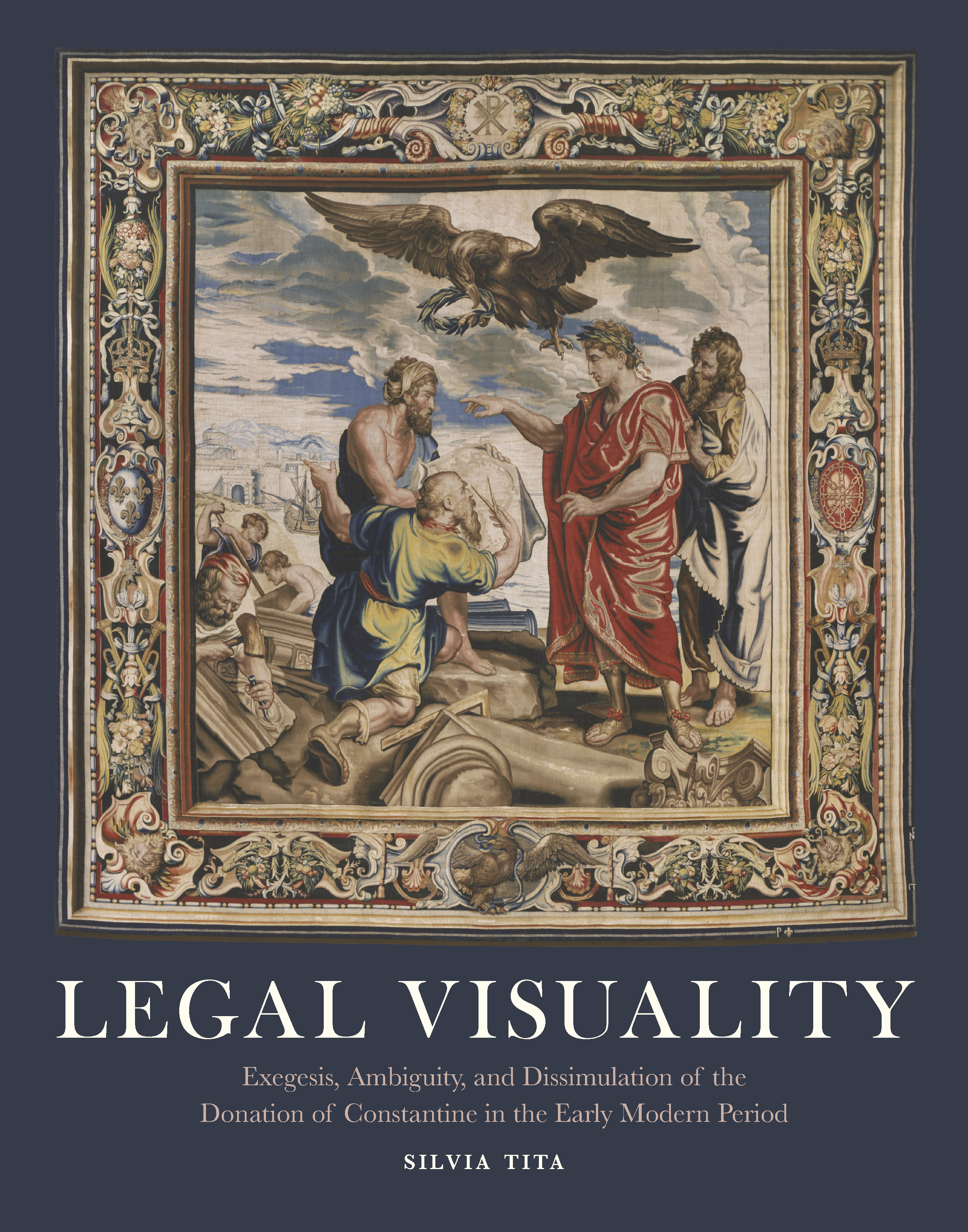 Legal Visuality
Exegesis, Ambiguity, and Dissimulation of the Donation of Constantine in the Early Modern Period


 Monastic Manuscripts from the Eastern Mediterranean (Sinai, Jerusalem, Antioch)
Production, Use, and Contexts
 Naples as Laboratory / Laboratorium Neapel
Style Options, Artistic Rivalry and Self Fashioning in Neapolitan Baroque Painting / Plurale Stilbildung, Kunstlerkonkurrenz und Self Fashioning in der neapolitanischen Barockmalerei
 Nurturing the Elite
Representations of Drinking, Eating, and Religious Vessels in Palmyrene Funerary Iconography
Volume 13


 Portraying the Individual in the Roman East
Local–Imperial Entanglements in Sculpture, Mosaics, and Paintings (First–Fourth Centuries AD)
Volume 18


 Small Worlds and Relational Agencies: Local Societies in Early Medieval Iberia
Pequeños mundos y Agencias relacionales: Sociedades locales altomedievales en la Península Ibérica