
‘Narrating’ the Landscape
British Creativity in Landscape Portrayal 1760-1800
By (author) Marie Claude Beaulieu Orna

Through an overall approach, the aesthetical, material and technical inventiveness among British landscape painters on the Grand Tour during its heyday is brought to light following its logical and sequential implementation.
As chosen by British landscapists traveling on the Grand Tour in the last third of the eighteenth century, our study explores the path to remedy the ambiguity of their pictorial genre. Indeed, being attached to certain continental artistic references while simultaneously willing to affirm a British character, those artists find their way experimenting processes and dealing with materiality issues in a particularly innovative manner. Their approach is to be closely related to the peculiarities of landscape art in Great Britain at that period, including its theoretical interpretation, teaching, and cultural perception. Through various examples, our research sheds light on this training and analyses painters’ traveling practice, largely devoted to the exercise of plein air sketching and employed to satisfy aesthetic goals. The book also investigates the diffusion of this know-how through engraving and publishing. It raises the parallel issue of artistic interaction in the cosmopolitan environment of the Grand Tour, suggesting a certain transfer of skills from the British to the continental artistic communities. The inventiveness among British landscapists on the Grand Tour during its heyday is thus brought to light following its logical and sequential implementation, from training to sharing of travel art works.
- By (author) Marie Claude Beaulieu Orna
Other Titles in this Series
 Light and Shade in Dutch and Flemish Art
A History of Chiaroscuro in Art Theory and Artistic Practice in the Netherlands of the Seventeenth and Eighteenth Centuries
Volume 7


 Le langage des mains dans l’art
Histoire, significations et usages des chirogrammes picturaux aux XVIIe et XVIIIe siecles
Volume 9
Similar Books
 A Collaborative Tapestry in Honour of Shirley Ann Brown / Une fresque brodée en l’honneur de Shirley Ann Brown
The Bayeux Tapestry Seen by her Colleagues and Friends / La Tapisserie de Bayeux vue par ses collègues et amis


 Balthasar Caymox of Nuremberg
Early Modern German Print Publishers: Popular Prints of the Seventeenth Century


 Legal Visuality
Exegesis, Ambiguity, and Dissimulation of the Donation of Constantine in the Early Modern Period
 Monastic Manuscripts from the Eastern Mediterranean (Sinai, Jerusalem, Antioch)
Production, Use, and Contexts
 Naples as Laboratory / Laboratorium Neapel
Style Options, Artistic Rivalry and Self Fashioning in Neapolitan Baroque Painting / Plurale Stilbildung, Kunstlerkonkurrenz und Self Fashioning in der neapolitanischen Barockmalerei

 Nurturing the Elite
Representations of Drinking, Eating, and Religious Vessels in Palmyrene Funerary Iconography
Volume 13


 Portraying the Individual in the Roman East
Local–Imperial Entanglements in Sculpture, Mosaics, and Paintings (First–Fourth Centuries AD)
Volume 18


 Technical Studies of Asian Art
Proceedings of the Seventh Forbes Symposium at the Freer Gallery of Art


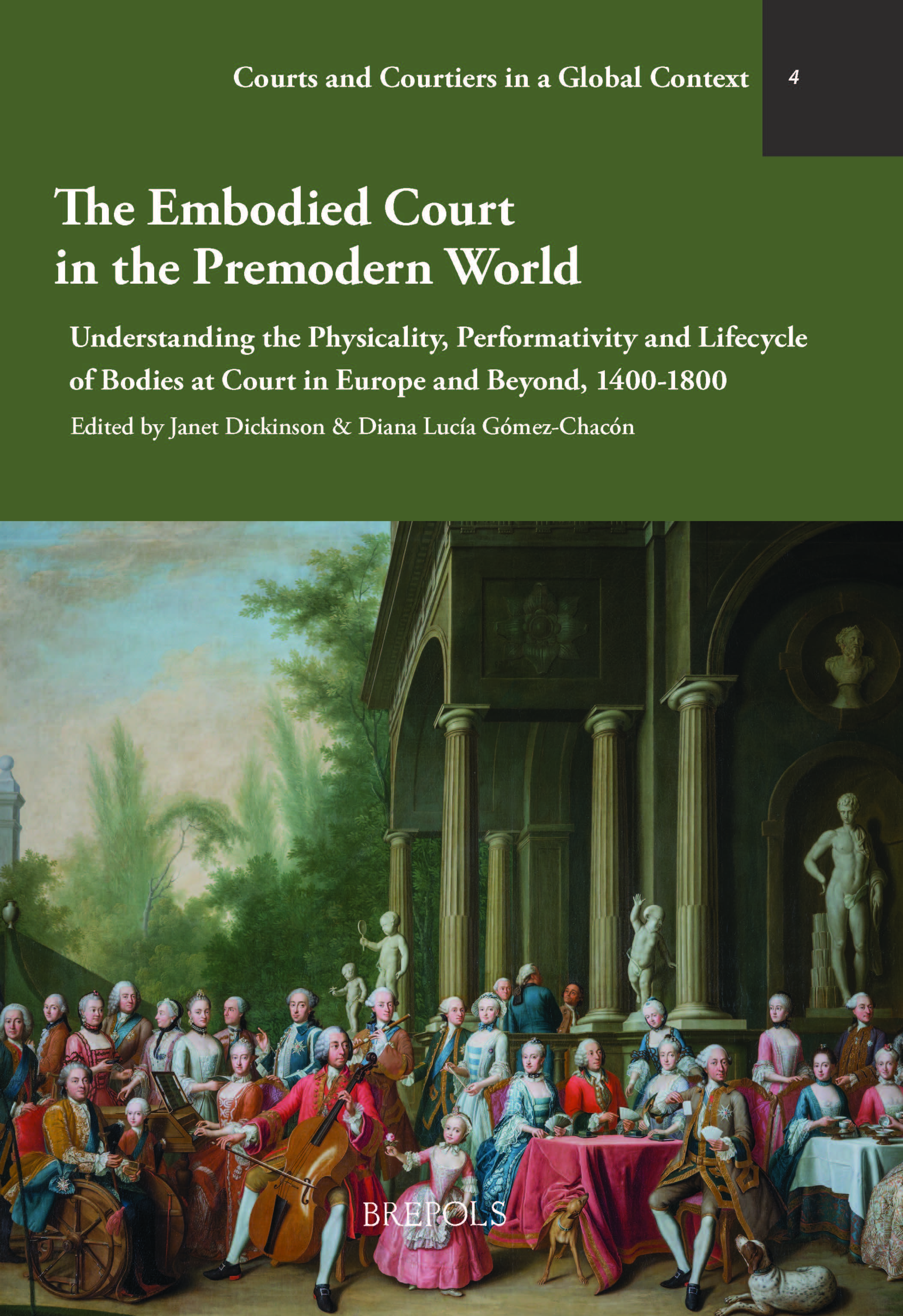 The Embodied Court in the Premodern World
Understanding the Physicality, Performativity and Lifecycle of Bodies at Court in Europe and Beyond, 1400-1800
Volume 4


 Venice Reimagined
The Resurgence of View Painting in Venice after the Fall of the Serenissima between 1797 and 1866

 Women’s Legacies in Natural Studies, Health, and Liberal Arts
Proceedings of the Second Annual International Women in the Arts Conference
Volume 4
 Writing in the Church of the Nativity in Bethlehem
Inscription and Graffiti in a Multilingual and Multigraphic Perspective
Volume 45




 “Italien übertrifft alles, was man mir darüber gesagt hat”
Wilhelmine von Bayreuth und Friedrich II. im Briefdialog über die Italienreise der Markgräfin

